Executive Overview
In an era saturated with high-velocity digital media, hyper-compressed audio, and the relentless noise of modern urban existence, contemporary ambient music has increasingly carved out a vital space for contemplation, ecological attentiveness, and mindful listening. Enter Minneapolis-based interdisciplinary artist, composer, and field recordist Matthew Hiram. With his latest release, Shade Songs, Hiram continues to chart a distinctive path through the intersection of acoustic ecology, improvisation, and environmental sound design.
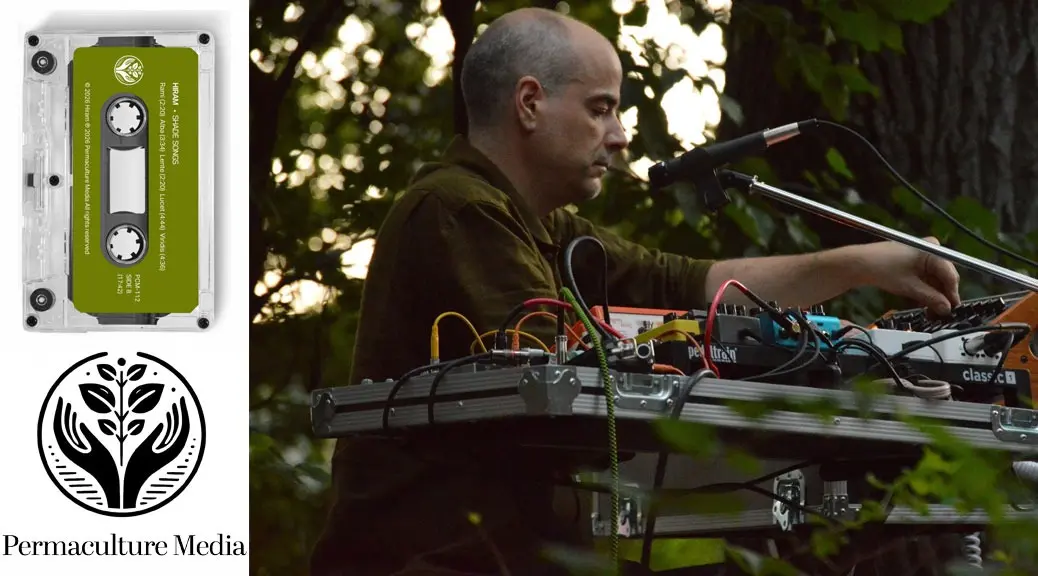
Available across digital platforms and limited-edition cassette formats, Shade Songs presents a collection of concise, deeply textural sonic vignettes inspired by the multifaceted concept of "shade." Moving far beyond mere ambient background noise, Hiram constructs a meditative world where organic instrumentation—such as wooden flutes and bass guitar—interlaces seamlessly with synthesized textures and raw field recordings gathered from coastal palms and arid desert landscapes.
While the album’s uncompromisingly hushed, gentle disposition invites deep introspection and rewards attentive headphone listening, it also prompts critical conversations regarding dynamic range, emotional contrast, and the boundaries of sustained tranquility within experimental sound art. This comprehensive review and investigative overview explores the thematic underpinnings, stylistic evolution, technical methodology, and critical reception of Shade Songs, placing Matthew Hiram’s work within the broader historical lineage of acoustic ecology and the experimental ambient tradition.
Detailed Chronology and Artistic Evolution
To truly understand the weight and texture of Shade Songs, one must examine the developmental arc of Matthew Hiram’s compositional practice. Operating out of the vibrant creative ecosystem of Minneapolis, Hiram has steadily built a reputation as an artist deeply attuned to the natural world. His body of work bridges the gap between human musicianship and environmental phenomena, effectively engaging in what he describes as "sonic conservation."
Roots in the Natural World
Hiram’s early exploratory projects laid the theoretical and sonic foundation for his current methodologies. Albums such as Air Songs, Immersion, and Green Green Earth established his fascination with the complex relationships binding environmental sound, spontaneous improvisation, and meditative contemplation. Rather than treating nature as a passive backdrop or a field of static samples, Hiram treats ecosystems as active collaborators in the compositional process.
In these earlier works, listeners heard the subtle rustle of canopies, the distant drone of waterways, and the micro-tonal shifts of weather patterns woven into structural improvisation. Hiram’s creative philosophy asserts that landscapes hold a distinct sonic character, a historical voice shaped by geology, meteorology, and botany. By capturing these elements and processing them through real-time electronic manipulation, Hiram seeks to archive environments that are increasingly vulnerable to human disruption and climate change.
The Conception of Shade Songs
The genesis of Shade Songs emerged from a prolonged period of field exploration across contrasting geographies, specifically coastal palm groves and expansive desert ecosystems. Observing how shade operates simultaneously as a physical phenomenon, a biological necessity, and a psychological refuge, Hiram began conceptualizing a body of work dedicated to the thresholds between light and darkness, exposure and shelter.
Unlike expansive, long-form ambient works that stretch across hours of drone, Shade Songs relies on a sequence of short-form vignettes. This structural choice mirrors the fleeting, localized nature of shade itself—a temporary shelter beneath a desert outcrop or the transient shadow cast by a coastal frond. Through real-time improvisation, Hiram layered acoustic elements over these environmental recordings, resulting in a cohesive suite of compositions that includes the expansive opening track Umbra, alongside shorter pieces such as Tsel, Cercis, Sedge, and Quies.
Supporting Context, Methodology, and Metrics
The creation of Shade Songs relies heavily on a unique methodology that merges traditional musicianship with modern sound art techniques, positioning Hiram at the intersection of several distinct artistic movements.
The Mechanics of Acoustic Ecology
Acoustic ecology, a discipline founded in the late 1960s and early 1970s by figures like R. Murray Schafer, examines the relationship between human beings and their environment through the medium of sound. Hiram’s work updates this academic tradition for the contemporary electronic music sphere. By employing high-fidelity field recording equipment, he captures micro-acoustic details—the friction of dry desert wind against scrub brush, the complex reverberations of coastal canopies—and uses them as the structural bedrock for his compositions.
[Environmental Field Recordings]
       │
       ▼
[Real-Time Improvisation (Bass, Wooden Flutes, Synths)]
       │
       ▼
[Electronic Processing & Layering]
       │
       ▼
[Acoustic Ecology in Miniature: "Shade Songs"]
This workflow ensures that Shade Songs avoids the sterile predictability of software-generated soundscapes. Every synthesized pad or bowed bass note is tuned to resonate with the harmonic frequencies discovered within the field recordings, creating a seamless symbiosis between the organic and the synthetic.
Botanical and Geographical Nomenclature
A striking feature of Hiram’s discography is his deliberate use of botanical and geographical terminology for track titles. On Shade Songs, titles like Cercis (derived from the redbud genus of trees) and Sedge (referring to grass-like wetland plants) anchor the abstract electronic textures to tangible, earthly phenomena.

- Umbra: Serving as the anchor piece at roughly six minutes in length, Umbra establishes the tonal gravity of the album, moving slowly through deep, shadowy resonance.
- Cercis: Exhibiting an especially delicate quality, this track utilizes sparse wooden flute phrasing to evoke the filtered light passing through dense foliage.
- Sedge & Quies: These compositions demonstrate Hiram’s mastery of economic arrangement, managing to suggest entire expansive landscapes using only a handful of well-chosen sonic elements.
Medium and Distribution
Released across digital storefronts and on limited-edition cassette tape, Shade Songs taps into the tactile resurgence of physical media within the ambient and experimental communities. Cassette tapes, with their warm saturation and analog tape hiss, complement Hiram’s organic sonic palette, enhancing the feeling of intimacy and weathered texture that runs throughout the album.
Critical Analysis and Artistic Discourse
While Shade Songs has earned widespread praise for its meticulous craftsmanship and emotional sincerity, it also invites important critical discussions regarding the boundaries of mood-based ambient music.
The Triumph of Controlled Atmosphere
There is no denying the transportive power of Hiram’s soundscapes. For listeners seeking refuge from the relentless pace of modern life, Shade Songs offers a deeply restorative sanctuary. The interplay between the woody resonance of the bass guitar, the breath-driven vulnerability of the wooden flutes, and the soft, rolling evolution of electronic textures results in a remarkably cohesive aesthetic.
The album shines brightest in moments of radical economy. On tracks like Cercis, Hiram proves that less is profoundly more. By stripping away extraneous ornamentation, he allows the natural resonance of his instruments and field recordings to speak for themselves. The work succeeds brilliantly as an intentional, highly focused listening experience—demanding the listener’s full attention, ideally through high-end headphones where the spatial placement of micro-sounds can be fully appreciated.
The Challenge of Dynamic Monotony
However, artistic consistency can occasionally double as a limitation. A notable critique of Shade Songs centers on its unwavering commitment to its core atmosphere. Throughout its runtime, the album rarely steps outside its carefully maintained, hushed perimeter.
While the music never descends into genuinely oppressive darkness or stagnant boredom, it remains so consistently gentle, contemplative, and soft-spoken that the absence of significant dynamic shifts or emotional contrast can make the listening experience feel slightly constrained. The shade Hiram constructs is undeniably beautiful, cool, and protective; yet, as the tracks dissolve one into the next, one occasionally finds oneself yearning for a starker contrast—a momentary step out into the blinding, disruptive intensity of the sunlight.
This raises a compelling question for contemporary ambient composers: Can an album maintain a singular emotional register without risking listener fatigue, or does the purity of a singular concept justify the suppression of dynamic peaks and valleys? Hiram firmly chooses the latter path, prioritizing immersive conceptual purity over conventional structural variation.
Future Outlook
As Matthew Hiram looks beyond the release of Shade Songs, his ongoing commitment to acoustic ecology and sonic conservation positions him as an increasingly vital voice in contemporary experimental music.
Expanding the Ecological Canvas
Looking forward, artists operating within the field-recording and ambient traditions face both unprecedented opportunities and urgent responsibilities. As global climate change drastically alters ecosystems worldwide, the acoustic profiles of deserts, forests, and coastal regions are shifting rapidly. Hiram’s practice of "sonic conservation" carries archival weight. Future projects could see him expanding his geographical scope, capturing endangered soundscapes, or collaborating more directly with ecological researchers to document the fading voices of threatened habitats.
Evolution of Performance and Format
While Shade Songs has found a natural home among headphone listeners and cassette collectors, the spatial, immersive nature of Hiram’s work suggests fertile ground for live performance. Translating these delicate improvisations into site-specific live installations—perhaps in botanical gardens, architectural ruins, or acoustic-friendly galleries—could introduce a vital physical dimension to his work, mitigating the potential monotony of recorded listening by introducing unpredictable environmental interactions.
Conclusion
Matthew Hiram’s Shade Songs is not background music designed to be casually ignored while navigating daily chores; it is a deliberate, highly contemplative exercise in acoustic refuge. Despite minor critiques regarding its unyielding dynamic consistency, the album stands as a testament to Hiram’s refined artistic vision, ecological attentiveness, and mastery of micro-tonal texture. For those willing to pause, sit still, and lean into the acoustic canopy he has constructed, Shade Songs offers a cool, restorative shelter well worth visiting.
Original review by Mike Gates via UK Vibe.