Executive Overview
The intersection of modern marketing, athletics, and cultural representation has reached a volatile flashpoint. A high-profile sports gambling advertisement featuring American actress Sydney Sweeney has ignited a fierce global debate regarding how female athletes are portrayed in the media. The campaign, which quickly went viral across multiple social media ecosystems, features the Euphoria star naked, strategically using various pieces of sporting equipment to cover her body rather than showcasing athletic prowess, training discipline, or competitive excellence.
The backlash was swift and uncompromising. Across the globe, elite sportswomen—ranging from Olympic gymnasts to European sprinting champions—have stepped forward to condemn the commercial. Critics argue that the advertisement reinforces archaic, highly sexualized tropes that reduce women in sports to objects of male gaze and aesthetic appeal, directly undermining decades of hard-fought progress toward parity, respect, and recognition based purely on athletic merit.
In response, a powerful digital counter-movement has emerged. Spearheaded by athletes who are reclaiming the narrative, women are flooding platforms like TikTok, Instagram, and X (formerly Twitter) with unfiltered, unvarnished footage of themselves training, competing, bleeding, and prevailing. Among the most prominent voices leading this charge is British sprinting sensation Amy Hunt, who used a post-race platform at the Ultimate Championship in Budapest to deliver an unforgettable rebuke.
This article investigates the genesis of the controversy, the cultural shockwaves it has sent through the athletic community, the quantitative metrics and historical context of media representation in sports, and the broader implications this cultural battle holds for the future of female sports marketing and sponsorship.
Detailed Chronology: From Viral Campaign to Global Backlash
The Genesis of the Advertisement
The controversy began with the rollout of a new multimedia marketing campaign by a prominent sports gambling brand. Seeking to capture the lucrative demographic convergence of entertainment pop-culture and sports betting, the company tapped 29-year-old American actress Sydney Sweeney—known for her roles in critically acclaimed television and film projects such as Euphoria, Anyone But You, and The Housemaid.
Rather than casting a professional athlete or framing Sweeney within an athletic context—such as participating in a workout, wearing functional sports apparel, or demonstrating a specific skill—the creative direction opted for shock value. The commercial features Sweeney completely naked, utilizing items like basketballs, baseball bats, and tennis rackets to preserve modesty while posing provocatively.
Within hours of its digital launch, the advertisement went viral. While some marketing traditionalists viewed it as an effective engagement play designed to generate high click-through rates and brand visibility, the reaction within the global athletic community was one of profound alienation and anger.
The Spark: Gracie Kramer’s Counter-Narrative
The first major crack in the commercial’s reception occurred when American gymnast Gracie Kramer took to social media. Frustrated by what she perceived as a regressive step for women’s athletics, Kramer published a gritty, unedited montage of herself enduring grueling training sessions, chalk-stained and exhausted.
Her caption served as the manifesto for the movement that would follow:
"I don’t know what Sydney Sweeney was doing, but this is what women in sport look like."
The video resonated instantly, striking a chord with thousands of female athletes who felt chronically misunderstood and exploited by mainstream advertising agencies that prioritized sex appeal over authentic athletic achievement.
Amy Hunt’s Defining Moment in Budapest
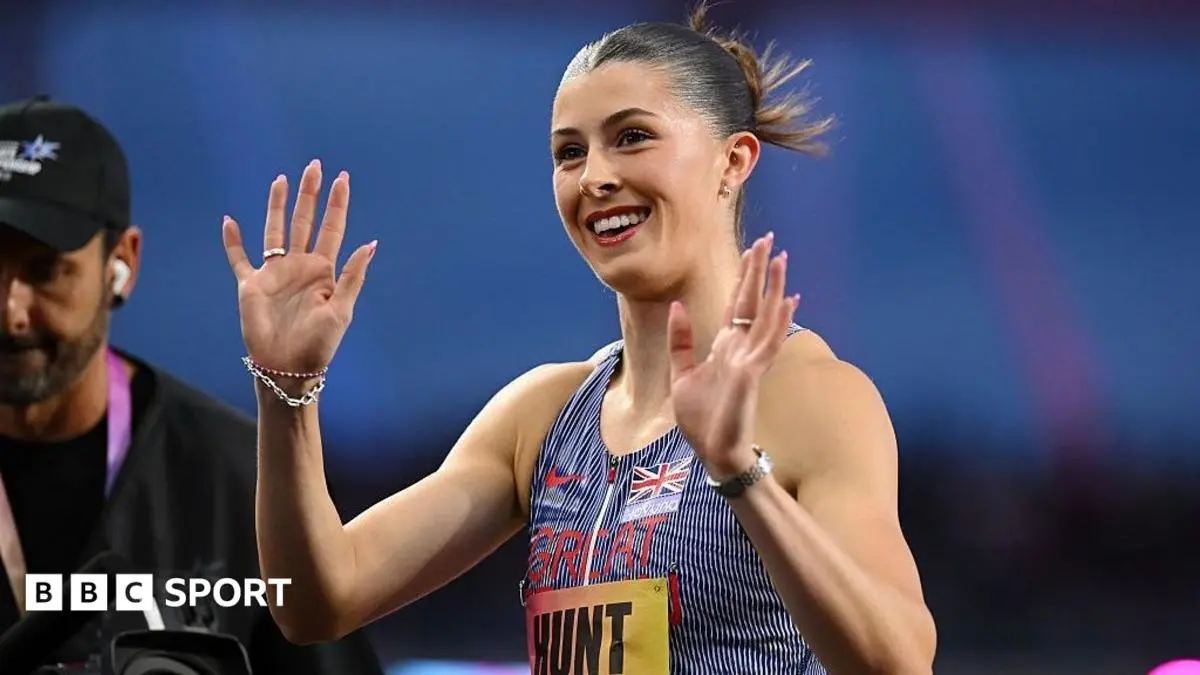
The cultural resistance reached a crescendo on a Sunday evening in Budapest during the Ultimate Championship. British sprinter Amy Hunt—who earlier this summer cemented her status as a four-time European champion—stepped onto the track for the fiercely competitive 200m final.
Hunt delivered a sensational performance, running a season’s best time of 22.10 seconds to secure a commendable fourth-place finish. However, it was her post-race interview with BBC Sport that transcended the athletic event and dominated international headlines.
Referencing the breathtaking winning time of 21.47 seconds clocked by American sprinter Melissa Jefferson-Wooden—marking the fourth-fastest time in history over the distance—Hunt seized the microphone to address the elephant in the room.
"Sydney Sweeney, this is what women in sport look like," Hunt declared with unflinching directness.
Pointing toward the staggering metrics of physical excellence achieved on the track, she added:
"21.4. Muscles. Hard work, blood, sweat, tears. This is a beautiful evening."
Hunt’s intervention shifted the conversation from digital outrage to an empowering celebration of female physical capability, turning a post-race media obligation into a masterclass in cultural activism.
Supporting Context & Metrics: The Reality of Women’s Athletics
To fully comprehend the fury surrounding the gambling advertisement, one must examine the socio-economic and media landscape that female athletes navigate daily. Despite record-breaking television viewership, packed stadiums, and unprecedented commercial valuations in women’s sports—such as the Women’s National Basketball Association (WNBA) and the UEFA Women’s Champions League—systemic inequalities in media representation persist.
The Hyper-Sexualization Paradox
Sociological studies consistently show that female athletes are disproportionately subjected to media frames that emphasize their femininity, physical attractiveness, and heterosexuality over their athletic competence. While male athletes are almost exclusively judged by their statistics, tactical intelligence, and physical strength, female competitors frequently find themselves pressured to balance elite athletic performance with conventional standards of glamor to secure lucrative sponsorships.
| Media Framing Category | Typical Focus for Male Athletes | Typical Historical Focus for Female Athletes | Modern Counter-Movement Focus |
|---|---|---|---|
| Primary Metric | Speed, strength, tactical execution | Appearance, marketability, femininity | Functional power, resilience, world-class times |
| Visual Depiction | Action shots, sweat, intense focus | Posed, glamorized, often non-athletic settings | Training montages, grit, muscular development |
| Sponsorship Criteria | Performance records, championships | Conventional beauty standards | Authenticity, athletic dominance, cultural voice |
As Amy Hunt highlighted through the performance of Melissa Jefferson-Wooden (21.47 seconds), elite sports are forged through unglamorous, brutal physical adaptation. The reality of a world-class sprinter involves microscopic muscle tears, cardiovascular exhaustion, biomechanical optimization, and psychological resilience. Reducing this dedication to a marketing gimmick utilizing a naked actress is viewed by many sportswomen as an insult to the sacrifices required to reach the pinnacle of human performance.
The Economics of Sports Gambling Advertising
The gambling industry has injected billions of dollars into sports sponsorships globally. However, marketing directors have frequently relied on outdated tropes to capture male-dominated betting demographics. The controversy surrounding the Sweeney commercial exposes a critical blind spot in contemporary advertising: the failure of corporate entities to recognize that modern sports consumers—particularly younger demographics—increasingly demand authenticity, respect, and genuine representation of athletes.
Official Statements and Industry Reactions
The backlash has prompted responses from various stakeholders across the sports, entertainment, and marketing sectors.
Athlete Solidarity Across Disciplines
Following Gracie Kramer and Amy Hunt’s interventions, sportswomen from soccer, track and field, weightlifting, rugby, and gymnastics have launched a decentralized digital campaign. Using hashtags celebrating real athletic physiques, athletes have posted behind-the-scenes footage of calloused hands, bruised shins, and sweat-drenched training gear.
A prominent British heptathlete, speaking anonymously regarding industry sponsorship norms, noted:
"We spend decades building our bodies into finely tuned engines capable of withstanding unimaginable physical loads. When brands reduce our entire domain to a naked body used to sell gambling products, it tells young girls that our sweat doesn’t matter unless it looks pretty. We are done accepting that trade-off."
Brand Silence and Marketing Critique
As of publication, the gambling brand responsible for the advertisement has declined to issue a formal apology or alter its campaign rollout, though digital engagement teams have closely monitored the swirling controversy.
Media ethics and advertising experts have weighed in, suggesting that the campaign represents a failure of risk management and creative oversight. Dr. Elena Vance, a professor of media studies focusing on gender representation in advertising, remarked:
"Brands can no longer rely on shock-value sexualization without facing immediate, organized economic and social pushback. The athletes of today are media-literate, economically empowered, and possess direct channels to their audiences through social media. When an ad misses the mark this profoundly, the backlash is instantaneous and global."
Future Outlook: Paradigm Shift in Sports Marketing
The friction generated by the Sydney Sweeney gambling advertisement is unlikely to dissipate quickly; instead, it serves as a watershed moment for how female athletes and brands interact. Several long-term structural changes are anticipated in the wake of this controversy:
1. Reimagining Athlete Partnerships
Brands looking to appeal to sports audiences will face heightened scrutiny regarding their creative briefs. The success of the counter-movement initiated by Kramer and amplified by Hunt demonstrates that campaigns centering authentic athletic achievement generate far more organic, positive brand equity than regressive, sexualized tropes. Future sponsorship contracts will likely feature stricter clauses regarding brand alignment and the respectful portrayal of sportswomen.
2. The Empowerment of Athlete Voices
Historically, athletes feared that speaking out against major corporate sponsors or advertising campaigns would jeopardize their individual endorsement opportunities. However, the unified front displayed by athletes across multiple sports proves that solidarity provides collective protection and amplifies individual influence. Amy Hunt’s decision to use her BBC Sport platform to pivot from her race result to a broader social critique signals a new era of athlete-activism.
3. Redefining Cultural Aesthetics in Sports
The phrase "This is what women in sport look like" has the potential to become an enduring cultural touchstone. By deliberately shifting society’s visual vocabulary away from airbrushed, sexualized ideals and toward muscularity, sweat, grit, and triumph, female athletes are seizing ownership of their visual representation.
As women continue to shatter world records, fill stadiums, and dominate television ratings, the commercial apparatus surrounding sports must evolve. The message delivered in Budapest and echoed across digital networks worldwide is unequivocal: the era of defining female athletes by their compliance with external aesthetic standards is over. The future belongs to those who run the 21.4 seconds, lift the heavy weights, and demand the respect their blood, sweat, and tears have earned.