Fifty years to the day after a small group of ambitious teenagers gathered in a Dublin kitchen to hash out the messy beginnings of a rock band, U2 returned to where it all began. On a crisp autumn afternoon, Bono, The Edge, Larry Mullen Jr., and Adam Clayton took to the playground stage at Mount Temple Comprehensive School in Dublin. The surprise homecoming marked half a century since the band’s inception, treating students, faculty, and local onlookers to a career-spanning, seven-song set that bridged the gap between global stadium superstardom and humble Dublin beginnings.
The anniversary gig was more than just a nostalgic victory lap. It coincided with the announcement of the band’s upcoming 16th studio album, Carnaval de Luz, set for release this November. Capping off a trilogy of releases that began with the socio-politically charged EP Days of Ash and continued with April’s Easter Lily, the new record features a poignant final collaboration: a co-written track titled "Torn," featuring the late country music icon Dolly Parton in her final recorded performance before her passing last month.
From a handwritten school noticeboard in 1976 to selling over 175 million records worldwide, U2’s half-century journey remains one of rock history’s most enduring narratives. Their return to Mount Temple served as a testament to the power of artistic limitations, lifelong friendships, and the idiosyncratic spark that turned four Irish schoolboys into enduring cultural titans.
Detailed Chronology: From a Kitchen in Rosemount Avenue to Global Domination
The U2 story is inextricably tied to the hallways and noticeboards of Mount Temple Comprehensive School in the mid-1970s. It all began on September 25, 1976, when a 14-year-old Larry Mullen Jr. pinned a simple, handwritten note to the school’s bulletin board: "Drummer seeks musicians to form band."
The Audition and Early Misfits
Auditions were swiftly organized in the kitchen of Mullen’s parents’ home on Rosemount Avenue. The hopefuls who answered the call were a self-described group of musical "misfits." Among them was Paul Hewson—soon to be known globally as Bono—who initially harbored doubts about attending. Being two years older than the others, Bono feared looking out of place alongside his younger peers. It took his schoolfriend Reggie Manuel to convince him to climb onto the back of a Yamaha DX100 motorbike (affectionately exaggerated by Bono ever since as a Harley Davidson) and head to the audition.
Also arriving at the kitchen door was Dave Evans (The Edge) and Adam Clayton, who famously turned up sporting a floor-length Afghan coat. The initial rehearsal was characterized by far more conversation than actual musicianship. Clayton was appointed bassist purely on the merit of having "the best hair," despite not knowing how to play the instrument. Meanwhile, Bono, who envisioned himself as the band’s lead guitarist, arrived without a guitar, admitting an aversion to handling gear or equipment.
Mid-rehearsal, the fledgling group caught their first glimpse of their future with an adoring public when a group of local girls attempted to scale the garden wall. While Clayton saw the youthful intrusion as an encouraging sign of potential pop stardom, Mullen—acting as the band’s stoic moral compass—reportedly grabbed a garden hose and sprayed the fans. Decades later, Mullen insisted the impromptu soaking "was an act of kindness and love because it was a hot day," while Bono quipped, "It’s been the story of our lives ever since. He doesn’t even want to have fans, but we quite like them."
Evolution and Name Changes
Initially operating under the monikers Feedback and later The Hype, the quartet eventually settled on the name U2. They cut their teeth through a grueling circuit of local performances, most notably honing their live chops over dozens of gigs at Dublin’s legendary McGonagles club. Their early sound married the raw, urgent energy of late-1970s punk with soaring, spiritual undertones—a formula that quickly propelled them out of Dublin clubs and onto the international stage.
By the 1980s, albums like War and The Joshua Tree cemented their status as a global powerhouse, driven by Bono’s passionate, morally urgent lyricism and The Edge’s distinctive, delay-heavy cascading guitar tones.
The 1990s Stylistic Swerve and Technological Innovation
Refusing to be typecast as earnest stadium-rockers, U2 executed a sharp stylistic pivot in the 1990s. Embracing electronic experimentation, industrial textures, and post-modern irony, they released the critically acclaimed trilogy of Achtung Baby, Zooropa, and Pop.
This era also redefined the modern live concert experience. Their legendary 1992 Zoo TV Tour pushed the boundaries of multimedia production, cramming stadium stages with massive video screens, live satellite feeds, and satirical broadcasts—including Bono’s nightly prank calls to the White House.
Golden Jubilee Homecoming
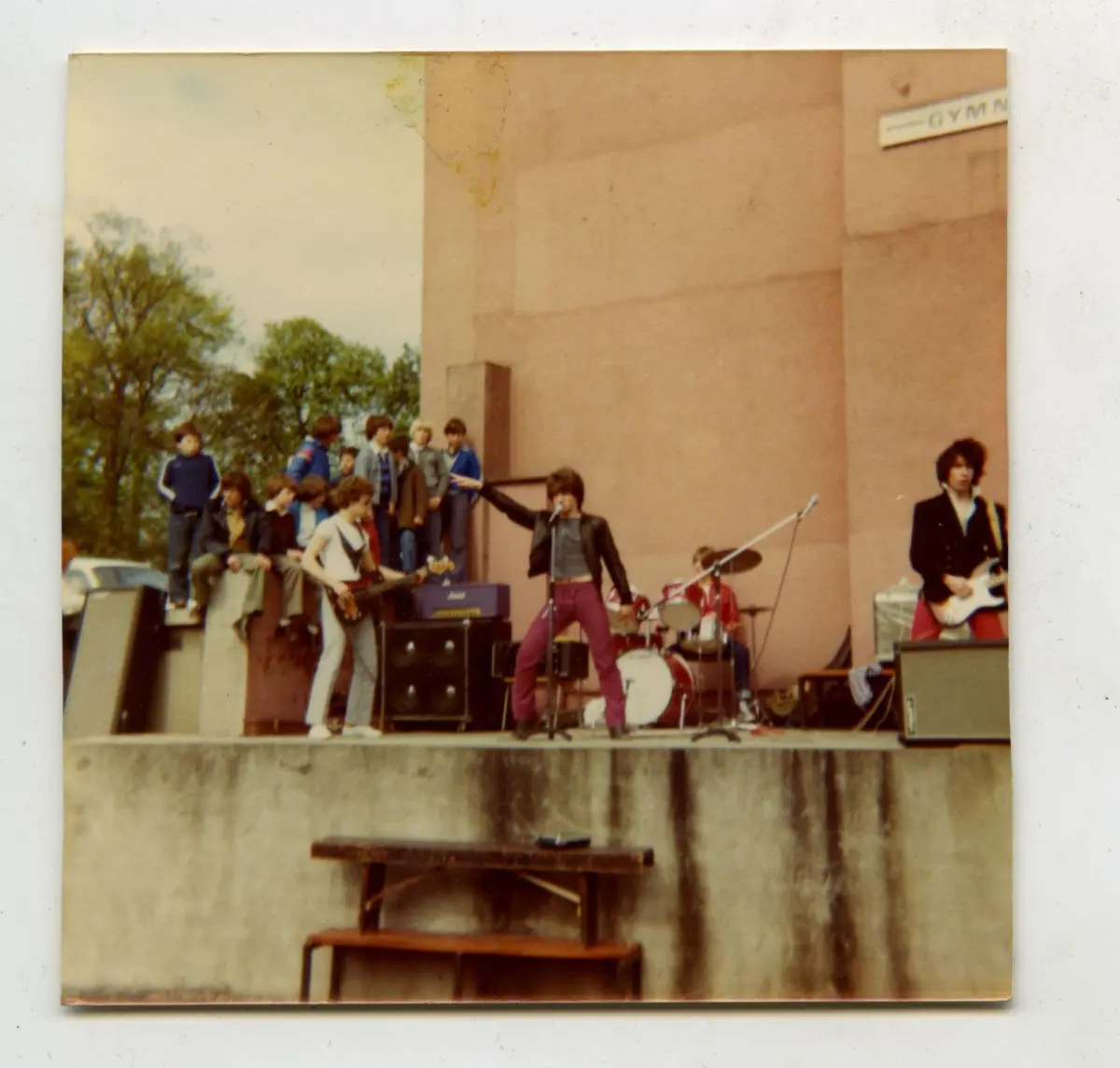
Fifty years after that initial kitchen rehearsal, the band’s return to Mount Temple’s playground brought the narrative full circle. Performing against the backdrop of the school day ending, the quartet delivered a seven-song setlist featuring classics like "I Will Follow," "Vertigo," "Beautiful Day," "Out of Control," "One," and "With or Without You," alongside their modern single "Silencio."
As teachers tried—and ultimately failed—to maintain order over excited pupils climbing on shoulders, Bono became audibly emotional on the very stage where U2 made their live debut in 1976.
Supporting Context & Metrics
U2’s enduring legacy can be quantified by staggering commercial metrics, artistic longevity, and foundational structural agreements that have kept the original lineup intact for half a century.
Global Record Sales: U2 has sold over 175 million records worldwide, making them one of the best-selling music artists of all time.
Grammy Accolades: The band has won 22 Grammy Awards, holding the record for the most wins by a rock group.
The Equal Split Agreement: Unlike many legacy rock bands plagued by bitter royalty disputes, U2 instituted a strict policy early in their career to split all publishing and touring revenues equally among the four members and their management. This financial egalitarianism is widely credited as the secret to their uninterrupted half-century tenure.
Philanthropy and Education: Fifteen years ago, the band helped establish and fund Music Generation, Ireland’s national music education program for children and young people. At the Mount Temple anniversary gig, the band closed their set with an orchestral arrangement of "One," performed alongside students from this very program.
Official Statements
Reflecting on the accidental genesis of the band, Larry Mullen Jr. revealed to BBC News that the famous noticeboard advertisement was actually masterminded by his father.
"I’d been playing on my own, in my house, and my dad was pretty frustrated," Mullen explained. "I wasn’t very good at many things, and playing the drums was included in that. So I think he, out of frustration, said I should try and play with other people."
"And unfortunately," Bono added playfully, "he got the three of us."
Addressing the band’s secret to longevity, guitarist The Edge (Dave Evans) pointed directly to their lack of conventional musical training:
"It’s been a guiding light, in some ways, the limitations of the band," Evans said. "We’re in this place where, musically, we never know what’s about to happen. It can fall apart or it can become something extraordinary. And that’s the beauty of U2."
During the Mount Temple performance, Bono dedicated the emotional homecoming to the late school counselor Jack Heaslip, who acted as a spiritual guide and "travelling pastor" on the band’s global tours before his passing from motor neurone disease in 2015. Bono thanked the school for giving them space to flourish, noting that the experience taught them that "maybe all we needed was around us, just under our feet."
Future Outlook: New Album and Dolly Parton Collaboration
While celebrating their golden jubilee in Dublin, U2 also looked firmly toward the future, announcing details regarding their upcoming 16th studio album, Carnaval de Luz, scheduled for release this November.
The upcoming 12-track record serves as the concluding chapter in a prolific trilogy that kicked off in February with the fiery, politically charged EP Days of Ash—which took direct aim at international flashpoints including the war in Ukraine, the Israel-Palestine conflict, and ICE operations in the United States—followed by the more subdued Easter Lily EP in April.
The Edge described Carnaval de Luz as "a messy, provocative, sacred collection of songs," while Bono promised fans a return to "loud guitars, deep bass, and ecstatic rhythms."
Crucially, the album’s closing track features a major posthumous collaboration. Titled "Torn," the song is a tender country ballad exploring fractured family dynamics and was co-written by and recorded with American icon Dolly Parton. Serving as Parton’s final recorded performance before her death last month, the track is expected to draw immense critical and commercial interest upon the album’s release.
BBC News has confirmed that an exclusive, in-depth interview detailing the creation of the Dolly Parton collaboration and the broader conceptual framework of Carnaval de Luz will be published in the coming weeks. As U2 enters its sixth decade of existence, the band proves that while they may have escaped the Dublin classroom lab long ago, their creative experiment is still finding new ways to evolve.