Executive Overview
For singer-songwriter Claire Hamill, music is not merely an auditory experience; it is a living, breathing archive of personal milestones, cultural shifts, and poignant human encounters. In a career that has spanned decades—marked by her own critically acclaimed releases, including the recent A House Among The Trees with the Claire Hamill Band—her artistic identity has been shaped by an eclectic collection of sounds. From the tight family vocal harmonies of her early childhood in Northern England to chance encounters with rock royalty in London and Los Angeles, Hamill’s musical education reads as a masterclass in twentieth-century popular music history.
In a recent retrospective feature curated by writer Michael Heatley, Hamill opened her personal record collection to reflect on ten foundational tracks that defined her trajectory. Far from a standard list of greatest hits, her selections trace a deeply personal geography. They span the emotive girl-group pop of the early 1960s, the orchestrally ambitious surf-rock of California, the British folk-rock underground, avant-garde electronic pop, and classical masterpieces.
This piece explores the stories behind these ten iconic recordings. By examining the context of each track—ranging from the £5 bargain singles of her youth to the priceless memories attached to them—we gain rare insight into the inner workings of a singular British artist whose creative path crossed with many of the era’s most brilliant and tragic figures.
Detailed Chronology: The Soundtrack of Claire Hamill’s Life
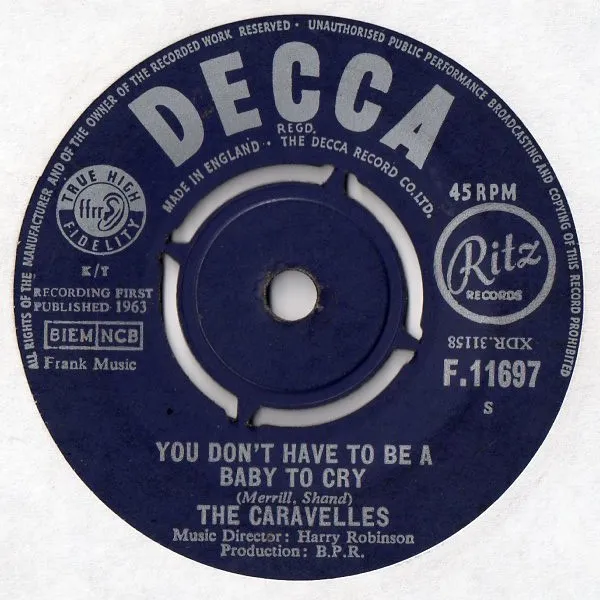
1. The Caravelles – You Don’t Have To Be A Baby To Cry (Decca, 1963)
- The Record: 7” UK pressing, Decca F 11697 (£5)
- The Memory: Long before she stepped onto a professional stage, Hamill’s musical awakening was rooted in domestic harmony. One of her earliest memories involves listening to her mother and Auntie Josie sing along to this melancholic pop tune. When she was 12, her family relocated to Teesside, where her parents opened a pioneering local coffee bar—complete with a jukebox and a Coca-Cola machine—that served as a vital social hub in a region lacking similar venues for miles around. Yet, it was the human voice, blending in sweet, resonant harmony, that left the deepest and most enduring impression.
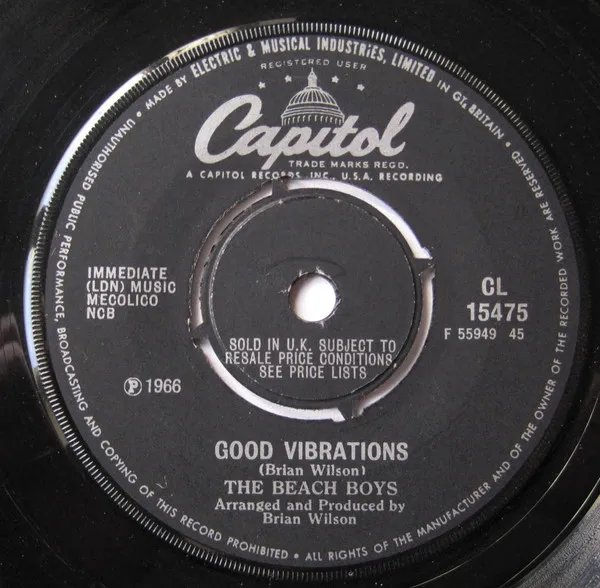
2. The Beach Boys – Good Vibrations (Capitol, 1966)
- The Record: 7” UK pressing, Capitol CL 15475 (£8)
- The Memory: If vocal harmony was introduced to Hamill in the living room, The Beach Boys pushed it into "another dimension." Brian Wilson’s monumental pocket-symphony was a mind-blowing revelation, introducing her to complex, shifting arrangements that bordered on the orchestral. While Good Vibrations represented an advanced step in her musical education, family life remained anchored in communal singing; everyone knew the words to Sloop John B, a staple of family gatherings that eventually paved the way for her deeper appreciation of Wilson’s avant-garde studio masterpieces.
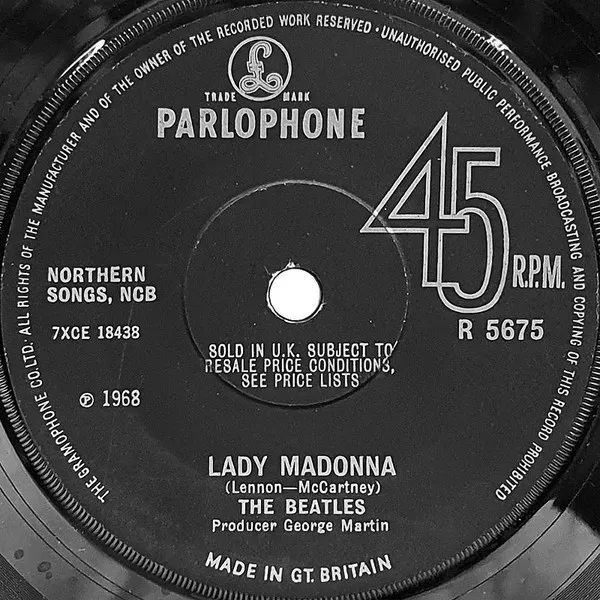
3. The Beatles – Lady Madonna (Parlophone, 1968)
- The Record: 7” UK pressing, Parlophone R 5675 (£60)
- The Memory: Music often serves as a mirror for lived experience. Following the breakdown of her parents’ marriage, Hamill’s mother returned to work, retraining to use her previous typing skills from ICI to support the family. To young Claire, her mother was the living embodiment of Lady Madonna. Concurrently, songs like Eleanor Rigby became foundational pieces in her nascent repertoire. A pivotal adolescent moment arrived during a holiday in Whitby with a neighbor and her friends. Encouraged by the friend’s guitar-playing father, a teenage Hamill stepped into a local pub, performed Eleanor Rigby, and received the rapturous, affirming applause of a captivated room.
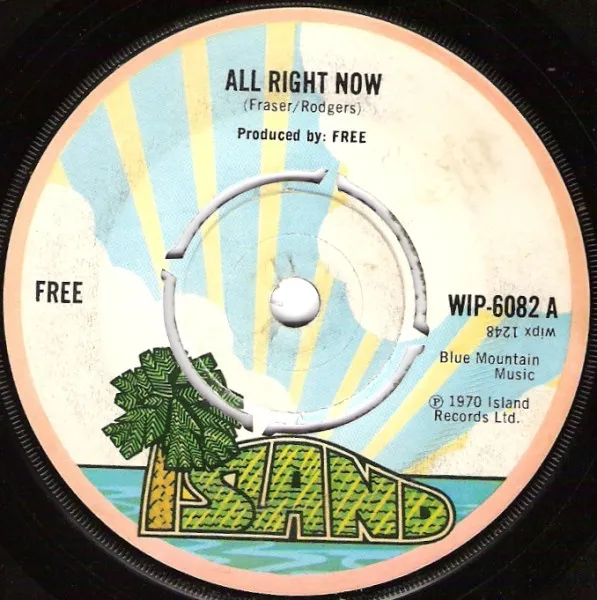
4. Free – All Right Now (Island, 1970)
- The Record: 7” UK pressing, Island WIP 6082 (£5)
- The Memory: Every generation has its defining local heroes, and for Hamill’s school peers in Teesside, Free was that band. The connection was even more pronounced because powerhouse vocalist Paul Rodgers hailed from Middlesbrough, with his mother living on the very same road as Hamill’s convent school. She recalls the chaotic stampede of students rushing to the top floor of the three-story building just to catch a glimpse of him. By age 17, Hamill found herself immersed in the London music scene, hanging out at Island Records in Basing Street with guitarist Paul Kossoff. Those quiet afternoons drinking tea with the brilliant, fragile young guitarist left a bittersweet impression on the realities of early fame.
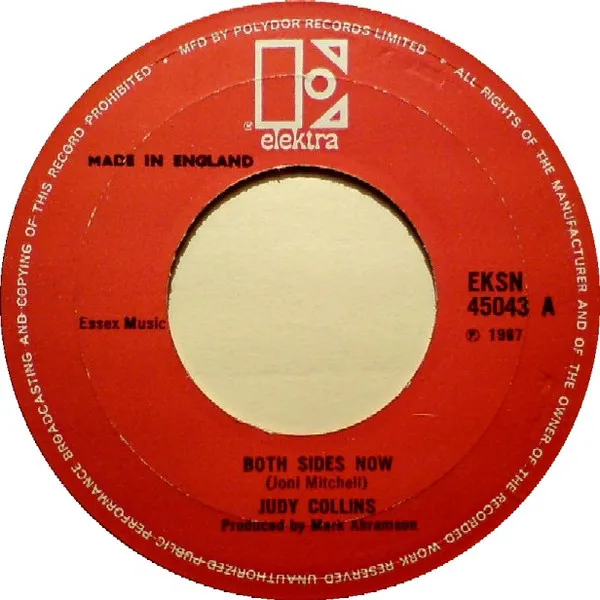
5. Judy Collins – Both Sides, Now (Elektra, 1970)
- The Record: 7” UK pressing, Elektra EKSN 45043 (£5)
- The Memory: The gentleman who had originally invited Hamill to sing in the Whitby pub eventually became her mother’s long-term partner. Blessed with an exceptional record collection, he introduced her to the songwriting genius of Joni Mitchell. Upon learning that Mitchell had penned the song Judy Collins had popularized, Hamill experienced a profound sense of artistic identity: "Now I know who I am: I’m like Joni Mitchell, because I write songs as well." Unlike the traditional, folk-heavy vocal delivery of contemporaries like Sandy Denny, Mitchell’s approach resonated deeply. Years later, that circle closed when she was formally introduced to Mitchell in David Geffen’s Los Angeles office.
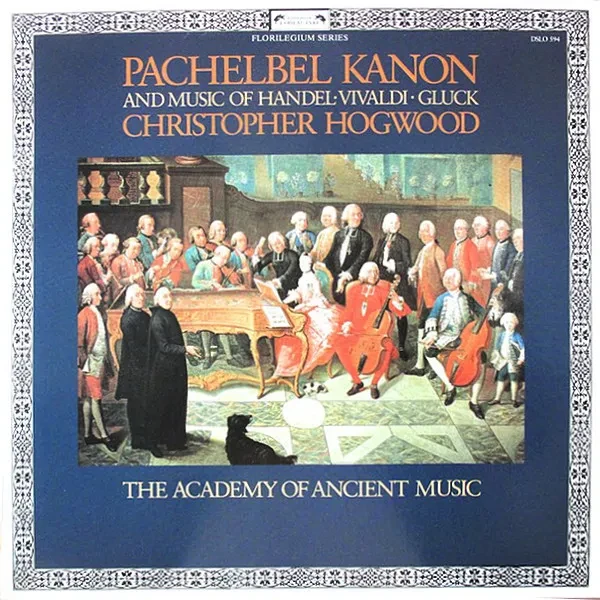
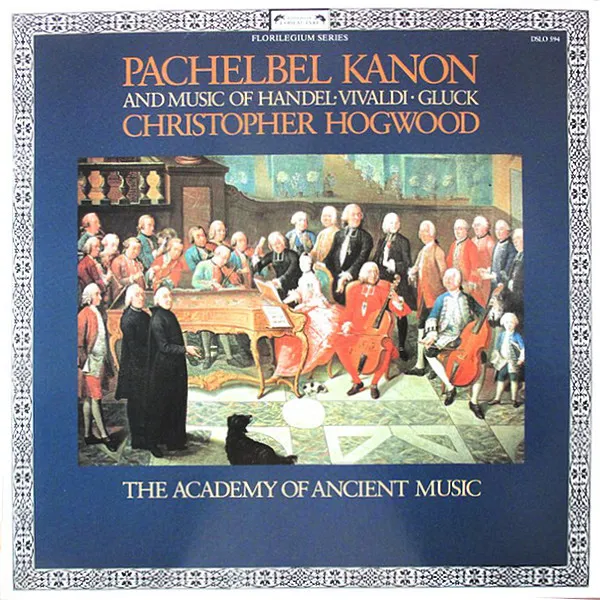
6. Academy of Ancient Music – Pachelbel’s Canon in D (L’Oiseau Lyre, 1981)
- The Record: UK LP pressing, L’Oiseau Lyre DSLO 594 (£10)
- The Memory: By the 1980s, Hamill’s career intersected with innovative television broadcasting. Her then-husband, Nick Austin, launched a pioneering satellite TV channel dedicated to new age and classical music, which aired on Channel 4 during the early morning hours. When Michael Appleton—former producer of the iconic BBC music show The Old Grey Whistle Test—compiled video footage of Emperor penguins walking in time to Pachelbel’s Canon in D, Austin commissioned Hamill to compose an original song around the visual. The resulting collaboration struck a chord with audiences, though television executives proved somewhat selective; when invited to perform on the popular Saturday morning children’s show Going Live, the BBC famously demurred, preferring the penguins to the singer.
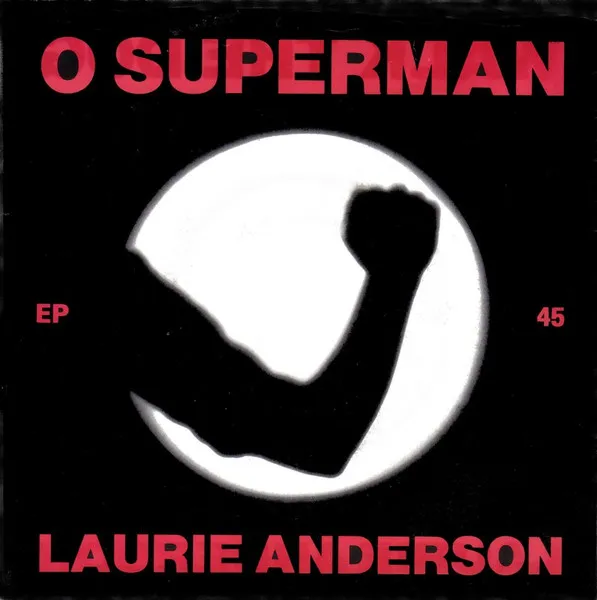
7. Laurie Anderson – O Superman (Warner Bros, 1981)
- The Record: 7” UK pressing, Warner Bros K 17870 (£5)
- The Memory: Avant-garde pop often leaves an indelible mark on fellow creators. Hamill first encountered Laurie Anderson’s mesmerizing, minimalist masterpiece on John Peel’s legendary BBC Radio 1 show. She was so captivated by its sonic textures that she borrowed Anderson’s signature breathy vocal style for her own composition, The Moon Is A Powerful Lover. Her orbit around Peel also yielded humorous social memories; she recalls being gently teased by the beloved broadcaster at a London music-industry party for being a frequent fixture on the social circuit, with Peel affectionately dubbing her a "ligger."
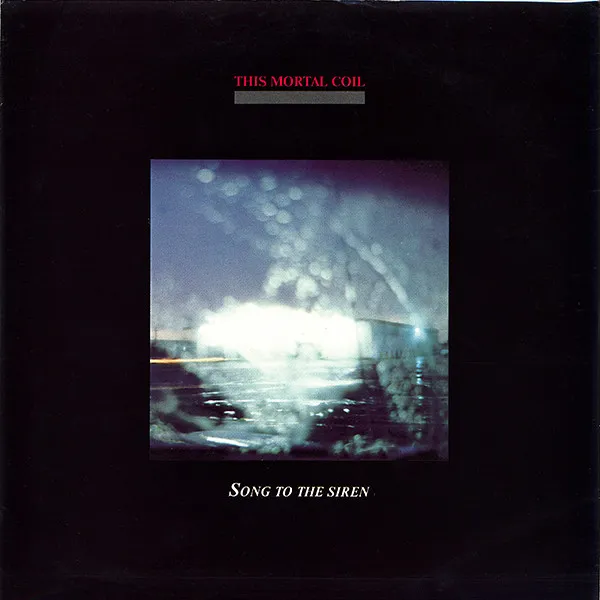
8. This Mortal Coil – Song to the Siren (4AD, 1983)
- The Record: 7” UK pressing, 4AD AD 310 (£15)
- The Memory: Elizabeth Fraser’s ethereal interpretation of Tim and Larry Beckett’s composition remains a touchstone of British alternative music. Hamill holds Fraser in the highest regard as one of Britain’s most singular vocalists. This admiration carried a personal dimension: Hamill had befriended Tim Buckley himself back in 1974 when they both performed at a club in Denver, Colorado. Reflecting on Buckley’s untimely passing alongside Paul Kossoff’s struggles, Hamill acknowledges the heavy, often tragic toll that extraordinary talent can take on sensitive artists.
9. John Williams – Rodrigo’s Concierto de Aranjuez (Sony Classical, 1984)
- The Record: UK CD pressing, Sony Classical SK 37848 (£5)
- The Memory: The creative impulse sometimes collides head-on with the legal realities of intellectual property. Having written a contemporary song structured around Joaquín Rodrigo’s breathtaking classical guitar concerto, Hamill sought to officially record and release the track. Discovering that the piece remained protected under copyright law, she penned a respectful, enthusiastic letter to Rodrigo’s daughter, who administers the estate, asking for permission to adapt the composition. The response was swift and uncompromising: an absolute refusal.
10. Seal – A Kiss From A Rose (ZTT, 1994)
- The Record: UK CD pressing, ZTT ZANG 52CD1 (£5)
- The Memory: Growing up in a household where finances were tightly stretched—surviving on a modest 50p weekly pocket money with no record player in the house—Hamill rarely bought physical records during her childhood, later receiving promotional copies once she entered the professional music industry herself. Consequently, A Kiss From A Rose holds the distinct honor of being the very first record she actively went out and purchased with her own money. She remains deeply enamored by its sophisticated structural shifts, praising its unexpected pre-chorus transitions, lush arrangement, and Seal’s transcendent vocal performance.
Supporting Context & Metrics
To contextualize the evolution of Claire Hamill’s collection, it is illuminating to observe the market valuation and format shifts of these ten historical releases:
| Artist | Title | Year | Original Format & Label | Estimated Collector Value (UK) |
|---|---|---|---|---|
| The Caravelles | You Don’t Have To Be A Baby To Cry | 1963 | 7" Vinyl (Decca) | £5 |
| The Beach Boys | Good Vibrations | 1966 | 7" Vinyl (Capitol) | £8 |
| The Beatles | Lady Madonna | 1968 | 7" Vinyl (Parlophone) | £60 |
| Free | All Right Now | 1970 | 7" Vinyl (Island) | £5 |
| Judy Collins | Both Sides, Now | 1970 | 7" Vinyl (Elektra) | £5 |
| Academy of Ancient Music | Pachelbel’s Canon in D | 1981 | LP (L’Oiseau Lyre) | £10 |
| Laurie Anderson | O Superman | 1981 | 7" Vinyl (Warner Bros) | £5 |
| This Mortal Coil | Song to the Siren | 1983 | 7" Vinyl (4AD) | £15 |
| John Williams | Rodrigo’s Concierto de Aranjuez | 1984 | Compact Disc (Sony Classical) | £5 |
| Seal | A Kiss From A Rose | 1994 | Compact Disc (ZTT) | £5 |
Note: Market valuations reflect standard UK collector pricing trends as cataloged by archivist publications such as Record Collector.
Official Statements & Industry Reflections
Reflecting on her journey through the decades, Hamill’s commentary underscores a recurring theme in the music industry: the delicate balance between commercial apparatus and genuine artistic expression. Whether recounting the protective warmth of her parents’ Teesside coffee bar, the humbling intimacy of sharing tea with Paul Kossoff in his London flat, or the bureaucratic humor of being bypassed for a troop of dancing penguins on Saturday morning television, her perspective remains refreshingly grounded.
Industry commentators and contemporaries have long noted Hamill’s unique capacity to synthesize these disparate influences—ranging from classical adaptations and avant-garde electronica to traditional British folk and West Coast pop—into her own songwriting. Her ongoing creative output demonstrates that the foundational sparks ignited by a Decca 7-inch in 1963 continue to burn brightly.
Future Outlook
As Claire Hamill looks to the future, her dedication to live performance and original composition remains undiminished. Following the release of A House Among The Trees with the Claire Hamill Band on Archway Ocean, she continues to captivate audiences who appreciate the rich heritage of classic British singer-songwriters.
Fans and collectors eager to witness her enduring stagecraft will have the opportunity to experience her live later this year, when the Claire Hamill Band takes the stage at the prestigious Nene Valley Rock Festival in September. As she bridges the gap between the golden era of vinyl collecting and modern independent release models, Hamill stands as a testament to the enduring power of a well-crafted song and the lifelong community forged through shared musical passion.