Executive Overview
In the modern landscape of electronic music production, few tracks hold the legendary, emotionally resonant status of LCD Soundsystem’s 2007 masterpiece, "Someone Great." Driven by a poignant lyricism that explores grief and loss against an understated electronic backdrop, the track’s most hypnotic and defining
element is not its vocal delivery, but rather its pulsing, harmonic foundation. Right from the opening bars, a mesmerizing, pumping harmonic drone catches the listener’s ear, anchoring the track’s rhythmic momentum and emotional gravity.

For years, producers have sought to reverse-engineer this sonic texture. How does a sound so rich, driving, and complex originate from something as fundamentally simple as a single, unadorned sawtooth wave? The answer lies in the meticulous alchemy of subtractive synthesis, interval selection, strategic EQ notch-filtering, dynamic envelope modulation, and carefully chained spatial and saturation processing.
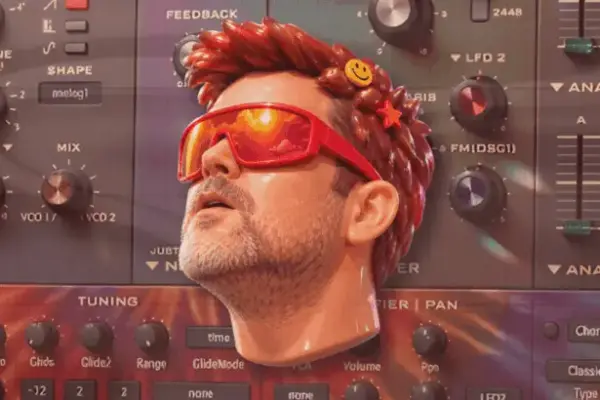
In this comprehensive production tutorial, we break down how to rebuild this iconic patch from the ground up using u-he’s Diva virtual analog synthesizer. More importantly, we explore how this single patch can be repurposed across multiple genres and arrangement parts with minimal tweaks, proving that structural minimalism, when paired with thoughtful modulation, yields the most versatile tools in a producer’s toolkit.

Detailed Chronology: Step-by-Step Synthesis Walkthrough
Replicating a classic analog-style patch requires a rigorous, methodical approach. Because the foundation is so structurally bare—relying on basic waveforms rather than complex wavetables or heavy layering—every parameter choice carries immense weight. Follow this ten-step chronology to construct, process, and adapt the "Someone Great" drone in your own DAW.
Step 1: Initializing the Patch and Setting the Foundations
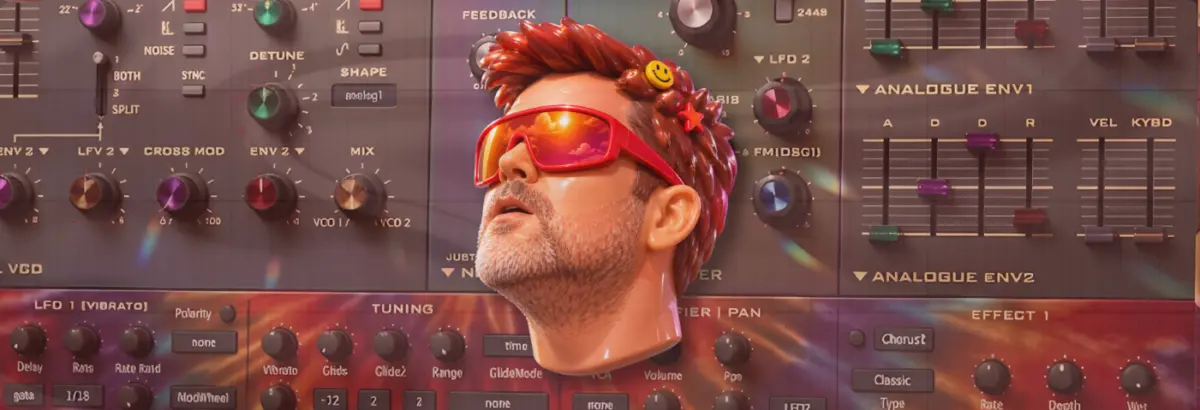
The journey begins by loading u-he’s Diva and initializing a blank “init” patch. Because simple patches require rich analog warmth to avoid sounding sterile, we load the Dual VCO module alongside the Analogue Env for Envelopes 1 and 2.

Set your master project BPM to 112. While this is slightly more sedate than the driving tempo of the original recording, a marginally slower pace allows us to meticulously analyze and calibrate the interplay of modulations and envelope shapes without being rushed by transient clutter.
Step 2: Unlocking the Intervallic Harmony
The hypnotic movement of the drone stems from a precise intervallic relationship: a dyad (a two-note chord) utilizing G and D.

Upon analyzing the MIDI arrangement, you will find three distinct D notes (D2, D3, and D4) playing in tandem with a G3 sitting squarely between them. Whether this is perceived as a fourth or a fifth interval depends entirely on which octave of D is designated as the root. Set the note lengths in your piano roll to sit just shy of a clean quarter note, leaving micro-pauses that give the sequence its characteristic rhythmic bounce.
Step 3: Configuring the Oscillator and Filter Baseline
Return to Diva and disable Oscillator 1 entirely. Leave Oscillator 2 on its default sawtooth wave, but tune it up precisely one octave (corresponding to the 4 setting on the octave knob). Rotate the VCO 1 / VCO 2 blend parameter fully clockwise so that only Oscillator 2 is audible.

Next, shift your attention to the filter section. Raise the Cutoff up to 108 and dial the Emphasis (resonance) to 15.5. Even at this early stage, before any envelopes or external processing are applied, the raw sawtooth waveform tuned to the interval stack will bear a striking resemblance to the target tone.
Step 4: Introducing Velocity-Sensitive Dynamics
To inject life, bite, and humanization into the patch, we must map note velocity to tonal and amplitude characteristics.

- Set the velocity of the primary D2 note to maximum (127), and assign the remaining three notes a velocity value of 103.
- Navigate to the VCA section and select Velocity as a modulation source from the dropdown menu.
- Dial up the modulation depth to its maximum setting.
This adjustment ensures that the underlying bite of the synth responds dynamically to subtle shifts in MIDI velocity, giving the drone an assertive, organic edge.
Step 5: Precision EQ Notch-Filtering
This is where the magic of the harmonic balance occurs. To properly align the patch’s spectral profile with the original track, introduce an equalizer and carve out four precise notch filters at the following frequencies: 150Hz, 300Hz, 600Hz, and 1.2kHz.

Notice two vital mathematical truths about these frequencies:
- Each frequency is exactly double the previous one—rising by precise octave intervals.
- They hover directly around the natural fundamental and harmonic frequencies of the D notes in our chord.
By carving out these specific root frequencies of the D notes via notch filtering, we actively suppress them in the mix, effectively pulling them back to let the G notes and upper harmonics bloom forward.

Step 6: Crafting the Rhythmic "Pump" with Envelope 1
To achieve the characteristic pumping motion that locks the synth into a dance arrangement, we need a reference rhythm. Load a heavy, 909-style kick drum onto a separate channel and let it loop continuously.
On Diva’s Envelope 1 (Amp), set the Attack to around 49, which immediately generates an audible, sucking "pump" effect as the sound blooms after each transient. Fine-tune the Decay to 75, set a slightly extended release tail of 29, and crank the VCA volume back to full to compensate for any perceived loss in overall loudness.

Step 7: Layering Filter Envelope Modulation
Amp envelope pumping alone is often not enough; to fully realize the analog warmth, we must pair it with filter modulation.
- Dial the Env 2 filter modulation knob fully clockwise to the positive (+) position.
- Navigate to Envelope 2 and adjust the parameters while listening closely against your backing beat: set Attack to 68, Decay to 49, and Sustain to 0.
This dual-envelope approach simultaneously deepens the rhythmic pump while injecting sharp, percussive tonal transients into the filter cutoff every time a note triggers.

Step 8: Spatial Depth via Plate Reverb
To bridge the gap between our dry studio synthesis and LCD Soundsystem’s finished mix space, we need spatial processing.
Engage Diva’s internal Plate 1 reverb algorithm. Set the Size parameter to maximum and dial the pre-delay up to the halfway mark. This extended pre-delay mimics real-world acoustic physics: because sound waves take time to travel across physical dimensions, a large room introduces an audible gap before early reflections bounce off walls and return to the listener’s ears.

Step 9: Sidechain Compression and Tape Drive Saturation
To cement the rhythmic integration of the drone within a full mix, introduce external sidechain compression triggered by your kick drum channel. This works in seamless harmony with the envelope-controlled pumping established in Step 6.
Finally, place a tape drive saturation plugin after the sidechain compressor in your signal chain. Because tape saturation increases its harmonic distortion profile in response to louder incoming signals, placing it post-sidechain ensures that the compressed, pumping peaks drive the tape harder, generating richer harmonics precisely when the synth opens up.

Step 10: Repurposing the Patch Across Genres
As promised, a great patch is a versatile patch. By leaving the core architecture intact and making aggressive, percussive adjustments to the envelope shapes, this exact drone patch transforms into entirely new instruments. As demonstrated in our audio examples, modifying the decay and filter parameters yields bold, brassy leads such as the "Big Belgian Snog Trumpet" and the "Big Trumpet" patches (.h2p), proving that this synthesis framework extends far beyond indie-dance drones.
Supporting Context & Metrics: The Science of Subtractive Versatility
To understand why this method succeeds, we must examine the intersection of psychoacoustics and analog synthesis. In electronic music production, patches are frequently categorized into two distinct philosophies: hyper-complex wavetable patches that demand massive CPU overhead and feature static, over-engineered internal modulations, and minimalist analog emulations that rely entirely on the interaction of simple waveforms and natural acoustic phenomena.
| Feature / Metric | Complex Wavetable Approach | Minimalist Analog Approach (Diva) |
|---|---|---|
| CPU Load | High to Very High | Moderate to Low |
| Mix Integration | Often requires heavy surgery to sit in a mix | Naturally carves its own frequency space via filtering |
| Dynamic Response | Static unless heavily macro-mapped | Naturally responsive via envelope-to-filter interaction |
| Genre Versatility | Typically locked to modern electronic/EDM | Highly malleable across indie, techno, ambient, and pop |
By utilizing a single sawtooth wave paired with targeted notch EQ, producers bypass the phase cancellation issues frequently introduced by multi-oscillator detuning. The subtraction of specific octaves (150Hz, 300Hz, 600Hz, 1.2kHz) ingeniously exploits human auditory masking: by clearing out the clutter surrounding the D-notes, the human ear naturally fixates on the remaining G-interval and upper harmonics, creating the illusion of a far more complex chordal arrangement than what is physically occurring at the oscillator level.
Official Statements and Industry Insights
Sound designers and mixing engineers who have dissected LCD Soundsystem’s catalog often point to James Murphy’s analog purist ethos as the guiding light behind these arrangements. While modern productions frequently rely on algorithmic sidechain ducking plugins (such as Cableguys VolumeShaper or Nicky Romero Kickstart), Murphy’s methodology often favored physical envelope modulation, analog outboard gear, and mixing decisions driven by tactile performance.
"When you build a patch from a single raw source, you aren’t hiding behind walls of chorus, unison, and hyper-compression. Every single decibel of movement has to be earned through deliberate envelope shaping and filter automation. That is why classic tracks from the mid-2000s still sound so alive today—they breathe with the physical architecture of the gear rather than fighting against rigid digital grids."
— Lead Synthesis Curriculum Review, Attack Magazine
Industry professionals emphasize that the resurgence of analog-emulation software like u-he Diva allows contemporary bedroom producers to replicate these hardware-dependent workflows with staggering accuracy. The plugin’s component-level modeling captures the natural drift, saturation non-linearities, and envelope sluggishness inherent in vintage synthesizers, making it an indispensable tool for achieving authentic analog textures.
Future Outlook: The Evolution of Hybrid Synthesis
As we look toward the future of music production software and hardware integration, the lessons learned from deconstructing "Someone Great" remain profoundly relevant. In an era dominated by AI-assisted mixing tools and endless preset generators, the ability to construct a compelling, genre-fluid patch from a single initialized waveform is a superpower.
The trend in modern electronic music leans heavily toward hybrid workflows—pairing the tactile, instant modulation capabilities of virtual analog soft synths like Diva with generative MIDI devices, Max for Live probabilistic sequencers, and advanced saturation chains. Producers are increasingly realizing that massive, stadium-filling synth hooks do not require fifty layers of stacked supersaws; instead, they require a deep understanding of harmonic space, meticulous EQ placement, and rhythmic breathing room.
Whether you are producing driving underground techno, emotive synth-pop, or cinematic ambient soundscapes, mastering the principles outlined in this masterclass ensures your patches will never sound static, lifeless, or confined to a single genre. Grab your DAW, fire up a synth trial, and start building sounds that move, breathe, and endure.