Executive Overview
What makes a piece of classical music definitively "Russian"? Is it the incorporation of an authentic folk tune, the solemn resonance of an Orthodox church melody, or simply the geographic birthplace of the composer?
These questions stood at the center of a fierce intellectual debate in the late 19th century—one that continues to challenge how musicologists, performers, and audiences understand national identity in art. As classical music in Russia expanded beyond the exclusive salons of the imperial court into public concert halls and newly established conservatories, its leading practitioners faced a critical dilemma: How could they forge an independent, native musical voice while building upon the established theoretical foundations of Western European musical culture?
This profound artistic struggle is exemplified by the relationship between the visionary composer, theorist, and educator Sergei Taneyev (1856–1915) and his revered teacher, mentor, and sparring partner, Pyotr Ilyich Tchaikovsky (1840–1893). As the classical music world approaches the 170th anniversary of Taneyev’s birth in November 2026, their historic 1880 correspondence offers a vital lens through which to examine a timeless question: How much does a national identity label actually tell us about a work of art?
Taneyev argued that Russian composers needed a rigorous pedagogical program—rooted in counterpoint and the analytical study of historical European models—to elevate native folk melodies into complex masterworks. Tchaikovsky, by contrast, resisted rigid blueprints, viewing European music not as a singular trunk of a tree, but as a diverse garden where traditions naturally cross-pollinate. Despite their differences, both masters demonstrated that the creation of a distinct national voice was never an insular project. Rather, Russian classical music was born from a dynamic, transnational exchange that bridged St. Petersburg, Moscow, Paris, and beyond.
Detailed Chronology: The Evolution of Russian Classical Music (1850–1915)
To understand the urgency of Taneyev and Tchaikovsky’s debate, one must trace the rapid institutional and artistic transformation of Russia’s musical landscape during the latter half of the 19th century.
- 1862: The founding of the St. Petersburg Conservatory by Anton Rubinstein marks a turning point in professional music education in Russia, introducing structured curricula modeled on European conservatories.
- 1866: The Moscow Conservatory opens its doors under the leadership of Nikolai Rubinstein, eventually becoming a bastion of rigorous academic composition and counterpoint training.
- 1880: Sergei Taneyev and Pyotr Ilyich Tchaikovsky engage in their famous epistolary debate regarding the future trajectory of Russian musical composition and its relationship to Western European traditions.
- 1884: Taneyev completes his landmark choral and orchestral cantata, John of Damascus, successfully merging Russian sacred traditions with advanced European counterpoint.
- 1885–1889: Taneyev serves as the director of the Moscow Conservatory, solidifying his reputation as a master pedagogue who would later shape the minds of musical titans such as Sergei Rachmaninoff and Alexander Scriabin.
- 1893: The sudden passing of Pyotr Ilyich Tchaikovsky leaves a profound void in the Russian musical establishment, prompting Taneyev and his contemporaries to reflect deeply on Tchaikovsky’s artistic legacy.
- 1915: Sergei Taneyev passes away, leaving behind a monumental legacy of theoretical writings, chamber works, and pedagogical influence that bridged the 19th-century nationalist debates with the dawn of 20th-century modernism.
Supporting Context & Metrics: The Mechanics of the Tchaikovsky-Taneyev Debate
The Institutional Expansion of Russian Music
Prior to the 1860s, classical music in Russia was largely concentrated within the aristocratic enclaves of the imperial court. However, the launch of the St. Petersburg and Moscow conservatories democratized access to formal training, sparking intense debates over pedagogy.
Two distinct philosophies emerged:
- The Nationalist Vanguard ("The Five"): Comprising César Cui, Aleksandr Borodin, Mily Balakirev, Modest Mussorgsky, and Nikolai Rimsky-Korsakov, this group championed a radical break from European academicism, drawing directly on Russian history, folklore, and indigenous scales.
- The Academic Realists: Represented by figures like Tchaikovsky and Taneyev, this faction valued rigorous conservatory training while striving to imbue sophisticated European forms with a distinct Russian soul.
The Botanical Metaphor: Trees vs. Gardens
The ideological divide between teacher and pupil was famously articulated through botanical imagery in their 1880 letters. Taneyev conceptualized European music as a massive, centuries-old tree whose roots and trunk had grown organically from folk and church melodies. Russian melodies, in his view, were separate seeds from which an entirely new tree might be cultivated. Crucially, Taneyev did not advocate for isolationism; he believed that Russian composers must study the historical arboriculture of Europe—specifically Bachian counterpoint—to successfully cultivate their own arboreal tradition.
Tchaikovsky challenged this linear model. Rejecting the notion of European music as a singular, monolithic tree, he reframed the continent as a vibrant garden where French, German, and Italian traditions grew side-by-side. For Tchaikovsky, Russian music did not need to be planted in an isolated plot outside Europe; it had already taken root in shared musical soil. He heard distinct national accents in French composers like Jules Massenet and Georges Bizet, just as Taneyev heard unmistakably Russian contours in Tchaikovsky’s own symphonic and operatic works.
Official Statements and Historical Perspectives
The intellectual rigor of the period is captured in the surviving correspondences and academic analyses of the era. Musicologists studying the correspondence between Tchaikovsky and his young protégé note that their arguments were never merely academic; they were existential explorations of cultural belonging.
"Why treat European music as a single tree? French, German, and Italian music already possessed distinct characters. Music could belong to a wider European culture and still sound intensely, unmistakably Russian."
— Derived from Pyotr Ilyich Tchaikovsky’s 1880 Epistolary Defenses
Taneyev’s pedagogical stance emphasized that technical mastery—specifically the art of counterpoint—was the ultimate guarantor of artistic independence. By mastering the mechanisms of voice-leading perfected by Johann Sebastian Bach, a Russian composer could elevate native material from simple novelty to universal art.
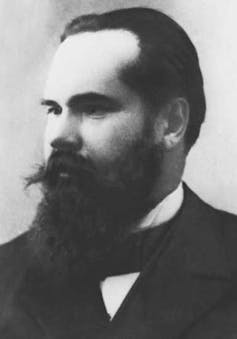
"Studying another culture’s achievements is not an act of surrender; it is the ultimate tool for self-discovery. A national musical voice does not emerge from ignorance of the outside world, but through rigorous international exchange."
— Core Philosophy of Sergei Taneyev (Moscow Conservatory Archives)
Modern musicological research underscores that even the most fervent nationalists of the 19th century relied heavily on European harmonic and orchestral techniques. The debate was therefore not about whether to use European tools, but how to ethically and artistically integrate them without diluting indigenous identity.
Future Outlook: Redefining National Identity in Modern Classical Music
As the global classical music community looks toward the 170th anniversary of Sergei Taneyev’s birth in November 2026, the relevance of his debate with Tchaikovsky extends far beyond music history textbooks. In an increasingly interconnected global society, the tension between local identity and international influence remains as potent as ever.
Contemporary composers and performers continue to grapple with the legacy of nationalism. When works by Tchaikovsky, Taneyev, Rachmaninoff, or Scriabin are performed on international stages today, they carry the weight of geopolitical and cultural symbolism. Yet, as the historical record proves, attempting to box these masterpieces into rigid national categories oversimplifies their creation.
Taneyev’s life and career serve as a enduring reminder that Russian classical music was never a closed, hermetic tradition. Whether it was Taneyev playing Tchaikovsky’s piano concerto in the Paris apartment of Camille Saint-Saëns in 1876, or fusing Orthodox sacred choral traditions with Germanic counterpoint in John of Damascus, art has always thrived at the borders of cultural exchange.
Ultimately, the argument between a master and his pupil yields a shared, timeless lesson for the modern world: true artistic identity is never forged in isolation. It is through the rigorous, respectful engagement with the wider world that a culture finds its own truest and most resonant voice.