Executive Overview
In an era defined by hyper-connectivity, algorithmic exhaustion, and the relentless fragmentation of human attention, a quiet counter-movement is taking root across Europe’s independent music capitals. At the vanguard of this meditative resistance is Silent Songs, an uncompromising boutique record label, publisher, and live-curation platform. Founded on the radical premise that modern listeners are starved for quietude, introspection, and unhurried space, the label champions contemporary classical and ambient music designed to transform the mundane into the transcendent.
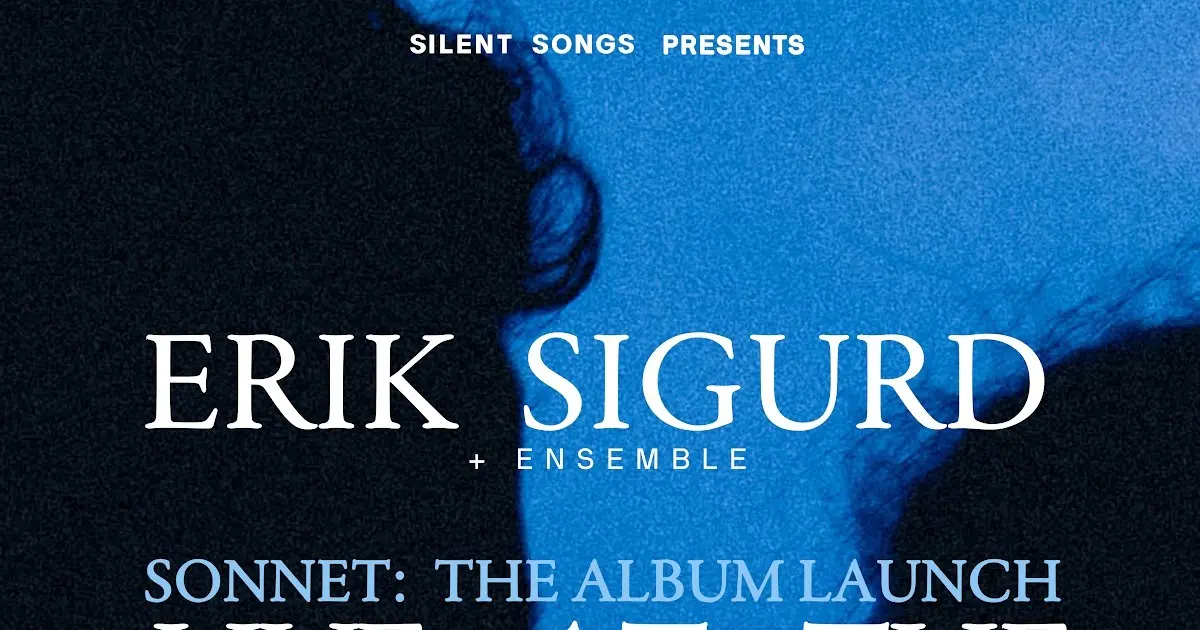
Nowhere is this ethos more vividly embodied than in the upcoming London debut of British-Swedish composer Erik Sigurd—the evocative, cinematic pseudonym of acclaimed jazz and classical pianist Leif Kaner-Lidström. Marking the release of his highly anticipated debut album, Sonnet, Sigurd is set to perform a landmark live concert on November 13, 2026, at The Old Church in Stoke Newington.
This performance is far more than a standard album release party; it is a masterclass in spatial sound design and collaborative composition. The evening will be structurally divided into two distinct sonic journeys. The first half will feature Sigurd at the solo piano, interspersing his own deeply intimate compositions with works by the foundational pianistic influences that shaped his artistic voice. The second half will expand into a rich, multi-textured landscape, as Sigurd is joined by an elite ensemble comprising a string quartet (Eleonora Consta, Roman Lytwyniw, Luba Tunnicliffe, and Zachary Owen), saxophonist Kaidi Akinnibi, double bassist Sam Becker, and harpist Oliver Wass. Together, they will perform Sonnet in its entirety—a sweeping 14-movement chamber work that blurs the boundaries between contemporary classical, ambient minimalism, and improvised chamber jazz.
This report provides a comprehensive examination of the event, the artist, the overarching philosophy of the Silent Songs label, and the cultural necessity of intentional listening in the twenty-first century.
Detailed Chronology & Event Architecture
The Genesis of a Modern Classical Milestone
The journey toward the Sonnet live premiere has been years in the making. While Leif Kaner-Lidström is a ubiquitous figure in the contemporary European jazz and classical circuits—known widely for his work with the exploratory Levitation Orchestra and the dynamic Jess Gillam Band—his work under the Erik Sigurd moniker represents a deliberate inward turn.
For Kaner-Lidström, the Erik Sigurd project was born out of a desire to step outside the kinetic energy of large-scale jazz ensembles and delve into the psychological sanctuary of the solo piano. Over several years of nocturnal writing and spontaneous improvisation, a collection of pieces began to cohere around a central theme: the translation of poetic structures into musical form. This culminated in the recording of Sonnet, an album scheduled for official release on November 12, 2026.
Recognizing the cinematic depth and emotional resonance of the material, the curation team at Silent Songs immediately identified the project as a cornerstone release for the label. Plans were swiftly put into motion to mount a live experience that would honor the intricacies of the album without compromise.
The Live Experience: November 13, 2026
Set within the historic, resonant stone walls of The Old Church in Stoke Newington—London’s only surviving Georgian parish church, renowned for its pristine acoustics and intimate atmosphere—the concert is meticulously structured to guide the audience through an intentional emotional arc.
- Act I: Introspection and Influence
The evening opens in absolute stillness. Stripped of electronic mediation and amplification artifice, Erik Sigurd will take to the piano for a solo set. This first half is designed as an intimate dialogue between past and present. Sigurd will perform selections from Sonnet alongside carefully curated pieces by the classical and modern pianistic masters who have informed his stylistic evolution. This segment highlights the tactile nature of the instrument—the hammer hitting the string, the resonant decay of the soundboard, and the intentional use of negative space. - Act II: The 14-Movement Chamber Journey
Following a brief intermission, the spatial dimensions of the concert will expand dramatically. Sigurd will be joined on stage by a stellar cohort of London’s finest contemporary chamber musicians. The integration of a traditional string quartet (Consta, Lytwyniw, Tunnicliffe, Owen) with the earthy resonance of Sam Becker’s double bass, the ethereal plucking of Oliver Wass’s harp, and the lyrical, warm cadences of Kaidi Akinnibi’s saxophone creates a porous, breathing ensemble. Together, they will navigate the 14 movements of Sonnet, a suite that treats silence not merely as the absence of sound, but as an active, structural participant in the composition.
Supporting Context & Cultural Metrics
The Counter-Culture of Slowness: The Silent Songs Manifesto
To fully understand the weight of Erik Sigurd’s Sonnet, one must examine the philosophical bedrock of its publisher, Silent Songs. In an age dominated by TikTok-driven micro-tracks, algorithmic playlisting, and the commodification of background music, Silent Songs has staked its reputation on uncompromising depth.
The label’s manifesto reads as both a cultural critique and a restorative invitation:

"There was a time when you could sit in silence without reaching for your phone, when you looked forward to long car rides for the space to think, when you would listen to an album from start to finish. We find the songs that make ordinary moments feel transcendent."
This ethos addresses a growing neurological and cultural fatigue. Modern urban life subjects the human brain to an unprecedented barrage of stimuli. In response, audiences are increasingly seeking out genres that offer cognitive sanctuary: contemporary classical, neoclassical ambient, and neo-acoustic music. By curating live environments that banish distractions and encourage deep listening, Silent Songs is pioneering a new template for the modern concert-going experience.
The Artist Behind the Moniker: Leif Kaner-Lidström
While Erik Sigurd represents the meditative, inward-looking solo practitioner, Leif Kaner-Lidström’s musical footprint is remarkably diverse. A composer, arranger, and pianist of exceptional versatility, Kaner-Lidström bridges the often-rigid divide between jazz improvisation and classical rigor.
- The Levitation Orchestra: As a core contributor to this London-based collective, Kaner-Lidström has helped redefine contemporary spiritual jazz, blending orchestral arrangements with free-flowing improvisation and expansive communal energy.
- The Jess Gillam Band: His collaborations with saxophonist Jess Gillam showcase his ability to adapt his pianistic sensibilities to vibrant, cross-genre crossover projects that challenge traditional concert-hall boundaries.
- The Erik Sigurd Project: Operating under his Swedish-British heritage, the Sigurd persona allows Kaner-Lidström to strip away the pyrotechnics of modern jazz in favor of stark emotional honesty, impressionistic harmonies, and a deep engagement with acoustic space.
Official Statements & Industry Perspectives
In the lead-up to the album release and live premiere, industry insiders and cultural commentators have increasingly noted the shift toward meditative, acoustic-driven performance spaces in London’s independent music sector.
A spokesperson for Silent Songs reflected on the partnership with Kaner-Lidström:
"In Erik Sigurd, we found an artist who understands that music does not need to shout to be heard. Sonnet is an album built on restraint, nuance, and emotional architecture. Bringing this music to life at The Old Church is not just about launching a record; it is about reclaiming the sacred space of shared, quiet attention in a noisy world."
Musicologists studying the current neoclassical boom point to artists like Sigurd as vital agents in bridging the generational gap between traditional classical audiences and younger listeners raised on ambient electronic music. By maintaining classical rigor while embracing the spaciousness and textural warmth of ambient music, projects like Sonnet offer a universally accessible point of entry into complex, long-form listening.
Future Outlook & Industry Implications
As the date for the Stoke Newington premiere rapidly approaches, the cultural reverberations of Erik Sigurd’s Sonnet extend far beyond a single night in November 2026.
- A Blueprint for Independent Curation: The success of the Silent Songs model points toward a sustainable future for independent labels. By focusing on immersive, place-based live experiences rather than relying solely on streaming revenue, labels can cultivate deeply loyal communities of listeners who view music as an intentional lifestyle choice rather than disposable background noise.
- The Evolution of Chamber Music: The hybridization of string quartets, solo piano, harp, double bass, and jazz-informed saxophone seen in Sigurd’s 14-movement suite demonstrates the porous nature of twenty-first-century composition. Expect to see more contemporary artists dismantling genre silos to create hybrid chamber works that appeal simultaneously to jazz aficionados, classical purists, and ambient enthusiasts.
- The Reclamation of Attention: Ultimately, the movement championed by Silent Songs and artists like Erik Sigurd speaks to a profound human need. As artificial intelligence and algorithmic curation threaten to homogenize creative output, the deliberate cultivation of silence, acoustic purity, and human collaboration stands as a vital act of cultural preservation.
Tickets for the November 13, 2026 performance at The Old Church are available via Dice. For listeners seeking a sanctuary from the relentless pace of modern life, Erik Sigurd’s Sonnet promises to be one of the most essential artistic statements of the year.