Executive Overview
In the restless landscape of modern global music, true innovation rarely arrives through the invention of entirely new sounds; rather, it emerges when artists treat centuries-old traditions not as museum artifacts, but as raw, volatile materials waiting to be detonated. Enter LEENALCHI, a seven-piece powerhouse hailing from Seoul, South Korea, who have seized the traditional art of pansori—a sacred, narrative-driven vocal genre once performed exclusively by a lone singer and a single barrel drummer—and reconstructed it into a high-octane, bass-heavy, punk-infused phenomenon.
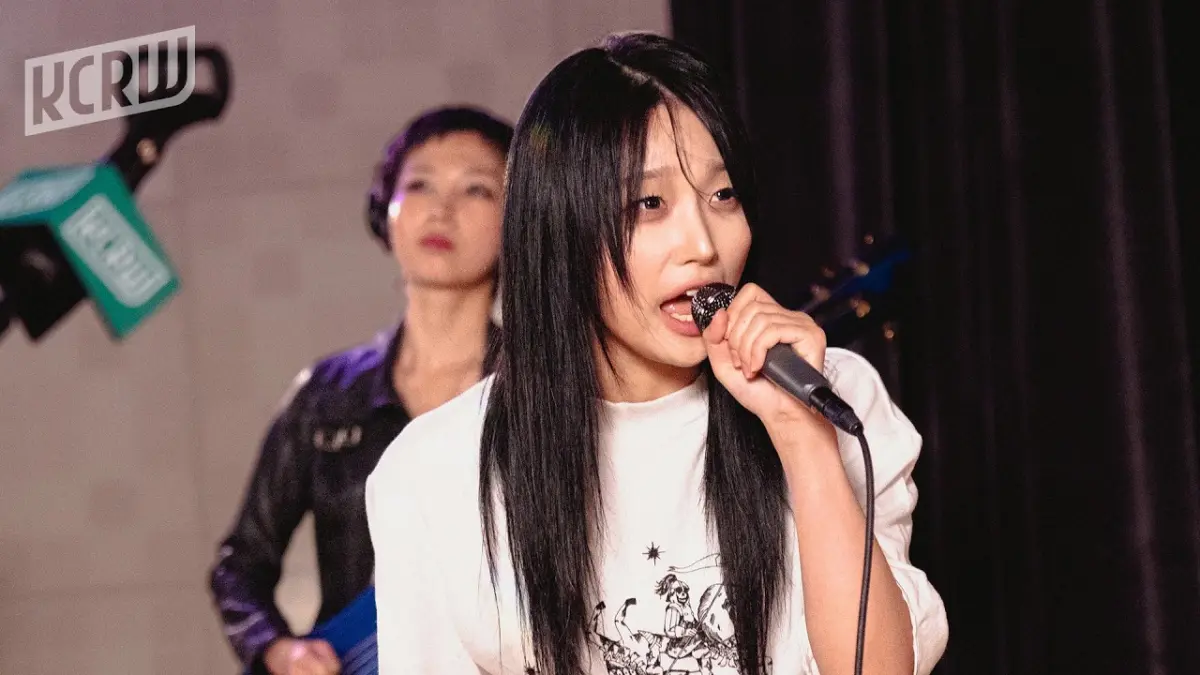
At the center of this cultural collision is "Crying Softshell Turtle," a standout track from their breakthrough 2020 conceptual album Sugungga. During a blistering live session for the renowned public radio station KCRW, LEENALCHI demonstrated precisely why they are currently one of the most vital acts crossing international borders. Reimagining an 18th-century royal court drama involving a desperate aquatic soldier, an ailing Dragon King, and a quick-witted rabbit, the band merges traditional Korean vocal pyrotechnics with the subterranean thump of dual electric basses and relentless, driving percussion.
Led by visionary bassist Jang Young Gyu—whose cinematic sensibilities have previously shaped the sonic landscapes of blockbuster Korean films such as Train to Busan and The Wailing—LEENALCHI is on the precipice of a massive international breakthrough. Following a pivotal signing to David Byrne’s legendary world-music incubator, Luaka Bop, and the summer release of their EP Here Comes That Crow, the band is officially setting the stage for a long-overdue global vinyl and digital reissue of Sugungga on October 2. This milestone release serves as the launchpad for an extensive, highly anticipated fall tour spanning the United States, before leaping across the Atlantic to conquer stages in Europe and the United Kingdom.
By stripping away conventional instrumentation and embracing a stripped-down, rhythm-first philosophy, LEENALCHI is not merely preserving Korean heritage—they are arming it with a modern sonic arsenal designed to captivate audiences worldwide.
Detailed Chronology
To understand the meteoric rise of LEENALCHI, one must trace a timeline that stretches from the dusty royal courts of late-Joseon Dynasty Korea to the hyper-modern recording studios of Seoul, and finally to the global stages of contemporary tastemakers.
The Roots of Sugungga (18th Century – 2020)
The narrative foundation of LEENALCHI’s masterwork lies in Sugungga, one of the five surviving canonical pieces of traditional pansori repertoire. Originating in the 18th century, the epic is an elaborate, allegorical satire. The plot centers on a powerful Dragon King of the underwater realm who falls deathly ill. His royal physicians declare that the only cure is the fresh liver of a land-dwelling rabbit. A loyal softshell turtle volunteers to venture onto dry land, locate a rabbit, and trick the creature into returning to the ocean palace.
Once the turtle captures the rabbit, however, the tables turn. Using his wits, the rabbit manages to convince the gullible underwater monarch that he has accidentally left his magical liver hidden in the forest. Upon returning to dry land, the rabbit escapes, leaving the royal court empty-handed and humiliated. Historically, this tale functioned as political satire, poking fun at the aristocracy while highlighting the struggles of ordinary subjects.
For centuries, pansori masters performed this epic through sori (singing) and aniri (narrative dialogue), backed solely by a buk (barrel drum). In 2020, Jang Young Gyu and his collaborators looked at this ancient framework and decided to strip it to its barest essentials: voice, bass, and drums. The resulting self-produced album, Sugungga—released quietly during the height of the global pandemic—became an unexpected domestic and critical sensation in South Korea, proving that ancient storytelling could thrive in modern dance clubs and indie rock spaces.
The Breakthrough and the KCRW Session (2020–2024)
As travel restrictions eased and the world reopened to live performance, LEENALCHI began exporting their hypnotic live show. Their appearance on KCRW’s iconic live sessions series captured the band at the height of their powers.
Midway through "Crying Softshell Turtle," the performance hits a fever pitch. The lyrics explicitly evoke Korean court speech through deeply honorific registers used by a low-ranking subject addressing a monarch: "Officer Turtle, weeping, humbly says to the king." This phrase echoes three distinct times throughout the track, each iteration escalating the urgency of the turtle’s plea. He begs the Dragon King for permission to slice open the captured rabbit’s belly before the clever creature can talk its way out of execution.
Rather than relying on smooth, Western-style harmonies, the four pansori-trained vocalists—Park Soo Bum, Choi Su In, Ra Seo Jin, and Ahn Yi Ho—trade rapid-fire lines over a tense, punk-edged instrumental break. Bassists Jang Young Gyu and Ejae lock into a synchronized, subterranean groove underneath drummer Oh Hyung Suk’s crisp, driving percussion. The tension peaks as the vocalists slip effortlessly into pansori’s signature guttural, high-pitched vocal delivery, embodying the frenzied turtle and the swaggering rabbit. In a brilliant denouement, the rabbit delivers the final, defiant blow: "You will find nothing but dung."
The Global Expansion: Luaka Bop and the Fall Tour (2024)
The momentum culminated in a major career milestone when LEENALCHI inked a partnership with Luaka Bop, the influential boutique label founded by Talking Heads frontman David Byrne. This alliance positioned the band shoulder-to-shoulder with boundary-pushing global artists who refuse to neatly fit into regional genres.
Following the June release of their evocative EP, Here Comes That Crow, the band’s schedule for the remainder of the year solidified into a relentless global campaign. October 2 marks the official worldwide release of Sugungga, making the album widely available on vinyl and streaming platforms globally for the first time in an optimized format.
This release immediately kicks off a high-profile fall tour. The itinerary features extensive dates across the United States throughout October, followed by a mid-November crossing into Europe. The tour’s grand finale lands in the United Kingdom, where LEENALCHI will bring their electrifying stage show to audiences in Dublin, London, Bristol, Leeds, and Manchester, sealing their status as a genuine international touring force.
Supporting Context & Metrics
To fully grasp the magnitude of LEENALCHI’s cultural footprint, it is essential to examine the mechanics of pansori, the pedigree of the band members, and the shifting paradigms of the global music marketplace.
The Architecture of Pansori in the 21st Century
Recognized by UNESCO as a Masterpiece of the Oral and Intangible Heritage of Humanity, pansori is an intensely demanding vocal discipline. Trainees spend decades conditioning their vocal cords, often practicing near waterfalls or in isolated environments until their voices develop a characteristic rasp—a textured, gravelly resonance known as suri-seong (eagle voice). This technique allows vocalists to project across large spaces without amplification, shifting seamlessly between speech, song, and dramatic acting.
LEENALCHI’s radical innovation was substituting the traditional buk drum with a modern rhythm section while multiplying the vocal front line. By deploying four distinct pansori vocalists instead of one, the band creates a dynamic choral interplay that resembles a theatrical Greek chorus more than a traditional folk ensemble.
The Mastermind: Jang Young Gyu’s Cinematic Pedigree
At the helm of LEENALCHI is bassist and composer Jang Young Gyu, whose fingerprints are all over contemporary Korean arts and culture. Before forming LEENALCHI, Jang built a formidable reputation as one of South Korea’s most sought-after film composers. His genre-defining scores for Na Hong-jin’s psychological horror masterwork The Wailing and Yeon Sang-ho’s international zombie blockbuster Train to Busan proved his unique ability to generate tension, atmosphere, and rhythmic drive using unconventional instrumentation.
This cinematic background is profoundly evident in LEENALCHI’s music. Songs are treated as narrative scripts; every bassline acts as a character’s forward momentum, and every drum fill signals a plot twist. The addition of Ejae on a second bass guitar creates a thick, rolling low-end frequency that functions simultaneously as a melodic lead and a rhythmic anchor, bypassing the need for standard electric guitars or keyboards.
Global Market Metrics and the Rise of "K-Indie"
While the global conversation regarding South Korean music has been dominated by the juggernaut of K-Pop, a vibrant parallel ecosystem—often referred to as "K-Indie" or alternative Korean music—has been quietly expanding its reach. According to recent international music market analyses, listeners outside of Asia are increasingly seeking out genre-fluid, culturally distinct acts that offer an authentic alternative to mass-produced pop music.
LEENALCHI’s partnership with Luaka Bop places them in an elite lineage of globally minded acts. By bridging the gap between traditional heritage arts and avant-garde post-punk minimalism, the band occupies a rare commercial and artistic sweet spot: complex enough to satisfy ethnomusicologists, yet aggressive and danceable enough to pack underground rock clubs from Brooklyn to Berlin.
Official Statements
The philosophy driving LEENALCHI’s unique artistic vision is rooted in a desire to democratize traditional art forms, stripping away academic elitism and replacing it with visceral energy.
Reflecting on the adaptation of ancient texts for modern listeners, the collective has frequently emphasized that pansori was never meant to be treated as a fragile museum piece. In historical contexts, pansori performers functioned much like modern stand-up comedians, street-theater actors, and political commentators—engaging rowdy marketplace crowds with bawdy humor, sharp social critique, and gripping suspense.
Speaking on the minimalist instrumentation that defines the band’s core sound, founder and musical director Jang Young Gyu has noted that removing harmonic instruments like guitars and keyboards forced the ensemble to focus entirely on the primal interplay between human breath, vocal texture, and low-end bass frequencies. "When you take away everything except the voice and the rhythm," Jang explains, "you realize how much emotional weight can be carried by a single syllable delivered with the right pressure and timing."
Luaka Bop echoed this sentiment upon signing the band, releasing a statement praising LEENALCHI for creating "a sound that feels entirely ancient and violently futuristic all at once." The label emphasized that the global reissue of Sugungga is designed to introduce international listeners to a masterclass in narrative tension, noting that language barriers instantly dissolve the moment the band’s twin-bass groove and high-pitched vocal gymnastics take hold.
Future Outlook
As LEENALCHI stands on the threshold of their worldwide Sugungga release and subsequent international tour, the horizon looks remarkably bright, albeit demanding.
The immediate future will test whether a band performing entirely in Korean, utilizing centuries-old narrative forms rooted in classical mythology, can successfully capture the imaginations of mainstream Western festival-goers and indie-rock devotees. However, early indicators from their KCRW session, critical acclaim for Here Comes That Crow, and the curatorial backing of Luaka Bop suggest that the cultural climate has never been more welcoming to such uncompromised cross-cultural pollination.
Looking further ahead, LEENALCHI’s success opens vital doors for other traditional Korean artists. By proving that indigenous performance arts can be successfully modernized without losing their cultural soul, the band has established a viable blueprint for global cultural export that relies on artistic authenticity rather than corporate manufacturing.
For audiences fortunate enough to catch them live during their upcoming US and European dates—culminating in their late-autumn UK run through Dublin, London, Bristol, Leeds, and Manchester—the experience promises to be transformative. In an era dominated by hyper-processed digital audio and fleeting viral trends, LEENALCHI offers something refreshingly elemental: human breath, thundering bass, and stories that have survived centuries because they speak to the very core of what it means to be alive, desperate, and remarkably clever in the face of danger.