Executive Overview
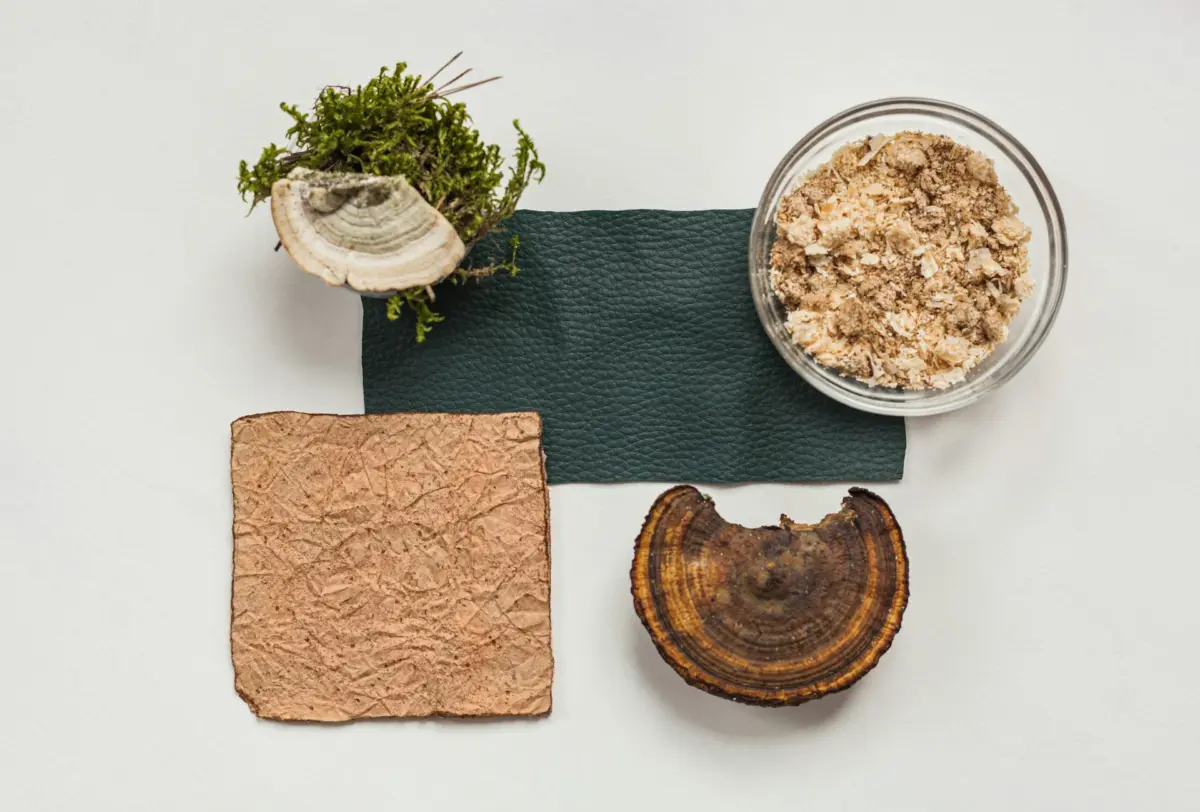
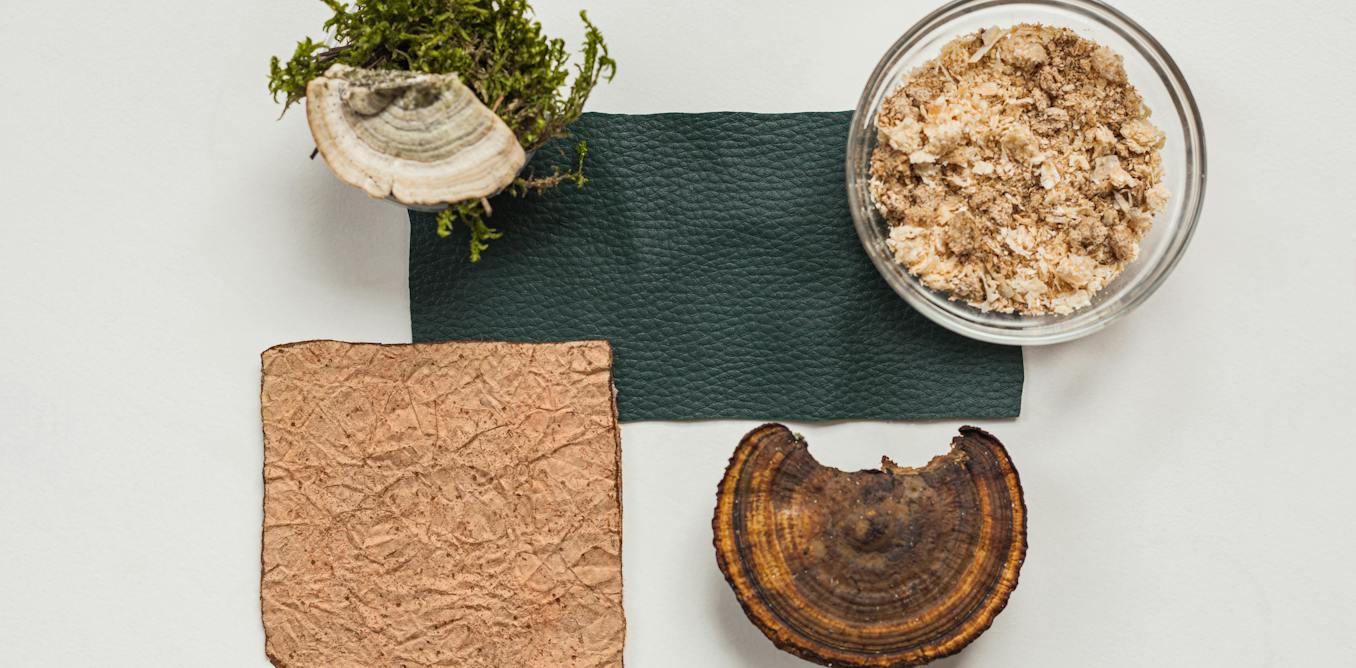
Step onto the floor of any international fashion exhibition, and you will be met with a vision of a remarkably futuristic wardrobe. High-concept garments grown from fungi mycelium, dresses spun from bacterial cellulose, and accessories crafted from agricultural waste are routinely showcased as the undisputed saviors of an industry buckling under its own ecological footprint. Touted as the definitive next generation of sustainable textiles, these biofabricated materials promise to phase out environmentally taxing staples like bovine leather and petroleum-derived polyester.
Yet, step off the exhibition floor, walk into a major high-street retailer, and open almost any consumer’s wardrobe. The reality is starkly, stubbornly conventional. The dominant fibers remain precisely what they have been for decades: cotton, polyester, wool, and leather.
This creates a glaring disconnect—a yawning chasm between the breathless headlines of scientific breakthroughs and the quiet, unchanging reality of the high street. While mainstream discussions often pin this lag entirely on high price tags or exclusive luxury concept collections, cost is merely a symptom of a much deeper malaise.
The core bottleneck of the biofabricated movement is not a lack of scientific ingenuity. Rather, it is a profound systemic failure: the pace of scientific innovation has wildly outstripped the capacity of the traditional fashion system to absorb, process, and scale it. Transforming a biological sample in a laboratory into a mass-market garment requires an intricate alignment of supply chains, manufacturing processes, design methodologies, and lifecycle assessments that simply do not yet exist.
Detailed Chronology: The Evolution of Biofabrication
To understand why biofabricated textiles struggle to reach mainstream closets, it is essential to trace how the field evolved from theoretical biology to commercial ambition over the past twenty years.
The Pioneers and Early Concepts (Mid-2000s)
The modern biofabrication movement gained mainstream visibility around 2007–2010, largely pioneered by artists, designers, and early bio-design researchers. A landmark moment occurred when designer Suzanne Lee famously showcased garments grown from fermented bacterial cellulose (commonly known as kombucha culture). These early exhibits proved that living organisms could be cultivated to create textile-like sheets. However, these artifacts were fragile, highly sensitive to moisture, and existed strictly within the realm of conceptual art and academic research.
The Scientific Acceleration (2010–2018)
During the 2010s, venture capital and biotech startups recognized the commercial potential of growing materials. Laboratories worldwide began moving beyond basic fermentation. Scientists successfully isolated specific fungal strains capable of weaving dense, durable mats of mycelium. Concurrently, material scientists developed chemical treatments to stabilize bacterial cellulose and engineered processes to convert agricultural byproducts—such as pineapple leaves, apple peels, and citrus juice extraction waste—into viable fiber matrices. During this period, the focus was overwhelmingly on material invention: proving that a living system could mimic the tensile strength and aesthetic qualities of animal leather or synthetic plastics.
The Luxury Collaboration Era (2018–2023)
Armed with venture funding, biotech firms sought high-profile validation by partnering with elite luxury houses. High-end brands like Stella McCartney, Hermès, and Ganni began showcasing prototype bags and garments crafted from alternative biomaterials. These collaborations generated massive global headlines, cementing the perception that sustainable bio-textiles were on the verge of commercial ubiquity. However, these collections were largely limited to runway displays, red-carpet events, or strictly restricted, high-priced capsule drops.
The Reality Check and Standardization Phase (2023–Present)
As international trade shows like Première Vision Paris increasingly spotlight biofabricated materials alongside artificial intelligence and next-generation manufacturing, the industry has entered a sobering phase of introspection. Stakeholders are realizing that initial hype outpaced technical scalability. The current era is defined less by radical new material discoveries and more by the grueling, unglamorous work of establishing supply chains, securing regulatory compliance, refining industrial processing methods, and resolving the fundamental contradictions of scaling living systems.
Supporting Context & Metrics: The Mechanics of the Material Gap
To bridge the chasm between laboratory discovery and commercial availability, one must examine the staggering advantages held by traditional textiles, alongside the complex operational hurdles facing biofabrication.
The Legacy of Established Systems
Every new biofabricated material enters a mature, deeply entrenched global industrial ecosystem. Traditional textiles have enjoyed decades—and in some cases centuries—of continuous optimization:
- Leather: Optimized through generations of tanning, dyeing, and mechanical finishing techniques to maximize durability, suppleness, and water resistance.
- Cotton: Backed by global agricultural networks, standardized grading systems, and continuously refined spinning, weaving, and chemical finishing processes.
- Polyester: Engineered specifically for the demands of fast, cheap, and massive industrial manufacturing, offering incredible durability, colorfastness, and low production costs at scale.
New biomaterials are routinely and unrealistically expected to compete with this centuries-old engineering maturity overnight. Growing a sheet of mycelium or bacterial cellulose is merely the first step. Once harvested, the raw material must undergo drying, tanning or stabilizing treatments, coloring, mechanical testing, and finishing before it can even be cut by a pattern maker.
The Challenge of Biological Variability
One of the most profound operational hurdles in scaling biofabricated materials is the inherent unpredictability of living systems. Traditional synthetic manufacturing relies on absolute repeatability: identical chemical inputs processed under strictly controlled parameters yield an identical output, roll after roll.
Living organisms do not operate with industrial uniformity. Minor fluctuations in temperature, humidity, nutrient composition, or microbial health during the growth phase can result in variations in thickness, density, tensile strength, and color absorption. For global fashion brands that require absolute consistency across thousands of meters of fabric distributed worldwide, this biological variability presents a logistical nightmare.
The Environmental Paradox of "Bio"
A pervasive misconception is that "bio" automatically equals environmentally friendly. A comprehensive life cycle assessment (LCA) reveals a more complex picture.
While biofabricated materials often circumvent the methane emissions of cattle farming or the microplastic shedding of virgin polyester, they are rarely impact-free. Many fungal or bacterial matrices require intensive chemical treatments, cross-linking agents, petroleum-derived polymer coatings, or specialized synthetic backing materials to achieve the water resistance, tear strength, and flexibility that consumers demand. Furthermore, scaling production often requires energy-intensive fermentation facilities, heavy industrial water usage, and complex solvent recovery systems. If the overall environmental footprint of processing and treating a biomaterial equals or exceeds that of conventional alternatives, the ecological justification for its adoption begins to blur.
Official Industry Perspectives
Industry leaders, researchers, and trade bodies have increasingly spoken out about the structural transformations required to move biofabrication forward.
Dr. Amanda Parkes, Chief Innovation Officer at Material ConneXion, has frequently emphasized that the fashion industry suffers from a translational vacuum. "The science is moving at a blistering pace," Parkes notes. "We can grow incredible molecular structures in a lab that were unimaginable ten years ago. But the industrial plumbing required to wash, dye, finish, and deliver those materials to a factory floor simply does not exist yet."

Speaking at recent industry forums, representatives from platforms like Fashion for Good have echoed these sentiments, stressing that materials innovation must be paired with system innovation. According to executive briefings from sustainable fashion consortia, brands cannot simply swap out a roll of leather for a roll of mycelium without altering their entire manufacturing pipeline. Sewing machines, cutting lasers, adhesive bonding techniques, and quality control protocols often have to be completely re-engineered to accommodate the unique physical behaviors of biomaterials.
Furthermore, designers themselves are frequently locked out of the experimentation phase. A prominent critique raised by textile researchers is that fashion designers almost never begin their creative process with raw biochemical data; they design with touch, drape, and weight. Because biofabricated samples are largely sequestered in R&D labs or reserved for flagship luxury projects, the vast majority of mainstream commercial designers never get the opportunity to physically handle, drape, or prototype with these materials. Consequently, they default to familiar, predictable textiles.
Future Outlook: Bridging the Laboratory and the High Street
If biofabricated materials are to fulfill their transformative promise and move beyond the status of novelty runway items, the global fashion ecosystem must undergo a fundamental evolution.
1. Shifting the Evaluation Metrics
The narrative surrounding biomaterials must mature. The goal should no longer be to create a direct 1:1 "replacement" or "imitation" of leather or silk. Instead, researchers and designers must identify the unique, intrinsic properties where biomaterials genuinely outperform conventional textiles—whether in breathability, specialized structural performance, or circular degradation—and design entirely new garment typologies around those advantages.
2. Reinventing Supply Chain Infrastructure
Venture capital and biotech startups must shift their focus from purely cultivating new strains of fungi or bacteria to investing in mid-stream processing infrastructure. Establishing localized bio-refining hubs, standardized finishing plants, and scalable dyeing facilities capable of handling biological matrices will be non-negotiable prerequisites for mass-market adoption.
3. Democratizing Access for Designers
To truly integrate bio-textiles into everyday wardrobes, samples must flow out of closed laboratory environments and directly into design schools and commercial design studios. When everyday apparel designers can freely experiment with the tactile and mechanical limits of biomaterials as easily as they do with cotton or denim, commercial applications will naturally diversify.
Conclusion
The biofabricated fashion revolution is far from a false promise, but it is suffering from a severe case of misplaced temporal expectations. The science has sprinted ahead, while the industrial systems, supply chains, and design paradigms required to support it are still walking. Crossing the chasm from the petri dish to the high street will not be achieved through scientific breakthroughs alone; it will require a synchronized, industry-wide reconstruction of how fashion is made, processed, and consumed.