Executive Overview
The live music industry is currently grappling with a severe collision between global politics, corporate influence, and artistic solidarity. At the epicenter of this storm is global pop superstar Ed Sheeran and his ongoing Loop Tour, which has been upended by a wave of high-profile artist boycotts. The catalyst for this unprecedented industry friction was the abrupt removal of rapper Macklemore from eight scheduled tour dates following his pro-Palestinian remarks and live performance of his 2024 protest track, "Hind’s Hall," at MetLife Stadium in New Jersey.
As the fallout deepens, attention has shifted from the initial decision—attributed by promoters to venue pressure—to the complex web of corporate ownership, institutional silencing, and artist-led accountability. Aaron Rowe, one of several supporting acts who subsequently withdrew from the tour in protest, has stepped forward to defend Sheeran while redirecting public ire toward the corporate power brokers pulling the strings behind the scenes.
This in-depth report examines the chronological sequence of events, the structural pressures exerted by venue magnates, the ripple effects across the tour’s lineup, and the broader implications for freedom of expression within the contemporary touring ecosystem.
Detailed Chronology of Events
The tensions underpinning the Loop Tour dispute did not materialize overnight, but rather accumulated through a series of escalating public and backstage confrontations that ultimately fractured one of the year’s most lucrative concert packages.
September 4–5, 2025: The MetLife Stadium Performances
During his opening stints for Ed Sheeran at MetLife Stadium in East Rutherford, New Jersey, Macklemore (born Benjamin Hammond Haggerty) used his platform to address the ongoing humanitarian crisis in Gaza. During his set, the rapper performed his socially conscious single "Hind’s Hall"—a song explicitly dedicated to pro-Palestinian student protesters and critical of U.S. foreign policy and institutional complicity. The performance was captured by fans, widely shared across social media platforms, and praised by human rights advocates. However, it immediately drew scrutiny from concert promoters and venue stakeholders who viewed the overtly political demonstration as a liability.
Mid-September 2025: The Ousting of Macklemore
Shortly after the New Jersey concerts, Macklemore was informed that he had been dropped from the remaining eight scheduled appearances on the Loop Tour. The rapper quickly alleged that external pressure—specifically from corporate interests tied to venue ownership—was the driving force behind his dismissal. The Messina Touring Group subsequently confirmed that multiple venues had issued explicit warnings, indicating that upcoming concerts would be canceled or refused entry if Macklemore remained on the bill.
The removal sent shockwaves through the live entertainment community. Critics viewed the decision as a direct assault on artistic freedom and an alarming precedent where corporate entities could unilaterally censor performers based on their political speech.
September 18, 2025: Aaron Rowe Breaks Silence
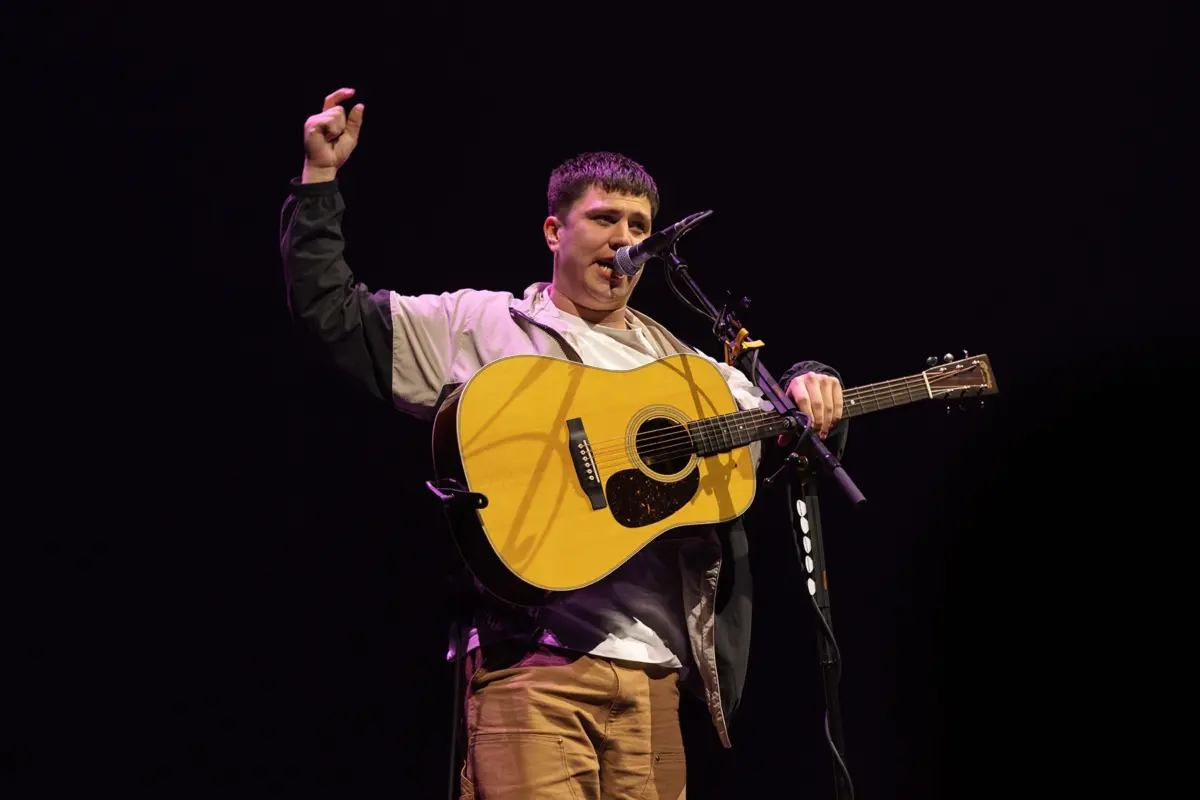
Amid growing public backlash directed squarely at Ed Sheeran, tour opener Aaron Rowe published a video statement via Instagram on Friday, September 18. Rowe urged observers to re-evaluate where they were placing their anger.
"I’m gonna be honest. I think you are all focusing on the wrong person here," Rowe stated in the video. "All I keep hearing is Ed Sheeran this, Ed Sheeran that — when you really should be focusing on the likes of Robert Kraft."
Rowe acknowledged that while Sheeran’s initial handling of the crisis "could have been a lot better," the British singer-songwriter was operating under intense internal panic and likely recognized the removal as a profound mistake.
Mid-September 2025: The Boycott Escalates
Rowe’s video accompanied a broader exodus of talent from the Loop Tour. In the days following Macklemore’s termination, fellow support acts FINNEAS and Lukas Graham officially withdrew from their scheduled appearances. Simultaneously, the renowned Irish folk-rock band Beoga pulled out of their role as members of Sheeran’s live backing band.
In his departure announcement, Rowe crystallized the sentiment shared by the boycotting artists: he declared that he could not "stand by and allow billionaires to use their position of power to silence" musicians who choose to speak out on behalf of marginalized populations, particularly Palestinians.
Supporting Context & Metrics: Corporate Power and Philanthropic Stakes
To fully understand the mechanics of Macklemore’s removal, one must examine the corporate infrastructure governing modern stadium tours. At the heart of this controversy lies the Kraft Group, headed by billionaire Robert Kraft.

The Kraft Group and Gillette Stadium Influence
The Kraft Group owns Gillette Stadium in Foxborough, Massachusetts, where Macklemore had been slated to perform alongside Sheeran on September 25 and 26. According to industry disclosures, representatives of the venue and associated corporate entities exerted significant leverage over the Messina Touring Group, asserting that political demonstrations of the nature witnessed at MetLife Stadium violated venue policies or created untenable security and public relations risks.
Critics, including Macklemore and the boycotting artists, pointed to this intervention as a textbook example of corporate censorship, where financial stakeholders utilize real estate monopolies to sanitize cultural events and suppress dissenting political discourse.
Financial Mobilization and Philanthropic Matching
In response to his removal from the tour, Macklemore took direct financial action. The artist pledged to donate $1 million in net earnings generated from his tour involvement directly to humanitarian organizations providing relief to Palestinians.
Furthermore, Macklemore publicly challenged Robert Kraft to match the contribution. This public challenge yielded a high-stakes philanthropic response: Robert Kraft ultimately announced a $2 million commitment to charitable causes. Representatives for Kraft noted that the donation followed a direct request from Ed Sheeran himself, who had attempted to mediate between aggrieved artists, activist groups, and venue executives behind closed doors.
Official Statements and Industry Reactions
The fallout from the Loop Tour has prompted a flurry of statements from the primary figures involved, illuminating the immense pressure cooker that major pop tours become when geopolitical flashpoints intersect with live entertainment.
Ed Sheeran’s Defense and Promoter Realities
Ed Sheeran addressed the controversy by clarifying the division of labor within major touring operations. The British singer asserted that the decision to drop Macklemore was executed by the tour’s promoters and venue operators rather than originating from his own creative camp.
According to sources close to the production, Sheeran engaged in emergency consultations with venue management, promotion executives, and activist representatives in a frantic bid to broker a compromise that would keep the lineup intact. Ultimately, Sheeran was informed that he lacked the contractual authority to overrule the venues’ collective refusal to host Macklemore.
Aaron Rowe’s commentary provided further nuance regarding Sheeran’s internal state:
"I haven’t had a chance to talk to Ed too much, but I fully believe he knows that was a mistake," Rowe noted, suggesting that while Sheeran’s public communications were slow or insufficient, the headliner was caught off-guard by the aggressive intervention of stadium executives.
The Stance of the Boycotting Artists
The collective withdrawal of Rowe, FINNEAS, Lukas Graham, and Beoga sent an unmistakable message to concert promoters. By sacrificing lucrative opening slots on one of the decade’s most prominent tours, these acts prioritized ideological alignment and freedom of speech over commercial gain. Their unified stance reframed the narrative from a localized artist dispute into a systemic debate over who controls the cultural boundaries of the live stage.
Future Outlook: The Loop Tour Resumes
As the dust begins to settle on one of the most polarizing controversies in recent pop music history, the Loop Tour is scheduled to resume on Saturday night at Lincoln Financial Field in Philadelphia, Pennsylvania.
However, the resumption of the tour will occur under a dramatically altered landscape:
- Empty Supporting Slots: As of press time, no opening acts are listed for the Philadelphia concert or the immediate subsequent dates, leaving a stark void where a diverse roster of supporting talent once stood.
- Heightened Scrutiny: Media analysts and activist groups will closely monitor remaining tour stops for any further expressions of solidarity, tightened security measures, or additional policy shifts by venue operators.
- A Lasting Industry Precedent: The incident has sparked broader conversations across the global music community regarding artist contracts, the rights of venue owners to dictate concert content, and the ethical responsibilities of headliners when their supporting acts face institutional censorship.
Whether the Loop Tour can successfully rehabilitate its public image remains to be seen. What is certain, however, is that the intersection of music and political activism has been irrevocably altered, setting a formidable benchmark for how artists, venues, and promoters negotiate the boundaries of free expression in the years to come.