Executive Overview
Recreating your favorite classic patches is a time-honored, reliable method for learning how to program synthesizers. By meticulously mapping out oscillator types, filter slopes, envelope settings, and modulation routings of historic tracks, producers gain an intimate understanding of how distinct sonic architectures behave. However, it is far from the only path to mastery.
In an era dominated by hyper-efficient, highly targeted production workflows—where algorithms dictate what "sells" and tracks are routinely engineered to meet tight commercial deadlines—intentionality can sometimes stifle creativity. Designing music with a rigid plan ensures predictable results, but it frequently strips away the chaotic, exploratory joy that births genuine innovation.

This article explores a radically different methodology: going into the studio with absolutely no plan.
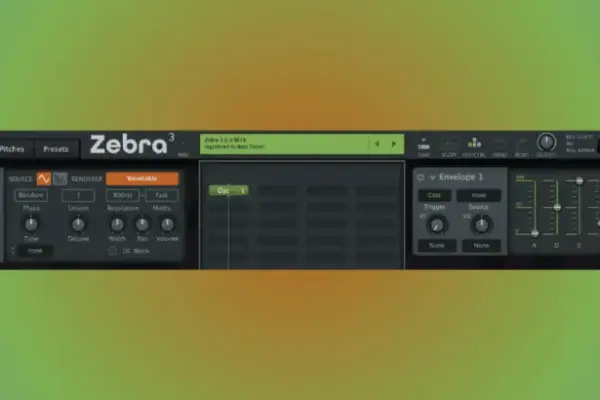
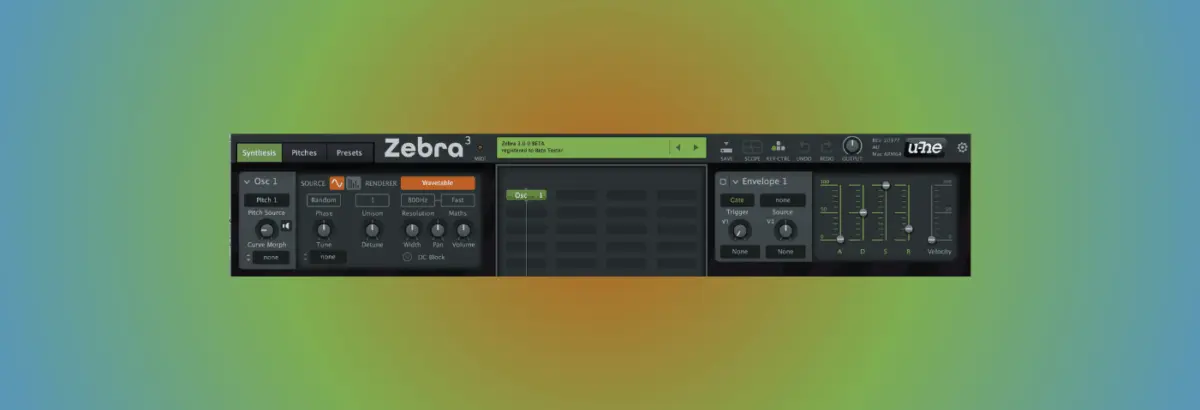
Using u-he’s long-awaited, ground-up modular soft synth sequel, Zebra 3, we strip away preconceptions, ignore target destinations, and simply turn knobs to see what happens. By treating sound design as a playful, unstructured experiment, producers can unearth unconventional melodies, unpredicted rhythmic structures, and entirely new techniques that would never emerge from a rigid blueprint.

Detailed Chronology: A Step-by-Step Sound Design Experiment
To demonstrate the power of unstructured experimentation, we have documented a 10-step exploratory sound design session using Zebra 3.
Step 1: Setting the Initial State (Init)
To begin any unscripted journey, you need a blank canvas.

- Open your DAW, load Zebra 3 with a default Init patch, and set your project tempo to 127 BPM.
- Import the provided MIDI file
WhoKnows.midand the audio fileKick.mp3, then hit play.
In its raw, initializing state, Zebra 3 plays a standard, unmodulated default oscillator. Unsurprisingly, it sounds clinical, flat, and remarkably boring. It is the sonic equivalent of a blank white page—waiting entirely for human intervention.
Step 2: Introducing the FM Oscillator Module
Rather than leaning on traditional subtractive synthesis tropes, we dive straight into one of Zebra 3’s powerful new FM oscillator modules.

- Set the external modulation type (Ext. Mod Type) to Dry.
- Change the frequency modulation algorithm from the classic linear DX style to TZFM (Through Zero FM).
- Set the modulation amount to 8 and experiment with the ratio.
Wrestling with the ratio dials instantly yields a universe of metallic, bleepy artifacts. We settle on a ratio of 1.0 : 2.5. The result is immediately resonant, harmonically rich, and striking. In a traditional workflow, a producer might stop here, satisfied with a quick win. But the goal of the "no plan" approach is to keep pushing boundaries.
Step 3: Modulating the FM Engine with an LFO
To inject organic movement into our static FM timbre, we assign an LFO to modulate the FM parameters.

- Set the LFO Mod Depth to 48.
- Configure the LFO Time Base to 2/1 (spanning two bars) and set the trigger mode to Single.
Even with a single sound generator, the patch begins to breathe, generating complex sidebands and harmonic shifts. Zebra 3 allows us to audition various LFO shapes—triangle, sine, and square. While the triangle and sine yield smooth, predictable undulations, the square wave introduces erratic, abrasive jumps that initially feel unusable. Rather than discarding it, we recognize its unbridled potential and push forward.
Step 4: Dialing in Feedback
The sound is rich and harmonically complex, but it still feels overly polite. To introduce grit, we turn to the Feedback control.

- As the feedback value increases, the patch transitions from subtle warmth into crunchy, aggressive digital distortion.
- Pushing the feedback up to 73 imparts a sharp, biting resonance reminiscent of classic hardware filters like the EDP Wasp.
Step 5 & 6: Taming the Chaos with a Multimode Filter
While the resonances achieved at a feedback level of 73 are intensely inspirational, they are dangerously untamed. To harness this beast, we introduce Zebra 3’s new multimode filter.
Cycling through the filter modes, we discover that the Old Time model paired with a 24 dB Low Pass slope provides immense analog-style warmth. To regain precise control over the transient response, we pull the filter cutoff frequency all the way down to 8.18 Hz, effectively closing the filter completely. This prepares the circuit to be dynamically opened via envelope modulation.

Step 7: Sculpting Percussive Punch with Envelopes
With the filter closed down, we assign a dedicated envelope generator to the filter cutoff to reintroduce articulation.
- Envelope Settings: Attack = 0ms, Decay = 1.25s, Sustain = 31, Release = 96.1ms.
- Modulation Depth: Dialed in at 105.
To hear how the patch sits within a real-world mix, we drop in the audio file Skippy_beat.mp3. Suddenly, the patch clicks into place, locking into the groove with a punchy, plucked character. To contextualize the spatial depth of the patch, we route Zebra 3’s built-in reverb via a send bus, injecting a cinematic sense of space.

Step 8: Adding Dynamic Bite via Filter Drive
Although our sound is now tightly controlled, it has lost some of its raw, jagged edge. We bring back the bite by utilizing the filter’s Drive control.
Applying static drive introduces harshness on the initial transients. To fix this elegantly, we assign a third envelope specifically to the Drive parameter:

- Set initial drive modulation depth to full, but set the envelope Decay to maximum.
- Crucially, dialing up the Attack time to approximately 40ms allows the overdrive to swell in after the initial transient passes.
The result is a clean, punchy note onset that blooms into heavy, aggressive overdrive.
Step 9: Injecting Life with Velocity Scaling
For our final synthesis tweak, we map MIDI Note Velocity to Envelope 3 at maximum depth.

- The patch now reacts dynamically to performance expression. Harder-struck MIDI notes drive the filter harder, yielding a bouncy, highly responsive performance that mimics acoustic instruments or heavily reactive analog gear.
Step 10: Post-Processing, Automation, and Experimentation
With the core patch finalized, the possibilities for arrangement and sound design expand exponentially:
- Cutoff Automation: Automating the filter cutoff over an 8-bar phrase builds immense tension and dynamic energy.
- Envelope Release Tweaks: Opening Envelope 1’s release time to 3.61 seconds smears the notes into lush, atmospheric pads.
- Layering & Unison: By layering the original, buzzy "Init" patch underneath our main sound—bolstered by an 8-voice detuned Unison mode—we achieve a massive, stadium-ready lead sound.
Supporting Context & Metrics: The Psychology of Unstructured Production
Why do modern electronic music producers cling so fiercely to templates and predetermined formulas? Industry analytics point toward the commodification of music production. Digital Audio Workstations (DAWs) and preset-heavy plugin ecosystems encourage goal-oriented, speed-driven workflows designed to satisfy fast-turnaround commercial markets.

However, psychological studies in creative output consistently demonstrate that unstructured play is vital for cognitive flexibility. When producers abandon the "target track" mindset:
- Cognitive Load Shifts: Moving away from analytical problem-solving ("How do I make this sound like Artist X?") frees up working memory for intuitive discovery.
- Error Utilization: In structured workflows, a "wrong turn" (such as the harsh square-wave LFO modulation in Step 3) is treated as a mistake. In exploratory sound design, it becomes the foundation for innovative patches (like the Wasp-style resonance in Step 4).
- Technical Retention: Users who discover parameter interactions organically through trial and error retain synthesizer architecture knowledge significantly longer than those who follow rigid tutorial steps.
Official Statements and Industry Insights
Reflecting on the philosophy behind Zebra 3, sound designers and software developers alike have increasingly championed the return to modular experimentation.

"The modern soft synth is an immensely powerful universe. When you load up a synth like Zebra 3 with a preconceived notion, you are essentially blinding yourself to ninety percent of its capabilities," notes a lead developer at u-he. "By throwing away the roadmap, turning down the lights, and simply interacting with the controls organically, you allow the software to surprise you. That element of surprise is where electronic music finds its soul."
Industry veterans echo this sentiment, advising producers to block out dedicated "patch-building days" where saving presets or finishing tracks is strictly forbidden. This low-stakes environment builds the muscular memory required to make bold, creative choices when working under tight commercial deadlines.

Future Outlook: The Evolution of Exploratory Sound Design
As artificial intelligence and algorithmic generation tools increasingly infiltrate the digital audio workspace, the nature of sound design is shifting. AI assistants can now generate "commercial-ready" chord progressions, drum loops, and synth patches in fractions of a second based on textual prompts or reference tracks.
While these tools offer unprecedented efficiency, they also threaten to homogenize the soundscapes of modern electronic music. As everything begins to align with algorithmic expectations, the value of unpredictability skyrockets.

Synthesizers like u-he Zebra 3—with their deep modular routing capabilities, complex through-zero FM engines, and flexible modulation matrices—represent a bulwark against sonic uniformity. In the future, the most successful producers will not be those who can replicate existing sounds the fastest, but those who retain the courage to turn on a synth, press play, and embrace the beautiful chaos of having absolutely no plan at all.