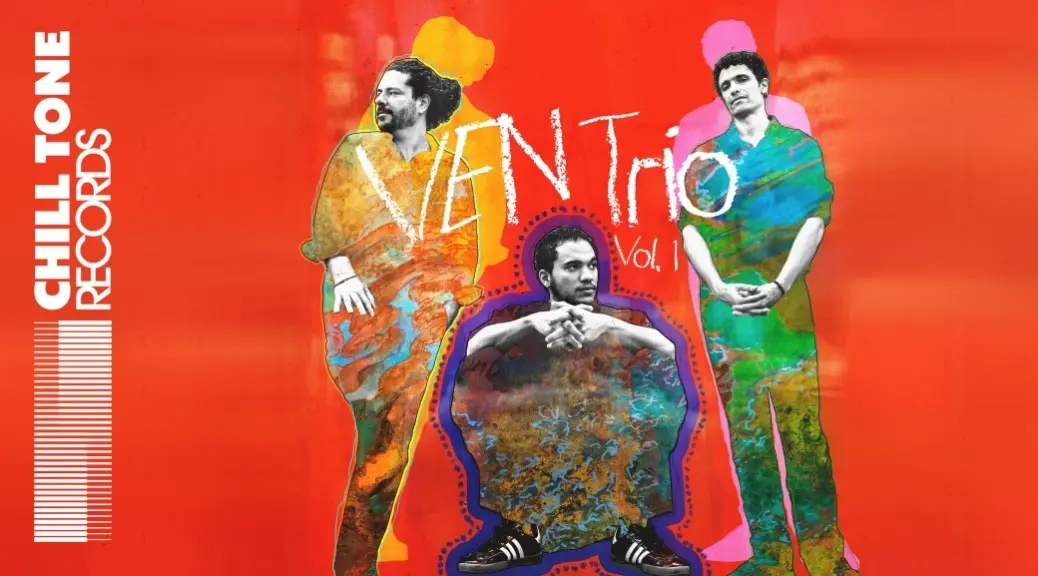
In the ever-evolving landscape of contemporary jazz, few debut recordings arrive with the seamless integration of cultural heritage, virtuosic interplay, and unbridled joy found on Vol. 1, the premier offering from the VEN Trio. Released to critical acclaim, this meticulously crafted collection draws deeply from the rhythmic foundations, harmonic colours, and melodic lyricism of Brazilian music while remaining firmly anchored in the language of modern, progressive jazz.
The trio—comprising Brazilian guitarist Vinícius Gomes, American bassist Noah Garabedian, and drummer Elé Salif Howell—represents a cross-continental convergence of distinctive artistic voices. Throughout the seven-track album, listeners are treated to a masterclass in ensemble balance. The music evokes the expansive, cinematic textures and melodic warmth of the Pat Metheny Group, while the telepathic, conversational exchanges between the three instruments recall the high-wire aesthetic of Trio Grande, the acclaimed collaborative project featuring Antonio Sanchez, Will Vinson, and Gilad Hekselman.
Yet, comparisons can only go so far in illuminating the collective identity of the VEN Trio. By marrying virtuosic technical execution with a profound respect for folkloric roots—ranging from the rich traditions of São Paulo and the Candomblé heritage of Bahia to the broader landscapes of American jazz and Armenian diaspora consciousness—the trio has fashioned a sonic blueprint entirely its own. Recorded live in the studio following a rigorous string of live performances, Vol. 1 captures not merely a set of compositions, but the living, breathing chemistry of three master craftsmen at the peak of their creative powers.
Detailed Chronology and Genesis of the Project
The genesis of Vol. 1 is rooted in both individual journeys and a serendipitous alignment of artistic trajectories across the American and international jazz circuits. To understand the cohesive brilliance of the VEN Trio, one must examine the distinct developmental pathways that brought its members together.
The São Paulo Roots and New York Ascendancy: Vinícius Gomes
Guitarist Vinícius Gomes arrived on the global jazz stage with a foundational grounding in the rich musical soil of São Paulo, Brazil. During his formative years in South America, Gomes collaborated extensively with luminaries such as accordionist and composer Toninho Ferragutti, absorbing the intricate syncopations, harmonic sophistication, and emotional directness of Brazilian popular and instrumental music.
Upon relocating to New York City, Gomes quickly immersed himself in the city’s hyper-competitive jazz ecosystem. His ability to bridge traditional Brazilian forms—samba, choro, and bossa nova—with contemporary post-bop idioms caught the attention of heavyweights. Over the years, he has shared stages and recording studios with a stellar roster of artists, including saxophonist Seamus Blake, pianist Guillermo Klein, pianist Billy Childs, and legendary drummer Duduka da Fonseca.
Gomes’s prior discography laid clear groundwork for his role in the VEN Trio. His album Changes and the widely praised Home (created alongside vocalist Song Yi Jeon) demonstrated a rare capacity for emotional transparency and technical fluency. On Vol. 1, Gomes acts as both a melodic anchor and a soaring lead voice, delivering guitar work that is at once rhythmically driven and intensely lyrical.
Ethnomusicological Depth and Cross-Cultural Composition: Noah Garabedian
Bassist Noah Garabedian brings an intellectual rigour and a globally conscious perspective to the ensemble’s low-end frequencies. Having pursued formal studies in ethnomusicology at the University of California, Los Angeles (UCLA), Garabedian developed an enduring fascination with folkloric traditions, using his own Armenian heritage as a lens through which to explore universal musical vernaculars.
Garabedian’s professional career is defined by high-profile associations across the spectrum of creative improvised music. His resume includes collaborations with tenor saxophonist Ravi Coltrane, master drummer Jeff ‘Tain’ Watts, pianist Kris Davis, and pianist-composer Andy Milne. This diverse background ensures that Garabedian approaches the bass not merely as a time-keeping or harmonic support instrument, but as an active, melodic counter-voice capable of shifting the structural weight of any given composition. His compositional contributions to Vol. 1 introduce complex rhythmic frameworks that challenge and inspire his fellow bandmates.
California Foundations and NYC Apprenticeships: Elé Salif Howell
Rounding out the rhythm section is drummer Elé Salif Howell, whose trajectory reflects a modern jazz pedigree forged through rigorous mentorship. Growing up in California, Howell’s early musical education was shaped by studies with pianist Art Khu and active participation in the prestigious Oaktown Jazz Workshops, an institution renowned for nurturing socially conscious, technically proficient young artists.
Seeking to deepen his mastery, Howell relocated to New York University (NYU), where he served a crucial apprenticeship under the legendary jazz drummer Lenny White. This lineage of rhythm connects Howell directly to the golden eras of fusion and acoustic post-bop alike. His impressive collaborative credits—spanning work with Ravi Coltrane, trumpeter Chief Adjuah (formerly Christian Scott), and veteran saxophonist Gary Bartz—cement his status as one of the most inventive and reliable drummers of his generation. On Vol. 1, Howell’s rhythmic imagination serves as the primary engine driving the ensemble’s dynamic excursions.
The Live Genesis and Studio Realization
The music found on Vol. 1 was road-tested before it ever touched magnetic tape. Following a concentrated run of live dates across the San Francisco Bay Area, the trio entered Hyde Street Studios in San Francisco to capture the raw electricity of their live performances.
Recorded live in the studio, the session preserved the immediacy, telepathic interaction, and spontaneous give-and-take that can only be forged on the bandstand. Later, subtle overdubbing and additional sonic textures were layered onto the tracks back in New York City. This careful post-production work added depth, colour, and atmospheric resonance without ever diluting the raw, immediate energy of the initial studio performances. The result is an acoustic portrait of a band entirely locked into one another’s musical consciousness.
Supporting Context and Repertoire Analysis
Spanning seven meticulously sequenced tracks, Vol. 1 offers a masterclass in programming, balancing evocative original compositions with profound tributes to the architects of Brazilian and Afro-Brazilian music.
Rhythmic and Harmonic Frameworks
The album opens with "For Milton," a poignant composition penned by drummer Elé Salif Howell and dedicated to the legendary Brazilian singer-songwriter Milton Nascimento. The track immediately establishes the album’s emotional core, showcasing how the trio internalizes the sweeping, cathedral-like harmonies and nostalgic warmth characteristic of Nascimento’s iconic Clube da Esquina movement.

The repertoire then pivots sharply with a high-octane interpretation of Letieres Leite’s "Mestre Móá do Katendê." Taken at a blistering, up-tempo clip, the VEN Trio dedicates this performance to the memory of Leite, the visionary founder of the Orquestra Rumpilezz. The arrangement honours the complex, sacred percussion traditions of Bahia while translating them seamlessly into a contemporary jazz trio format, highlighting Howell’s blistering yet precise stickwork and Gomes’s fleet-fingered fretboard mastery.
Bridging Soul, Funk, and Afro-Brazilian Traditions
Contrasting with the high-velocity workouts are pieces that explore a more patient, pocket-driven aesthetic. "Evening Drama" unfolds with a relaxed, languid samba feel that subtly incorporates elements of modern soul and urban funk, proving that the trio’s rhythmic palette extends far beyond traditional Latin-jazz clichés.
Bassist Noah Garabedian steps forward compositionally with "Birthday Song," an intricate piece that investigates the agueré rhythm intimately associated with Brazil’s Candomblé spiritual tradition. Garabedian’s bassline acts as a rolling, hypnotic tide over which Gomes and Howell converse with telepathic ease.
Expanding the group’s sonic horizons further is "Perpetual Sunrise." This track introduces layered vocal elements and understated synthesized textures, pushing the boundaries of what a traditional guitar-bass-drums ensemble can achieve. It demonstrates a willingness to experiment with modern studio craft, effectively blurring the lines between acoustic improvisation and contemporary ambient soundscapes.
The album draws to a close with "Canto de Xangô," a classic piece originally composed by Baden Powell and lyricist Vinícius de Moraes. The VEN Trio’s reading of this Afro-Brazilian standard serves as a fitting culmination, tying together the themes of spirituality, rhythmic reverence, and melodic grace that define the entire 45-minute journey.
Official Statements and Critical Reception
Since its release, Vol. 1 has drawn widespread praise from critics, musicians, and industry insiders alike, who have lauded the recording as a refreshing antidote to overly sterile or academic contemporary jazz releases.
In liner notes and critical reviews circulated across jazz publications, the consensus highlights the rare combination of technical virtuosity and emotional accessibility achieved by the trio. Speaking on the collaborative ethos of the group, industry analysts have pointed out that while each member maintains a stellar individual career—balancing sideman duties with international touring—the VEN Trio operates with the singular focus of a permanent, long-term band.
Prominent jazz critic Mike Gates, writing for UK Vibe, encapsulated the critical enthusiasm surrounding the release:
"There is a wonderful sense of freedom, warmth and sheer musical enjoyment running through Vol. 1… Melodically engaging, rhythmically infectious and beautifully performed, it is a stunning debut that leaves me hoping this particular musical partnership has a long future ahead of it. Bring on Vol. 2."
Furthermore, engineering and production notes from the Hyde Street Studios sessions emphasize the deliberate choices made to preserve acoustic space. Rather than compressing the sound to modern, hyper-loud radio standards, the production team prioritized a spacious, highly detailed soundstage. This spatial integrity ensures that every pluck of Garabedian’s double bass, every crystalline chord from Gomes’s guitar, and every dynamic shift in Howell’s drum kit remains distinct, allowing the instruments room to breathe and interact organically.
Future Outlook and Industry Implications
As Vol. 1 continues to find an expanding global audience via streaming platforms, physical vinyl distributions, and international radio airplay, the future looks remarkably bright for the VEN Trio. The jazz industry is currently experiencing a renaissance of cross-cultural collaborations, driven by artists who refuse to be confined by strict geographical or genre-based borders. In this climate, the VEN Trio occupies a vital and timely space.
Anticipation for Vol. 2
The overwhelmingly positive reception of their debut has naturally sparked speculation and high anticipation for a follow-up release. Industry insiders and fans alike are already looking toward Vol. 2, eager to see how the trio’s musical dialogue evolves after taking this material on extended tours. Live performance data indicates that the band’s improvisational vocabulary expands exponentially with every night on stage, suggesting that their next studio outing could capture an even deeper level of collective intuition.
Touring and Global Reach
Looking ahead, the VEN Trio has slated several regional and international tour dates designed to bring their unique synthesis of Brazilian folkloric jazz to major metropolitan centres across North America, Europe, and South America. These upcoming engagements are expected to feature masterclasses and workshops, capitalizing on the members’ extensive educational backgrounds (at institutions like UCLA and NYU) to inspire the next generation of creative improvisers.
Ultimately, Vol. 1 is much more than a successful introductory statement for a newly formed band; it is a masterclass in how to honour tradition while fearlessly pushing into contemporary sonic territories. By blending the sun-drenched harmonies of São Paulo with the cerebral pulse of New York modernism and the rich folkloric threads of California and the Armenian diaspora, Vinícius Gomes, Noah Garabedian, and Elé Salif Howell have crafted a timeless recording. If this debut is any indication of what is to come, the VEN Trio is well on its way to becoming one of the defining instrumental ensembles of the decade.