Executive Overview
On Sunday, November 1st, the prestigious French Institute in London will serve as the epicentre for a radical reimagining of modern art and sound. The renowned contemporary music collective Lovemusic is set to stage a groundbreaking multimedia event that challenges foundational perceptions of how audiences consume and process auditory art. Posing the central, provocative question—“How do we listen when sound is inseparable from image, gesture, language, and technology?”—the ensemble invites art lovers, musicologists, and the culturally curious into an immersive world where traditional boundaries between artistic disciplines dissolve entirely.
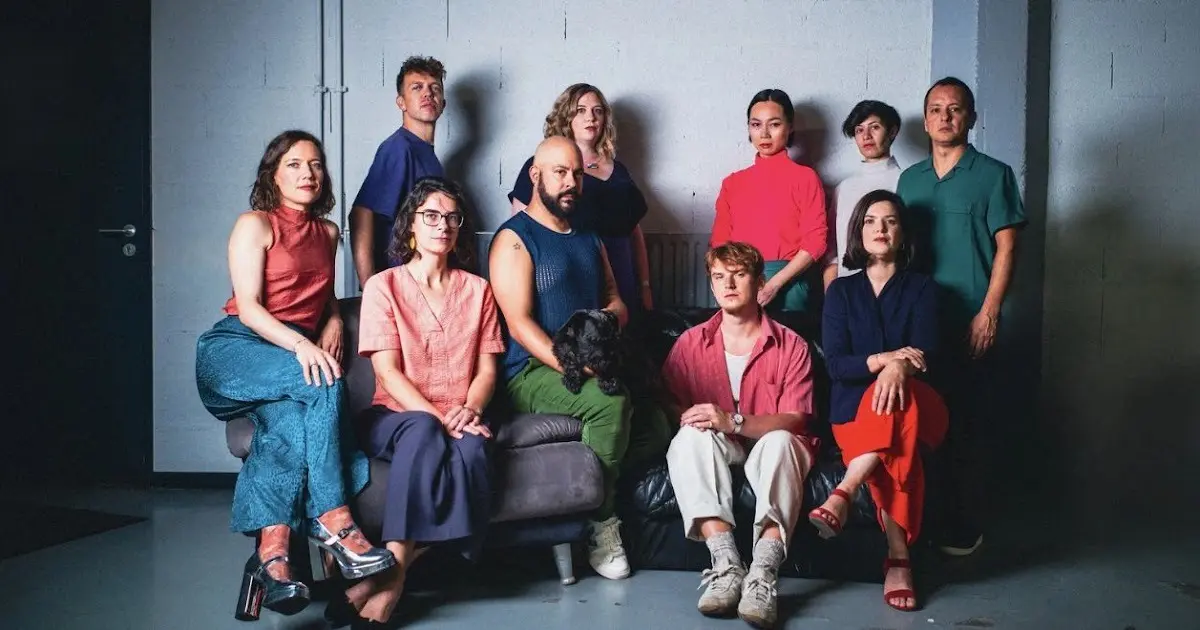
Specialising in avant-garde and new music, Lovemusic rejects the archaic paradigm of passive listening. Instead, the collective has curated a dynamic, multi-sensory journey that blends contemporary composition, theatrical performance, modern dance, cutting-edge video art, kinetic lighting design, and advanced interactive technology. This is an experience designed to demand as much from the spectator’s visual cortex as from their auditory senses.
Supported by the esteemed Diaphonique fund for contemporary music—a bilateral initiative dedicated to fostering creative exchange between the UK and France—the programme features a meticulously selected roster of international composers and multimedia artists. From a poignant dialogue between a flute and sign language to experimental explorations of ASMR (Autonomous Sensory Meridian Response), urban soundscapes, and digital fabrication, this showcase represents the absolute vanguard of contemporary performance art.
As cultural institutions globally grapple with the challenge of engaging modern audiences in an increasingly digital era, Lovemusic’s London showcase offers a vital blueprint for the future of live performance. This comprehensive report explores the conceptual framework of the event, provides a detailed breakdown of the featured artists and their revolutionary works, examines the institutional support driving the production, and analyses the long-term implications of this cross-disciplinary movement for the global arts sector.
Detailed Chronology and Programme Breakdown
The afternoon-to-evening programme at the French Institute has been structured as a continuous, evolving narrative rather than a standard concert bill. Each piece on the bill confronts a specific intersection of sound and external stimuli, guiding the audience through a carefully paced progression of scale, intimacy, and technological integration.
1. The Language of Silence and Breath: Helmut Oehring’s Flute and Sign Language Dialogue
The programme opens with a profound exploration of communication, language, and physical expression by celebrated German composer Helmut Oehring. Known for his radical integration of the deaf community and sign language into classical and contemporary music structures, Oehring’s work challenges the historical dominance of spoken and musical vocabulary.
In this performance, the traditional acoustic properties of the flute are placed in direct, intimate dialogue with sign language. The composition treats physical gestures not merely as visual accompaniments to sound, but as an equal, counterpoint language. The breath required to sustain a wind instrument mirrors the physical exertion of sign-based communication, forcing the audience to re-evaluate the very mechanics of expression. By stripping away conventional vocalization, Oehring highlights a visceral, kinetic syntax where silence speaks as loudly as sound, setting a deeply contemplative tone for the rest of the afternoon.
2. Kinetic Materiality: Kuba Krzewskiński’s String Explorations
Moving from breath to friction, Polish composer Kuba Krzewskiński introduces a wholly unique approach to traditional orchestral instruments. Krzewiński’s work is deeply grounded in the physical materiality of sound production, often focusing on the micro-interactions between the performer’s body, the instrument’s construction, and the surrounding acoustic environment.
For this London showcase, Krzewiński presents a specialized piece for violin and cello that shifts focus away from traditional melody and harmony. Instead, the performance magnifies the microscopic textures of music-making: the rasp of horsehair against steel, the pressure of wood under tension, and the bodily micro-movements required to generate friction. Through amplification and spatialized sound design, the listener is drawn inside the instrument, experiencing the tactile reality of string performance as an architectural, sculptural event.
3. Sonorous Cartography: Tine Surel Lange’s Urban Soundscape
Shifting the scale from the microscopic to the macro-environmental, Norwegian composer and sound artist Tine Surel Lange presents a sonic portrait of the contemporary urban landscape. Lange’s practice is heavily rooted in field recording, environmental acoustics, and the psychological impact of spatial design on human perception.
Her contribution to the Lovemusic programme acts as an auditory map of the modern city, juxtaposing natural phenomena with the relentless hum of industrial infrastructure, transit networks, and architectural acoustics. However, Lange avoids literal, documentary-style field recordings; instead, her compositions abstract these urban realities into rich, sculptural sound masses. Accompanied by synchronized visual projections that trace the geometries of modern architecture, the piece positions the audience as active urban flâneurs, navigating a synthetic sonic landscape that feels simultaneously alien and intimately familiar.
4. ASMR and Sensory Manipulation: Finbar Hosie’s Screening Experiment
One of the most anticipated and contemporary segments of the programme is British artist Finbar Hosie’s exploration of ASMR (Autonomous Sensory Meridian Response) within a live performance and screening context. ASMR—characterized by a static-like or tingling sensation that typically runs from the scalp down the neck—has exploded as a digital phenomenon on platforms like YouTube and TikTok, yet its integration into high art and live performance remains largely uncharted.
Hosie’s experimental screening treats the biological and psychological triggers of ASMR as raw musical material. By utilizing close-up visual framing, ultra-sensitive binaural microphones, and hyper-detailed tactile foley work performed live on stage, Hosie induces localized physical reactions in the audience. The work cleverly interrogates the boundary between private digital consumption and collective public spectatorship, asking how physical intimacy can be artificially engineered through modern amplification technologies.
5. Kinetic Deconstruction: Mathis Saunier’s Performance
French-born, London-based artist Mathis Saunier brings a distinctively kinetic and rhythmic energy to the programme. Saunier’s work operates at the intersection of electronic music production, conceptual art, and physical performance, often utilizing customized machinery, modular synthesizers, and found objects to create chaotic yet meticulously structured sound worlds.
In his live performance, Saunier physicalizes the electronic production process. Rather than relying on pre-programmed sequences or hidden digital workstations, every sonic shift is tied directly to physical manipulation on stage. The performance becomes a high-stakes kinetic display where sound, light, and movement are locked in a symbiotic feedback loop, reflecting the anxieties and energies of hyper-connected contemporary existence.
6. The Grand Finale: Neil Luck’s Production Apocrypha
The climax of the Lovemusic showcase arrives with British composer and performance maker Neil Luck’s Production Apocrypha. Known for his wry, theatrical, and often absurdist investigations into the nature of musical production and performance ritual, Luck’s work frequently blurs the line between high art, lecture-performance, and musical theatre.

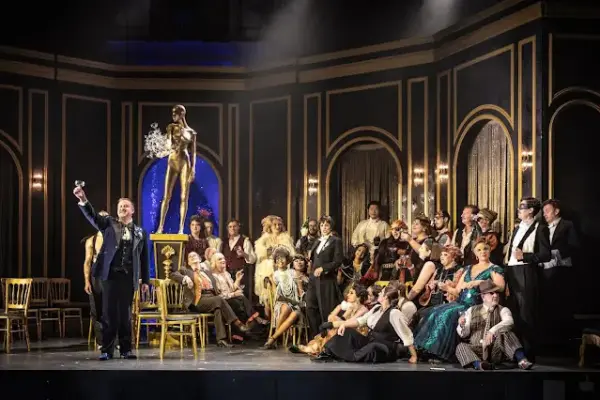
Production Apocrypha examines the mythologies of creation, staging, and authority within the arts. Featuring performers who navigate shifting roles as musicians, actors, and technicians, the piece deconstructs the mechanisms of live staging itself. Lighting rigs become characters, microphones malfunction by design, and musical scores are treated as flexible theatrical scripts. It is a brilliant, self-aware capstone to an event that questions every assumption the audience holds regarding the sacred space of the concert hall.
Supporting Context and Metrics: The Evolution of Multimedia Ensembles
To fully appreciate the significance of Lovemusic’s upcoming showcase at the French Institute, it is necessary to examine the broader economic, cultural, and institutional ecosystem supporting contemporary music in Europe.
The Rise of Interdisciplinary Collectives
Over the past decade, the classical and contemporary music sectors have experienced a seismic shift. Traditional symphony orchestras and chamber ensembles, constrained by institutional inertia and rigid historical repertoires, have steadily lost ground to agile, artist-led collectives like Lovemusic. These modern ensembles operate on a fluid, project-by-project basis, pulling talent from diverse creative pools—spanning classical composition, electronic music production, contemporary dance, and visual arts.
According to cultural economists tracking the European performing arts sector, funding models have evolved in tandem with these artistic shifts. Grant-making bodies and cultural ministries increasingly favor projects that demonstrate cross-disciplinary collaboration and audience accessibility over traditional, insular programming.
The Role of the Diaphonique Fund
The financial and institutional backbone of the Lovemusic London event is the Diaphonique fund. Established as a bilateral Franco-British fund for contemporary classical music, Diaphonique is supported by the Institut Français, the Bureau Export, SACEM, the Meyer Foundation, the Ernst von Siemens Music Foundation, and the British Council.
| Metric / Focus Area | Institutional Detail |
|---|---|
| Primary Funding Body | Diaphonique (Franco-British Contemporary Music Fund) |
| Key Partners | Institut Français (London), British Council, SACEM, Ernst von Siemens Foundation |
| Core Mission | Fostering cross-channel creative mobility, commissioning new works, and supporting Anglo-French artistic exchange |
| Averaged Annual Grants | €150,000 – €250,000 distributed across international premiere projects |
| Impact Index | High engagement with under-35 demographics through multimedia and immersive programming |
Diaphonique’s backing of Lovemusic underscores a strategic priority within European cultural diplomacy: ensuring that contemporary music does not remain confined to academic enclaves, but actively engages with the realities of 21st-century technological and visual culture. By underwriting international transport, artistic fees, and technological infrastructure, funds like Diaphonique enable experimental ensembles to take the kind of creative risks that local box office revenues alone could never sustain.
Official Statements and Curatorial Vision
The intellectual rigor behind Lovemusic’s programming is rooted in a collective desire to break down the barriers that have historically alienated casual audiences from contemporary classical music. In statements released ahead of the November 1st event, the collective’s artistic directors emphasized the urgency of rethinking the concert experience.
"We live in an age where auditory stimuli can never be divorced from the screens we look at, the spaces we inhabit, and the technologies that mediate our relationships," noted a representative for Lovemusic.
"For too long, the concert hall has treated listening as an isolated, disembodied act—sit quietly, close your eyes, and absorb. But human perception does not work in silos. When we watch a musician bow a string, when we process the kinetic energy of a dancer, or when we feel the physical vibration of a low-frequency oscillator, our entire nervous system is engaged. Our event at the French Institute is an invitation to embrace that complexity rather than filter it out."
Representatives from the French Institute in London echoed this enthusiasm, highlighting the venue’s historic role as a bridge for cultural innovation between France and the United Kingdom.
"The French Institute has always been a laboratory for ideas," said a spokesperson for the South Kensington cultural center.
"In hosting Lovemusic, we are not simply presenting a concert; we are hosting an inquiry into the future of human expression. The lineup of composers—spanning Germany, Poland, Norway, the UK, and France—reflects a truly pan-European artistic dialogue that remains vital, resilient, and relentlessly forward-looking."
Future Outlook: Implications for the Performing Arts
As the cultural sector continues to adapt to post-pandemic audience habits and the omnipresence of digital media, events like Lovemusic’s showcase at the French Institute point decisively toward the future.
1. The Death of the Passive Concert Experience
The traditional model of the classical music concert—seated audiences facing a stage in reverent silence—is increasingly being viewed as anachronistic by younger generations. As virtual reality, immersive gaming, and multi-platform digital art set new benchmarks for sensory engagement, live performance must evolve to offer something that screens cannot replicate: physical presence combined with radical multi-sensory stimulation. Lovemusic’s integration of ASMR, sign language, kinetic sculpture, and live electronics demonstrates how contemporary music can successfully meet this challenge.
2. Deepening Anglo-French Cultural Ties
Despite the complex political landscapes of post-Brexit Europe, initiatives like the Diaphonique fund prove that grassroots and institutional artistic collaboration across the English Channel remains remarkably robust. The cross-pollination of British and French aesthetic sensibilities—combining the British tradition of conceptual experimentation with the French legacy of spectralism, structural rigor, and theatricality—creates a fertile ground for artistic innovation that benefits both creative communities.
3. A Blueprint for Curatorial Courage
Ultimately, the Lovemusic event serves as a challenge to programmers, curators, and institutional directors across the globe. It proves that adventurous, intellectually demanding contemporary art does not have to alienate audiences. By framing complex sonic explorations within an accessible, visually stunning multimedia context, Lovemusic demonstrates that modern audiences are hungry for experiences that challenge their perceptions, stimulate their intellects, and redefine what it means to listen in the 21st century.
Tickets and full programmatic details for the Lovemusic event on Sunday, November 1st, are available via the official French Institute in London website.