Executive Overview
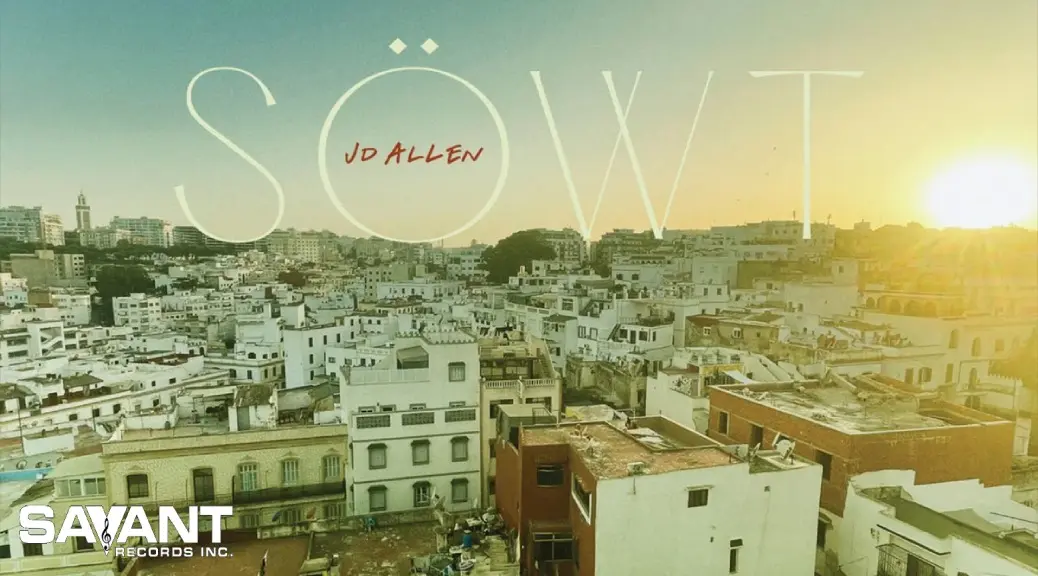
In the sprawling, interconnected geography of modern jazz, few instrumentalists command the tenor saxophone with the austere, narrative gravity of JD Allen. Over a celebrated career marked by hard-hitting minimalism and deep historical reverence, Allen has consistently stripped away the ornamental fat of contemporary jazz, favoring lean, muscular themes that unfold with deliberate patience. Yet, with his landmark fifteenth release for the Savant label, Sōwt (Arabic for "sound" or "voice"), Allen has achieved a profound stylistic pivot. He has journeyed directly into the heart of Morocco’s ancient Gnawa tradition, forging a transcontinental transatlantic dialogue that links the heavy, repetitive grooves of North Africa directly
to the ancestral roots of the American blues.
Recorded in Rabat, Morocco, Sōwt represents far more than a standard cross-cultural collaboration or a casual globetrotting detour. It is a meticulous, deeply researched archaeological dig into rhythm, memory, and sonic lineage. Mentored in his Detroit youth on the pioneering work of jazz luminary Randy Weston—who spent decades establishing the unbreakable umbilical cord connecting African-American jazz and Moroccan Gnawa—Allen has spent years immersing himself in the cultural hubs of Tangier and Rabat.
The resulting album is an acoustic melting pot where West and Central African traditions carried across the oceans meet in a single room. Featuring a masterclass lineup of international virtuosos—including master guembri player Yazid El Alaoui, Moroccan jazz bassist Hamza Souissi, Cuban-born drummer Ruy Adrián López-Nussa, and Parisian-settled pianist Leonardo Montana—Sōwt succeeds by honoring the structural similarities between Allen’s own skeletal compositional style and the mesmerizing, iterative trance patterns of Gnawa ceremony.
This review-analysis explores the genesis of Sōwt, dissects its brilliant cross-cultural instrumentation, examines its thematic nods to the spiritual realms of land, sea, and sky, and traces how Allen’s journey completes a critical circle in the evolving history of global jazz.
Detailed Chronology
The Genesis of an Obsession: From Detroit to Tangier
To fully understand the magnitude of Sōwt, one must trace the ideological and geographical breadcrumbs that led JD Allen to the studios of Rabat. Long before he picked up the tenor saxophone as a professional voice in the crucible of New York City, Allen was a young, inquisitive musician growing up in Detroit, Michigan. It was there that his early mentors instilled in him a foundational reverence for the avant-garde pianist and composer Randy Weston. Weston’s lifelong crusade was simple yet radical: to prove that American blues, jazz, and the ritualistic music of the Gnawa people of Morocco were not distant cousins, but members of the same immediate family, separated only by the cruel tides of the transatlantic slave trade and colonial history.
Weston’s legendary work with The Splendid Master Gnawa Musicians of Morocco left deep, indelible footprints on generations of jazz musicians. For many listeners and players alike—including prominent UK Vibe critics who witnessed Weston’s paradigm-shifting performances in the early 1990s—this cross-pollination opened an entirely new door of perception. Allen walked through that very same door.
Carrying the lessons of his Detroit mentors, Allen eventually made physical pilgrimages to North Africa. He based himself first in Tangier, the very coastal city that Randy Weston had once called home, absorbing the sights, sounds, and rhythms of the Medina. His travels eventually took him south to Rabat, the administrative and cultural capital, where the physical architecture and rich sonic history provided the ideal environment to conceptualize his fifteenth Savant release.
The Anatomy of the Sessions in Rabat
The recording sessions for Sōwt in Rabat were designed to capture an organic, breathing dialogue between American jazz aesthetics and Moroccan ritual. Allen wisely avoided treating the Gnawa elements as mere exotic seasoning or a decorative veneer over standard jazz changes. Instead, he built the entire project from the bottom up, centering the music around the low-end frequencies of the traditional Moroccan guembri and the modern upright/electric bass, balanced by an elite rhythm section forged in the fires of Havana, Paris, and the Caribbean.
Throughout the album’s seven compositions, Allen deploys an approach he has honed over decades: a bare-bones line-up featuring tenor saxophone over a rhythm section stripped of traditional chordal padding. By operating without a guitarist or a constantly comping pianist for large stretches of his career, Allen has cultivated an economical playing style. He prefers a short, punchy theme that he can turn over, interrogate, and bend until it yields its inner emotional truth.
This philosophy maps perfectly onto Gnawa music, which relies heavily on a foundational bass figure repeated with hypnotic persistence until the repetitive cadence induces a state of physical and emotional movement. The title Sōwt thus becomes a meta-commentary on the project: it is a unified voice built from disparate linguistic, cultural, and rhythmic dialects, united by the primal power of acoustic sound.
Supporting Context & Metrics
The Instrumentarium: Sky, Earth, and Iron
One of the most fascinating analytical dimensions of Sōwt is its rhythmic and harmonic architecture, particularly in the lower registers. At the psychological and spiritual center of the band sits Yazid El Alaoui on the guembri (also known as the sintir or hag-houge). This traditional three-stringed bass lute is carved from a single piece of wood, topped with camel skin, and serves as the rhythmic and spiritual anchor that leads every traditional Gnawa ceremony. El Alaoui’s woody, resonant plucks and occasional vocals provide the ancient heartbeat of the recording.

Locking horns—or rather, locking frequencies—with El Alaoui is Hamza Souissi, a Rabat-born bass guitarist whose decades of experience in the Moroccan jazz circuit (alongside his siblings in the Souissi Brothers band and master Gnawa fusion artist Majid Bekkas) grant him an innate understanding of how to bridge indigenous North African grooves with contemporary harmonic concepts.
Allen brilliantly describes this dual-bass pairing as “sky and earth.” At times, the traditional guembri holds down the earthy foundation while Souissi’s bass guitar roams freely above; at other times, they seamlessly swap roles, creating a rolling, tectonic low-end rumble.
Hovering over this deep earthy foundation is the unmistakable, metallic shimmer of the qraqeb—the heavy iron castanets wielded by Gnawa practitioners to maintain the driving, percussive pulse of the trance ceremonies. Though the specific credits for the qraqeb player remain unlisted in the liner notes, their sharp, cascading clatter cuts through the mix on tracks like the title track and "Solid," injecting an urgent, metallic brilliance into the acoustic canvas.
A Confluence of Diasporas: Cuba, Guadeloupe, and Detroit
Beyond the Moroccan contingent, Allen assembled a rhythm section representing a breathtaking cross-section of the African diaspora:
- Ruy Adrián López-Nussa (Drums): Hailing from one of Havana’s most prestigious musical dynasties and now based in France, López-Nussa has spent years serving as the propulsive engine for his brother Harold López-Nussa’s celebrated groups. His drumming brings an intricate, polyrhythmic Afro-Cuban sensibility that dances effortlessly around the North African meters.
- Leonardo Montana (Piano): Born in La Paz, raised between Bahia (Brazil) and Guadeloupe, and long settled in Paris (where he made his name in the acclaimed trio Triphase alongside Anne Paceo), Montana brings a panoramic worldview to the piano bench. Deeply marked in his youth by the hypnotic pull of the Guadeloupean gwoka drum, Montana’s piano styling bridges European impressionism, Caribbean syncopation, and jazz harmonic sophistication.
When tallied up, the personnel of Sōwt represent an extraordinary cultural convergence: Gnawa, Afro-Cuban, and gwoka traditions—all carrying the deep cultural memory of West and Central African roots carried across the oceans—meeting in a single room in Rabat, orchestrated and written entirely by a tenor saxophonist from Detroit.
Official Statements & Analytical Breakdown of the Tracks
The Repertoire: Mapping the Spiritual Suites
The tracklist of Sōwt is strategically organized to mirror the structural progression of a traditional Gnawa night ceremony (Lila), while retaining the improvisational freedom of modern American jazz.
Two tracks in particular—"Moussayé" and "Samawi"—explicitly point to the color-coded blue suites of the Gnawa nocturnal rituals:
- "Moussayé" honors Sidi Moussa, the white-robed spirit of the sea and water. The piece begins with the faintest vocal whisper from El Alaoui, which vanishes almost as quickly as it arrives, before erupting into the stormiest, most volatile cut on the record. Allen’s tenor and Montana’s piano throw everything at the arrangement, with Montana operating at full physical stretch, yet the guembri maintains its structural integrity underneath while the castanets tick away relentlessly.
- "Samawi" closes the album, invoking the spirits of the sky. Featuring quiet, evocative vocal asides from El Alaoui floating over a deep, earthy pulse marked by the steady metallic rhythm of the qraqeb, it possesses the most solemn and powerful ceremonial gravity of all seven pieces.
Between these spiritual pillars sit "Kin," the title track "Sōwt," and three pieces bearing stark, direct English titles: "Found," "Solid," and "Lil Lullaby."
Track-by-Track Sonic Profile
| Track Title | Primary Instrument Focus | Stylistic Character & Vibe |
|---|---|---|
| "Kin" | Guembri & Tenor Saxophone | Establishes the album’s minimalist parameters; the guembri lays down a fixed figure, Allen floats asymmetrical phrases above it, and El Alaoui’s gentle chant settles the arrangement at the finish. |
| "Sōwt" (Title Track) | Piano, Qraqeb & Full Ensemble | Runs notably hotter and more urgent; features the first prominent appearance of the iron castanets, with Montana stoking the piano fire before López-Nussa breaks loose in a drum solo. |
| "Moussayé" | Tenor, Piano & Guembri | The stormiest piece on the record; dedicated to Sidi Moussa, spirit of the sea, combining ferocious harmonic sparring with an unyielding traditional rhythmic bedrock. |
| "Found" | Tenor Saxophone & Rhythm Section | Slows the tempo down drastically, showcasing Allen’s darkest, longest tenor tones stretching out over an unsettled, restless rhythm section. |
| "Solid" | Qraqeb & Piano | Reintroduces the metallic clatter of the castanets to support Leonardo Montana’s second major, expansive piano solo of the date. |
| "Lil Lullaby" | Guembri & Melodic Tenor | Features the most haunting, evocative tone from El Alaoui’s guembri, drawing out Allen’s sweetest, most deeply lyrical saxophone playing on the entire recording. |
| "Samawi" | Vocals, Guembri & Qraqeb | The album’s ceremonial climax; quiet vocal asides over a deep, grounding pulse that honors the spirits of the sky and brings the recording full circle. |
Future Outlook
Closing the Circle: Legacy and the Road Ahead
In the fold-out liner notes of Sōwt, the historical weight of the project is further contextualized through essays penned by JD Allen himself alongside veteran jazz journalist Willard Jenkins—the very writer who helped Randy Weston immortalize his life story in the essential autobiography African Rhythms. Jenkins recalls Weston frequently emphasizing that the Gnawa people are direct family to African Americans, sharing common ancestors uprooted from the exact same regions of the African continent.
By placing the word Sōwt ("sound" or "voice") at the forefront of this artistic statement, Allen does not merely release a new album of original compositions; he actively participates in a grand historical reconciliation. For critics, musicians, and devoted listeners who witnessed the embryonic cross-cultural seeds planted by Weston three decades ago, Allen’s latest masterwork successfully closes a profound circle.
Looking toward the future of jazz, Sōwt serves as an inspiring blueprint for how artists can engage with global traditions without falling into the traps of pastiche, tourism, or superficial fusion. By respecting the structural mechanics of both the Detroit jazz avant-garde and the Moroccan Gnawa trance ritual, JD Allen has crafted an enduring work of art that proves musical roots run far deeper than national borders.
Available now on CD via Savant Records, Sōwt stands not only as a career-defining high-water mark for JD Allen, but as an essential chapter in the ongoing, borderless evolution of Black improvisational music worldwide.