Popular culture—from sprawling open-world video games to cinematic epics—has long reduced the medieval period to a binary existence defined almost exclusively by grueling physical labor and bloody political conflict. In these modern imaginings, the daily rhythm of a medieval individual’s life is thought to have been consumed entirely by the struggle for basic subsistence, agricultural toil, and feudal warfare. Yet, recent archaeological discoveries are shattering this monolithic, grim view of the Middle Ages, revealing a vibrant, multifaceted society where leisure, art, literacy, and play were integral to daily life.
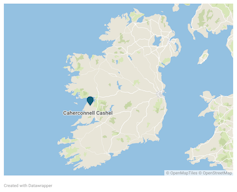
At the center of this paradigm shift is the Caherconnell Cashel, an exceptionally well-preserved ringfort nestled within the stark, limestone-paved Burren region of western Ireland. Recent excavations led by archaeologists at this sprawling, elite family farmstead have unearthed a treasure trove of artifacts that paint a vivid portrait of domestic life spanning from the late 10th to the early 17th century AD. Far from being isolated peasants or brutal warlords wrapped solely in survivalism, the wealthy local rulers who inhabited Caherconnell enjoyed a sophisticated domestic culture characterized by strategic board games, early secular literacy, and complex musical performances.
This comprehensive report explores the extraordinary artifacts recovered from Caherconnell Cashel, analyzing what they reveal about medieval recreation, social hierarchy, and cultural connectivity. By examining rare surviving items—such as an 11th-century bone-and-bronze writing pen, intricate antler gaming pieces, and delicate wire-string instrument tuning pegs—researchers are rewriting the narrative of medieval life, proving that the human impulse to play, create, and communicate transcends the physical hardships of the past.
Detailed Chronology
Understanding the historical arc of Caherconnell Cashel requires looking closely at how this elite site evolved over centuries of occupation. While the physical stone architecture of the ringfort tells one story, the stratigraphy and artifact chronology unveil a dynamic timeline of domestic life, changing social tastes, and long-range cultural exchange.

Phase I: Establishment and Early Expansion (Late 10th to 11th Century AD)
The construction of the Caherconnell Cashel began in the late 10th century, emerging as a prominent stone-walled enclosure designed to protect and project the status of a wealthy local ruling family. It was during this foundational era that the settlement established deep connections to broader European and Scandinavian cultural spheres.
- The Introduction of Strategic Gaming: Around the 9th and 10th centuries, cultural diffusion brought the Saxon and Viking board game hnefatafl to Ireland. Excavations at Caherconnell revealed physical evidence of this in the form of an exquisite, 11th-century barrel-shaped and polished antler gaming piece featuring a hollow core and a projecting bronze stem.
- The Rise of Secular Literacy: Also dating to the 11th century, researchers uncovered an unprecedented artifact: a bone-and-bronze ink pen. Crafted from the radius bone of a swan and tipped with a tapered bronze nib, this writing instrument represents a monumental shift away from purely monastic record-keeping toward secular literacy in an elite domestic environment.
- Early Musical Innovations: The 11th-century strata also yielded delicate bone and bronze tuning pegs for stringed instruments, demonstrating that the residents were actively tuning and playing early harps or lyres during the height of the Viking Age in Ireland.
Phase II: Consolidation and Elite Continuity (12th to 15th Century AD)
Throughout the high and late medieval periods, Caherconnell remained a thriving center of regional authority. As political landscapes shifted across Ireland, the family residing within the ringfort maintained their high social standing.
- Material culture from this era shows an intensification of local crafts, livestock management, and structural maintenance.
- The continued use of gaming pieces, writing implements, and musical equipment points to a stable domestic routine where leisure activities were codified as markers of high social class. Storytelling, the recitation of ancestral genealogies, and musical performances around the hearth became entrenched traditions that reinforced the lineage’s prestige.
Phase III: Late Medieval Decline and Transition (16th to Early 17th Century AD)
As the medieval period drew to a close and early modern administrative structures began to take root in Ireland, the traditional lifestyle centered around the ringfort eventually gave way.
- By the early 17th century, the continuous occupation of Caherconnell Cashel came to an end.
- Environmental preservation factors, combined with centuries of domestic accumulation, left behind the remarkable archaeological layers that modern researchers have meticulously uncovered, giving contemporary historians a rare, undisturbed window into half a millennium of elite medieval family life.
Supporting Context & Metrics
To truly appreciate the significance of the Caherconnell discoveries, one must understand the unique environmental preservation conditions of the Burren region and the broader archaeological landscape of medieval Ireland.
The Archaeology of the Intangible
In the study of medieval material culture, researchers face a profound preservation bias. The vast majority of items used for leisure, art, and daily communication were manufactured from organic, highly perishable materials such as:
- Wood: Extensively used for board game surfaces, musical instrument bodies, and furniture.
- Leather: Utilized for book bindings, apparel, and pouches.
- Textiles: Employed in games, clothing, and decorative wall hangings.
Because these organic components degrade rapidly in standard soil conditions, the archaeological record is heavily skewed toward inorganic remnants like stone, pottery, and metals. However, the unique alkaline soil chemistry and favorable preservation conditions found within specific contexts at Caherconnell Cashel allowed delicate organic materials—such as bird bone, antler, and preserved metal fittings—to survive the ravages of time.
Quantitative Breakdown of Key Artifact Categories
| Artifact Category | Specific Find Example | Material Composition | Historical & Cultural Significance |
|---|---|---|---|
| Board Gaming | 11th-Century Pegged Piece | Polished antler, bronze stem | Demonstrates adoption of hnefatafl, highlighting strategic thinking and Viking-Irish cultural exchange. |
| Literacy / Writing | 11th-Century Secular Pen | Swan wing radius bone, tapered bronze nib | Unique secular writing implement; pushes evidence of literacy beyond monastic walls into elite farmsteads. |
| Musical Performance | Wire-String Tuning Pegs | Animal bone and cast bronze | Provides direct physical evidence of early stringed instruments (harps/lyres) used for praise poetry and entertainment. |
The Geographic and Architectural Framework
Caherconnell Cashel is classified as a ringfort—a circular, enclosed farmstead defined by a robust dry-stone wall. Spanning a significant footprint within the Burren of County Clare, the site represents a high-status domestic settlement. While standard ringforts across Ireland typically housed average farming families, Caherconnell’s massive stone architecture, internal workshops, and elite artifact assemblage mark it out as the home of wealthy regional leaders who commanded economic surplus and enjoyed considerable leisure time.
Official Statements & Expert Analysis
The excavations at Caherconnell Cashel have generated intense academic interest globally, challenging long-held dogmas regarding literacy and social stratification in medieval Ireland. Members of the archaeological excavation team have shared key insights into the profound implications of their discoveries.

"Popular media often portrays medieval life as being dominated by fighters and farmers, leaving little evidence of a world beyond political struggle and simple subsistence. Leisure activities are often overlooked, despite the fact that they existed in one form or another at most—if not all—levels of medieval society. However, when conditions are right, archaeological remains can shed light on the extra-curricular activities of medieval folk."
— Lead Archaeological Team, Caherconnell Cashel Excavations
Discussing the groundbreaking discovery of the 11th-century bone-and-bronze pen, researchers emphasized its uniqueness in the Irish archaeological record:
"The Caherconnell pen finds no exact comparisons within Ireland or elsewhere; its early secular context is also, so far, unique. Until now, evidence of early literacy in Ireland has been largely confined to monastic and related church sites. At Caherconnell, the pen may have been used in general record keeping, external communications, and the composition of ancestral pedigrees and epic tales."
Furthermore, experimental archaeological testing conducted by specialist Adam Parsons added physical validation to the artifact analysis:

"Experimental work found that the closest match for the pen’s hollow barrel was a swan radius—a tubular bone—specifically from the right-side wing of the bird. This meticulous craftsmanship shows that the inhabitants invested serious resources into specialized tools for non-agricultural pursuits."
Commenting on the musical tuning pegs recovered from the site, the research team noted how these fragments bridge the gap between archaeology and early Irish literature:
"The bone tuning peg, being a relatively soft material, still bears distinct impressions from the wire-strings of the instrument. Music, and accompanying songs and poetry, fulfilled vital social, political, and cultural functions, ranging from proclaiming the magnificence of the nobility to entertaining a family around their hearth in the evening."
Future Outlook
The revelations from Caherconnell Cashel open exciting new avenues for medieval archaeology across Europe. As excavation techniques become more refined and analytical methods—such as micro-CT scanning, organic residue analysis, and experimental replication—advance, researchers are better equipped to extract hidden stories from fragmentary artifacts.

1. Expanding the Search for Secular Literacy
The identification of an elite secular pen at Caherconnell challenges historians to re-examine other high-status non-monastic sites across Ireland and Britain. Future archaeological projects will likely pay closer attention to floor deposits and workshop areas in ringforts and castles, searching for microscopic traces of ink wells, stylus tools, and writing equipment that may have been previously overlooked or misidentified.
2. Reconstructing Medieval Soundscapes
The recovery of wire-string tuning pegs provides a tantalizing glimpse into the acoustic world of the medieval elite. Future interdisciplinary research will likely combine archaeomusicology with digital modeling to recreate the exact sound profiles of these early stringed instruments, allowing modern audiences to hear the very melodies that entertained families in stone-walled enclosures a thousand years ago.
3. Democratizing the Narrative of Daily Life
While sites like Caherconnell represent the wealthy strata of society, archaeologists emphasize that human nature dictates that all social classes engaged in recreational pursuits. The challenge for future archaeological investigations is to find innovative ways to detect the invisible leisure activities of lower-status agricultural laborers and servants who left behind fewer durable luxury goods.
Ultimately, the work at Caherconnell Cashel serves as a powerful reminder that humanity across the ages has always sought solace, community, and joy through games, music, and stories—proving that medieval people were far more than mere fighters and farmers surviving day-to-day.