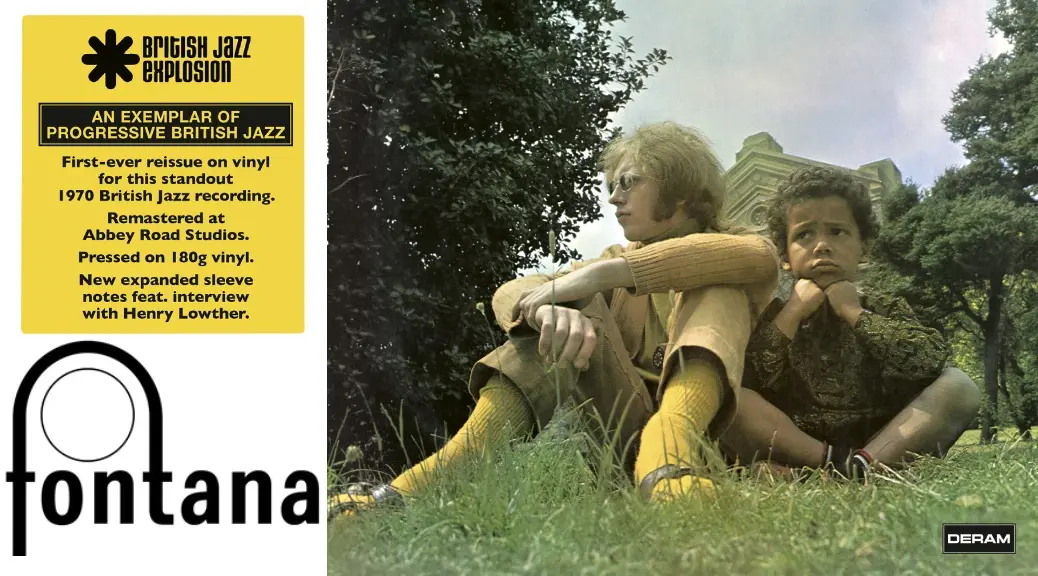
In the expansive landscape of modern British music history, few instrumentalists occupy a space as quietly influential, remarkably versatile, and chronically under-celebrated as trumpeter and multi-instrumentalist Henry Lowther. While his name may not immediately command the household recognition of contemporaries like Miles Davis or Chet Baker, Lowther’s unmistakable tone has quietly woven its way through the very fabric of British jazz, art-rock, and pop over the better part of six decades. A pivotal figure in the evolution of British jazz fusion, Lowther’s legacy is currently experiencing a much-deserved renaissance, spearheaded by a landmark vinyl reissue of his elusive 1970 solo debut, Child Song, courtesy of Fontana.
Originally issued during an era of immense creative upheaval in British improvised music, Child Song represents a fascinating historical artifact—a bridge between acoustic post-bop traditions, emerging electric fusion, and pastoral folk sensibilities. To examine Child Song and its recent return to the vinyl marketplace is to journey through the mind of a consummate musician who steadfastly refused the romanticized misery of the impoverished purist. Instead, Lowther forged a pragmatic, highly prolific career that saw him grace the stages of Woodstock alongside the Keef Hartley Band, provide the haunting, atmospheric muted trumpet lines for Talk Talk’s masterwork Spirit of Eden, and anchor high-profile pop and rock recording sessions for icons such as Elton John, Van Morrison, and Bryan Ferry.
This comprehensive retrospective explores the multifaceted career of Henry Lowther, dissecting the intricate sonic architecture of Child Song, contextualizing his vast sessionography within the broader British musical landscape, and evaluating the cultural and historical weight of this long-overdue vinyl reissue.
Detailed Chronology
The Formative Years and the Mike Westbrook Connection (1960s–1980s)
Henry Lowther’s professional journey began in earnest during the early 1960s, a golden age for the burgeoning British jazz scene. Born with a distinct, warm, and naturally conversational tone that mirrors the gentle burr of his native Leicester accent, Lowther quickly established himself as a player of extraordinary lyrical sensitivity and technical command.
A defining pillar of Lowther’s early career was his foundational, decades-long partnership with composer and bandleader Mike Westbrook. Beginning in 1963 and extending deep into the 1980s, Lowther became an indispensable voice within Westbrook’s groundbreaking ensembles. His work on Westbrook’s monumental 1974 release Citadel/Room 315 stands as a masterclass in modern orchestration, where Lowther’s expressive, glowing trumpet lines beautifully contrasted and complemented the avant-garde reed work of John Surman—most notably on the evocative movement "Love and Understanding."
During this fertile period, Lowther did not operate in a vacuum. He positioned himself at the absolute epicenter of the UK’s progressive jazz movement, collaborating extensively with luminaries such as Kenny Wheeler, Neil Ardley, Jack Bruce, John Taylor, Stan Tracey, Barbara Thompson, and the prestigious London Jazz Composers Orchestra.
From Woodstock to Pop Studios: The Pragmatic Virtuoso
While Lowther’s dedication to creative jazz was unshakeable, his pragmatic approach to survival in the music industry set him apart from ideological purists. In 1969, Lowther found himself performing on one of the biggest stages in human history: the original Woodstock Festival, where he played trumpet with the Keef Hartley Band. This high-profile exposure bridged the gap between underground British rhythm-and-blues and the burgeoning festival circuit.
However, recognizing the economic realities of a life dedicated entirely to avant-garde and progressive jazz, Lowther made a conscious decision to pivot toward studio session work. Over the next five decades, his signature trumpet and flugelhorn textures became a secret weapon for mainstream artists navigating sophisticated sonic territory. He contributed memorable, genre-transcending performances to albums by Elton John, Van Morrison, and Bryan Ferry. Perhaps most unexpectedly, Lowther’s delicate muted trumpet textures can be heard woven through the fabric of the punk-adjacent new wave soundscapes crafted by the Buzzcocks, specifically on tracks like "Airwaves Dream."
In a candid interview with Dr Jazz recorded during the COVID-19 lockdown, Lowther reflected on this dual existence without a shred of professional or artistic remorse. He maintained that commercial session work was not a compromise of his integrity, but rather a pragmatic, lucrative mechanism designed to support his family, pay his mortgage, and afford him the artistic freedom to pursue uncompromised jazz projects on his own terms. Lowther openly admitted that he had no desire to age into a bitter, resentful fifty-year-old purist languishing in a rented bedsit.
The Genesis and Reissue of Child Song (1970–Present)
Amidst this whirlwind of session work and big band performances, Lowther entered the studio in 1970 to record his debut outing as a leader: Child Song. Issued on the Fontana label, the album slipped into a crowded marketplace that was just beginning to grapple with the electrifying possibilities of jazz-rock fusion pioneered by Miles Davis.
Despite its initial obscurity, Child Song developed a dedicated underground following among collectors of progressive British jazz. While the album saw limited compact disc reissues in 2005 and 2013, it remained conspicuously absent from the vinyl format for over half a century. The current Fontana vinyl reissue rectifies this historic oversight, offering contemporary listeners a pristine, tactile portal into a uniquely British vision of improvised music.
Supporting Context & Metrics
The Sonic Architecture of Child Song
Child Song is anchored by a thematic framework centered entirely around childhood, yet the execution avoids cloying sentimentality, opting instead for a contemplative, melancholic, and occasionally jarring exploration of innocence and experience. The personnel assembled for the recording represents a who’s who of contemporary British fusion:

- Henry Lowther: Trumpet, flugelhorn, violin, percussion
- Mike McNaught: Electric piano
- Daryl Runswick: Double bass, electric bass
- Tony Roberts: Tenor saxophone, bass clarinet
- Mike Travis: Drums, percussion
- Jimmy Jewell: Tenor saxophone (guest on "Plaything")
Side A: Pastoral Moods and Avant-Garde Disruptions
The album opens with "Introduction," a masterclass in textural scene-setting. The piece effortlessly merges the Fender Rhodes-esque warmth of Mike McNaught’s electric piano with Lowther’s muted trumpet, flowing seamlessly into Tony Roberts’ contemplative tenor saxophone musings. Despite moments of forward momentum, the band resists explosive bravado; the overall performance remains remarkably low-key, wrapped in a cozy, intimate acoustic warmth.
As the record progresses, the mood shifts unpredictably. "Trav’lling Song" introduces a distinctively pastoral, almost folky disposition, driven by Lowther’s surprisingly adept violin playing alongside McNaught’s rolling keyboards. However, Mike Travis’s underlying drum rhythm threatens to unravel the arrangement, causing the journey to occasionally meander and lose its directional anchor.
The side closer, "Plaything (Child Song and Anima)," bears the unmistakable genetic footprint of Miles Davis’s ambient masterpiece In A Silent Way. This shimmering, hypnotic foundation gives way to an abrasive, experimental percussive passage. Musicologists have frequently debated whether this abrupt shift was intended as a satirical critique of contemporary hippie counterculture values. Ultimately, the uncertainty feels slightly unresolved within the composition, and it requires Tony Roberts’ magnificent, woody bass clarinet to pull the disparate elements back into a coherent artistic shape.
Side B: Structural Resolution and Warm Closures
Opening Side B with "¾ Skip (Trip-Up)," the album immediately establishes a firmer sense of compositional certainty. Propelled by Daryl Runswick’s muscular, solid electric bass line, the track achieves an exquisite harmonic balance between the rhythm section and the front-line horns. Lowther’s trumpet solo here is a moment of unvarnished brilliance, showcasing his virtuosic command of tone, breath control, and emotional nuance—though McNaught’s electric piano occasionally struggles to match the sheer intensity of Lowther’s flights.
The album concludes with "Puppet Song," a piece that mirrors the rich, comforting tonal warmth of the opening tracks. It serves as an emotional security blanket, gently wrapping up the listening experience and leaving the audience enveloped in a rich patina of acoustic-electric fusion.
Statistical Overview of Henry Lowther’s Career
- Active Decades: 6+ (1960s to present day)
- Major Collaborators: Mike Westbrook, Kenny Wheeler, Neil Ardley, Jack Bruce, John Taylor, Stan Tracey, Barbara Thompson, Elton John, Van Morrison, Bryan Ferry, Buzzcocks.
- Key Historical Milestone: Performance at the original Woodstock Festival (1969) with the Keef Hartley Band.
- Discography Highlight: Child Song (Fontana, 1970; Vinyl Reissue, 2026).
Official Statements & Archival Insights
Reflecting upon his prolific studio career during his landmark interview with Dr Jazz, Henry Lowther articulated a philosophy of musicianship grounded in professional dignity and practical realism:
"You reach a point where you have to look at the realities of life. I wanted to play music—uncompromised, beautiful music—but I also wanted to provide for my family. Doing pop and rock sessions wasn’t a sell-out; it was an education. You learn discipline, you learn how to deliver under pressure, and yes, it pays the mortgage so you can afford to blow your horn freely on the weekend without starving. I had no ambition to be a resentful, bitter fifty-year-old purist sitting alone in a bedsit complaining about the commercial world."
Music critics and reissue producers have similarly praised Lowther’s unique footprint on the British cultural landscape. Contemporary jazz archivist James Read noted in his assessment of the Child Song reissue:
"Henry Lowther wasn’t a name immediately familiar to casual listeners until stumbling upon his deep catalog. Yet, once you learn where to look, his sound is impossible to miss. His muted trumpet tones on Talk Talk’s ‘Spirit of Eden’ are legendary, but Child Song reveals his capability as a visionary bandleader. It may not be a lost masterpiece in the conventional sense, but this long-awaited vinyl reissue offers a fascinating, deeply rewarding window into early British jazz fusion."
Future Outlook
As the vinyl revival continues to unearth and recontextualize forgotten gems of the 20th-century musical canon, the renewed availability of Child Song serves as a critical catalyst for the broader reappraisal of British jazz history. For decades, the narrative of jazz fusion was dominated by American heavyweights, leaving innovative European voices in the shadows. Releases of this caliber actively rewrite that historiography, positioning British artists as vital, forward-thinking architects of a distinct transnational sound.
For Henry Lowther, this cultural reassessment arrives not as a belated validation, but as a celebratory exclamation point on a legendary career defined by humility, virtuosity, and unwavering artistic integrity. Contemporary listeners encountering his work for the first time—whether through the pastoral winding paths of Child Song, the breathtaking ambient spaces of Talk Talk, or the roaring orchestrations of Mike Westbrook—will undoubtedly find themselves forever changed.
Armed with a newfound appreciation for Lowther’s distinct sonic signature, fans and collectors alike will undoubtedly begin pouring over album liner notes, ensuring that whenever that warm, resonant trumpet or flugelhorn cuts through a mix, Henry Lowther will finally receive the profound recognition he has deserved all along.