Executive Overview
On November 11—Remembrance Day—the City of Birmingham Symphony Orchestra (CBSO) will make a poignant and historically charged return to Coventry Cathedral to perform Benjamin Britten’s masterwork, the War Requiem. This momentous performance not only honors the solemnity of Remembrance Day but also marks a profound cultural milestone: the 50th anniversary of the passing of Benjamin Britten, one of the 20th century’s most defining musical voices.
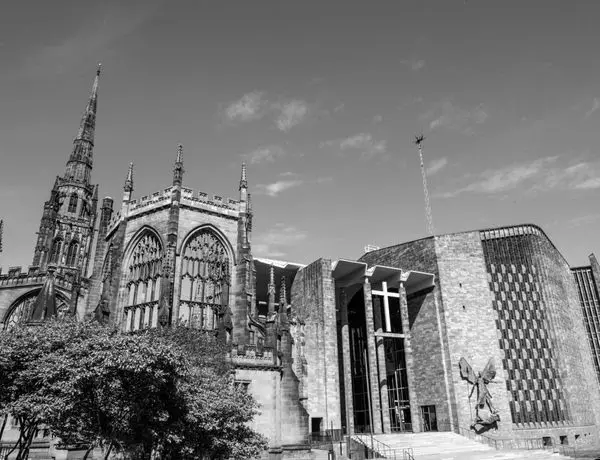
The weight of history hangs heavily over this homecoming. It was within the striking, brutalist-yet-ethereal walls of the modernist Coventry Cathedral that the CBSO gave the world premiere of the War Requiem on May 30, 1962. Commissioned specifically to mark the consecration of the new cathedral—built adjacent to the haunting, roofless ruins of its predecessor, which was destroyed by German incendiary bombs during the Second World War—the piece remains an unyielding artistic monument to human suffering, reconciliation, and the eternal cry for peace.
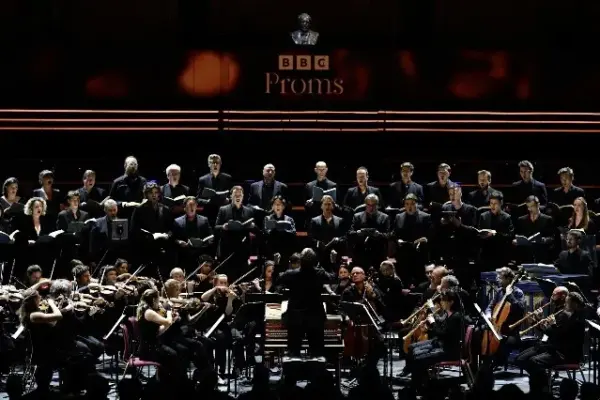
Under the visionary leadership of Music Director Kazuki Yamada, the upcoming performance gathers an extraordinary forces ensemble, including the CBSO Chorus, the CBSO Youth Choir, the Trinity Boys Choir, and an internationally acclaimed trio of soloists: soprano Olga Peretyatko, tenor Andrew Staples, and baritone Christian Gerhaher.
Far from remaining a localized commemorative event, this performance serves as the emotional anchor for an extensive international tour. Following their homecoming at Coventry, Yamada and the CBSO will transport the War Requiem across the European continent, performing in major cultural capitals including Brussels, Luxembourg, and Lucerne, alongside German engagements in Freiburg, Nuremberg, and Viersen, near Düsseldorf. Remarkably, the touring ensemble will retain its massive choral forces—including the CBSO Chorus and Trinity Boys Choir—making this one of the most ambitious and logistically complex touring projects undertaken by a British symphony orchestra in recent years.
In an era defined by geopolitical instability and renewed conflicts across the globe, the CBSO’s leadership stresses that this revival is driven by urgent contemporary resonance rather than mere historical nostalgia. As Chief Executive Emma Stenning notes, Britten’s masterpiece is "not a comfortable piece," but rather a vital, piercing demand for peace that resonates as powerfully today as it did amid the Cold War anxieties of 1962.
Detailed Chronology: From the Ashes of Coventry to the Global Stage
The Destruction of St Michael’s and the Birth of a New Cathedral
To understand the profound gravity of performing Britten’s War Requiem in Coventry, one must look back to the night of November 14, 1940. During the devastating Luftwaffe bombing raid known as the Coventry Blitz, the medieval Cathedral of St Michael was reduced to a hollowed-out shell, its soaring spire remaining as a solitary sentinel above a ruined nave. The obliteration of the cathedral became a universal symbol of the indiscriminate destruction of war.
In the post-war decades, rather than clearing the rubble, the community chose to preserve the ruined medieval shell as a permanent garden of remembrance and commission architect Sir Basil Spence to design a striking, modern cathedral directly adjacent to it. Consecrated in 1962, the new Coventry Cathedral was conceived not merely as a house of worship, but as an international monument to peace, reconciliation, and post-war international friendship—ideals that would heavily inform its artistic commissions.
The Historic 1962 World Premiere
To celebrate the consecration of the new cathedral, organizers orchestrated a multi-week arts festival that would cement Coventry’s place in 20th-century cultural history. The festival programming was staggering in its ambition, highlighted by three major world premieres:
- Benjamin Britten’s War Requiem, Op. 66: Performed by the City of Birmingham Symphony Orchestra under the baton of Meredith Davies (alongside composer/conductor contributions), featuring the legendary trio of soloists intended by Britten—soprano Heather Harper, tenor Peter Pears, and baritone Dietrich Fischer-Dieskau (though Fischer-Dieskau was ultimately replaced at the premiere by Hans Braun due to political complications, Pears and Harper cemented the work’s vocal identity).
- Michael Tippett’s King Priam: Premiered by the Royal Opera House at the Coventry Theatre, exploring the moral complexities of the Trojan War through a modernist lens.
- Arthur Bliss’s The Beatitudes: Commissioned for the cathedral’s opening services, though scheduling and rehearsal pressures for the monumental War Requiem forced its premiere to shift down the road to the Belgrade Theatre.
Britten’s War Requiem immediately transcended its immediate commemorative function. Weaving together the Latin Missa pro Defunctis (Mass for the Dead) with the deeply pacifist, harrowing poetry of Wilfred Owen—who was killed in action just one week before the 1918 Armistice at the age of 25—the work delivered an uncompromising indictment of armed conflict. The juxtaposition of liturgical grandeur with Owen’s stark verses ("My subject is War, and the pity of War. The Poetry is in the pity.") created a universal humanist statement that resonated deeply with a world still living under the shadow of nuclear annihilation.
The 2026 Remembrance Day Revival
Fast forward over six decades, and the CBSO’s return to Coventry Cathedral on November 11 bridges a vital historical arc. Commemorating both Remembrance Day and the 50th anniversary of Britten’s death in 1976, this performance reflects on how the composer’s pacifist vision has weathered the decades.
Under Kazuki Yamada, the performance brings together the full architectural and acoustic potential of Spence’s cathedral. The spatial separation envisioned by Britten—with a full orchestra and chorus representing the grand liturgical tradition, a chamber orchestra accompanying the soldiers’ dialogue, and a boys’ choir suspended in the acoustic ether—will be fully realized within the sacred space that birthed the work.
Supporting Context & Metrics: The Orchestral Force and European Tour Footprint
Staging the War Requiem is an immense logistical and artistic undertaking. The work requires a sprawling musical apparatus that stretches the resources of even major symphony orchestras.
Ensemble Composition and Musical Leadership
The performance at Coventry Cathedral and the subsequent European tour deploy a massive collective of musicians:
- Conductor: Kazuki Yamada, whose emotionally charged interpretations and dynamic rapport with the CBSO have drawn international acclaim.
- Orchestra: The City of Birmingham Symphony Orchestra, serving as both the symphonic backbone and the historical custodian of the score.
- Choral Forces:
- The CBSO Chorus, renowned as one of the finest symphonic choirs in the United Kingdom.
- The CBSO Youth Choir, injecting youthful vocal clarity and emotional immediacy into the performance.
- The Trinity Boys Choir, providing the ethereal, angelic counterpoint required by Britten’s score to symbolize innocence untouched—or lost—by war.
- Soloist Trio:
- Olga Peretyatko (Soprano): Bringing luminous vocal control and dramatic intensity to the Lacrimosa and Libera Me.
- Andrew Staples (Tenor): Channeling the aching, lyrical tenor lines originally immortalized by Peter Pears, embodying the voice of the fallen soldier.
- Christian Gerhaher (Baritone): A master of German Lieder and orchestral song, whose profound baritone gravitas brings Owen and Britten’s explorations of shared humanity across enemy lines to devastating life.
The European Tour Itinerary
Rather than remaining a one-night-only domestic event, the CBSO’s 2026 War Requiem project extends into a major international tour, bringing a powerful British musical statement across mainland Europe. The itinerary includes:

- Coventry, United Kingdom: Coventry Cathedral (Remembrance Day, November 11) — The spiritual homecoming.
- Brussels, Belgium: A symbolic capital of European diplomacy and international cooperation.
- Luxembourg: Engaging audiences in the heart of Western Europe.
- Lucerne, Switzerland: Performing in one of the world’s premier acoustic and cultural venues.
- German Dates: Freiburg, Nuremberg, and Viersen (near Düsseldorf). Taking a work born from Anglo-German reconciliation—featuring texts by a British soldier (Wilfred Owen) and musical motifs bridging wartime divides—back to German concert halls holds profound historic resonance.
Crucially, the CBSO has committed to touring with the full choral contingent, including the CBSO Chorus and Trinity Boys Choir. Transporting, housing, and managing a touring party of this scale demonstrates the orchestra’s dedication to maintaining the sonic integrity and emotional scale of Britten’s original conception across international borders.
Official Statements & Critical Perspectives
The decision to mount this extensive tour and Coventry homecoming stems from a deeply held institutional belief in the moral and social purpose of classical music.
In an official statement, CBSO Chief Executive Emma Stenning addressed the uncompromising nature of the project:
"War Requiem is not a comfortable piece. It is, as Britten intended, a reflection on war and a cry for peace, and in many ways could not be more prescient, or more urgently needed from an orchestra right now. We are not staging it as an act of nostalgia. We are staging it because it demands to be heard."
Stenning’s words cut to the core of why Britten’s masterwork endures. Written in the shadow of the Second World War and the early tremors of the Cold War, the Requiem explicitly rejects nationalist glorification. By setting Wilfred Owen’s famous encounter between two dead soldiers—“I am the enemy you killed, my friend”—Britten dismantled the ideological boundaries that justify armed conflict. In a contemporary global landscape marked by escalating hostilities in Eastern Europe, the Middle East, and beyond, Stenning and the CBSO position the music not as a museum piece, but as an active moral intervention.
Music Director Kazuki Yamada has similarly emphasized the spiritual weight of stepping back onto the podium at Coventry Cathedral. For Yamada, leading the orchestra that gave birth to the score requires a delicate balance of historical reverence and contemporary emotional truth. Under his baton, the CBSO has increasingly leaned into programming that engages with societal themes, making the War Requiem tour a defining pillar of his tenure.
Musicologists and critics have long hailed the War Requiem as Britten’s supreme achievement. By combining the universal Latin prayers for the dead with poetry that lays bare the psychological horror, mud, and futility of trench warfare, Britten created an architectural masterpiece. The score’s three distinct musical levels—the grand orchestra and chorus, the chamber orchestra accompanying the soloists, and the boys’ choir with organ—create an acoustic spatialization that physically envelops the listener in the tragedy of war.
Future Outlook: The Legacy of Peace and the CBSO’s International Mission
As the classical music world looks toward November 11 and the subsequent European tour dates, the implications of the CBSO’s undertaking extend far beyond the immediate concert season.
First, the project reinforces the vital role of regional British arts organizations on the international stage. While major London-based institutions frequently tour Europe, the CBSO—rooted in the industrial heartland of Birmingham—has historically forged a unique, gritty, and fiercely independent artistic identity. By taking a massive, resource-heavy British masterwork on an extensive European tour with its home choruses intact, the CBSO projects cultural confidence, artistic excellence, and international solidarity outward from the West Midlands.
Second, the tour serves as a timely reminder of the power of cultural diplomacy. At a time when geopolitical tensions strain international relations across Europe and the wider world, classical music continues to offer a shared language of empathy. Performing a work explicitly dedicated to reconciliation—in a cathedral built as a monument to peace—across the UK, Belgium, Luxembourg, Switzerland, and Germany reasserts the connective tissue of European cultural heritage.
Finally, the 50th anniversary of Britten’s death in 2026 prompts a broader reassessment of his legacy. While his operas (Peter Grimes, The Turn of the Screw) remain fixtures of the global theatrical repertory, it is the War Requiem that remains his most urgently political and socially binding statement.
When the first notes of the Requiem aeternam echo through Coventry Cathedral this November, they will carry the weight of sixty-four years of history, the grief of past generations, and an unyielding artistic plea for the future. For the City of Birmingham Symphony Orchestra, Kazuki Yamada, and the hundreds of choristers and musicians taking part, this is much more than a commemorative concert—it is a vital act of witness, demanding that the world stop, listen, and remember the true cost of war.
Full details regarding tickets, tour dates, and venue information for the CBSO’s upcoming performances can be accessed directly through the CBSO Official Website.