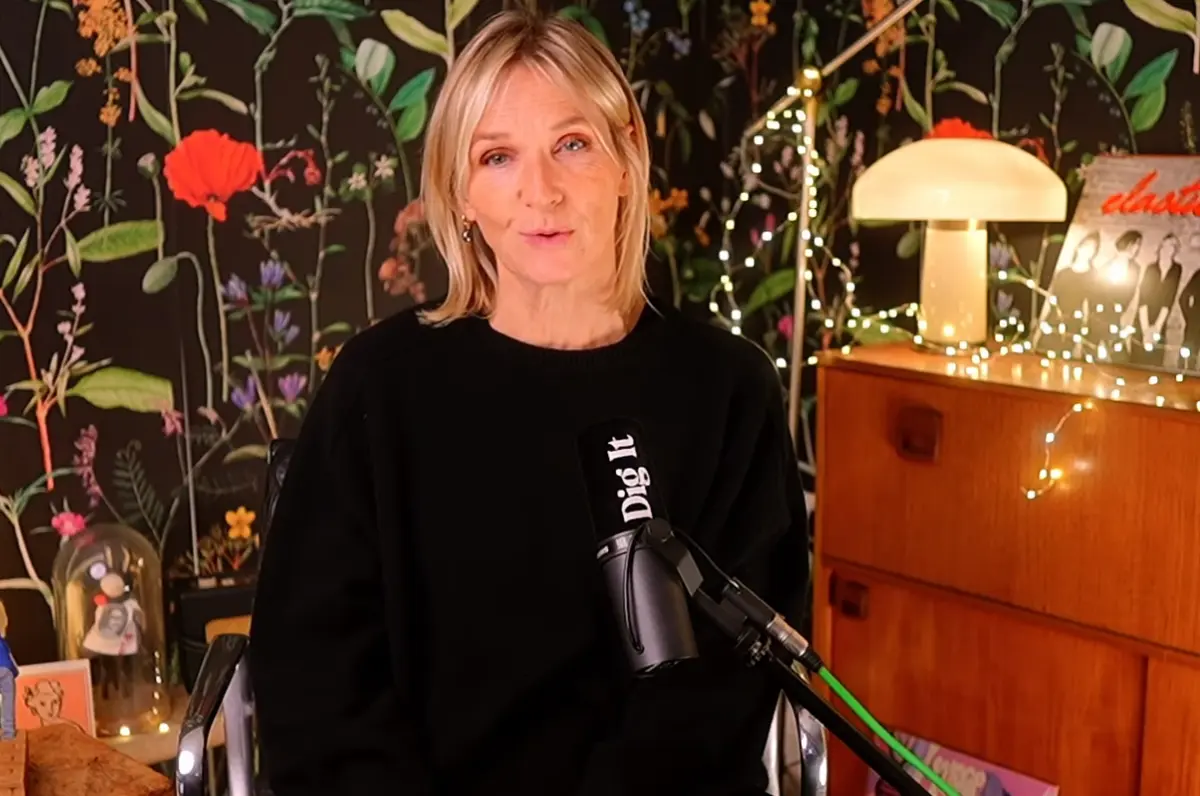
In the wake of comedian and actor Russell Brand being sentenced to 10 years and six weeks in prison after being convicted of rape and sexual assault, veteran BBC Radio 2 broadcaster Jo Whiley has opened up about her own uncomfortable encounters with him. Speaking candidly on the Dig It podcast alongside co-host Zoe Ball, the 61-year-old presenter revealed that she possesses a memorabilia book featuring a handwritten, derogatory inscription from Brand. Describing the note as a source of deep discomfort that leaves her feeling physically ill, Whiley announced her firm intention to rip the page out and burn it.
Brand’s conviction at Southwark Crown Court—following a high-profile four-week trial that examined offenses committed against four women between 2004 and 2009—has sent shockwaves through the British entertainment industry and broader cultural landscape. Handing down the sentence, Mr Justice Bennathan branded the comedian a "sexual predator" who relied on falsehoods and attempted to perpetuate harmful myths regarding consent during his defense.
Whiley’s emotional reaction reflects a broader cultural reckoning. Describing the verdict as "seismic" and noting that she wept upon hearing the news alongside her teenage daughter, Coco, Whiley’s testimony highlights the pervasive nature of misogyny that went unchecked in media circles for decades. As additional women step forward with fresh allegations of misconduct, high-profile figures within the broadcasting community are actively confronting, discarding, and dismantling the physical remnants of an era that enabled such predatory behavior.
Detailed Chronology of the Trial, Verdict, and Sentencing
The legal downfall of Russell Brand unfolded across a meticulously managed judicial process at Southwark Crown Court, culminating in a sentencing hearing that dismantled the defense’s arguments and reinforced modern standards of sexual consent in British law.
The Trial and Findings
The trial, which spanned four intensive weeks, focused on charges brought by four brave complainants detailing offenses committed between 2004 and 2009—a period coinciding with the height of Brand’s mainstream commercial fame across British television, radio, and international comedy circuits. Throughout the proceedings, the Crown Prosecution Service presented a compelling body of evidence establishing a pattern of aggressive, non-consensual behavior.
Brand’s defense team attempted to deploy historical tropes regarding victim behavior, apparel, and alcohol consumption—tactics aimed at muddying the waters around consent. However, the prosecution systematically dismantled these assertions, paving the way for the jury to return unanimous guilty verdicts on one count of rape and three counts of sexual assault. Following the verdict, Brand was immediately remanded in custody, held securely away from the public eye until the formal sentencing phase could be concluded.
The Sentencing Hearing and Judicial Condemnation
On Monday, 9 November, Mr Justice Bennathan delivered a scathing judicial reprimand before handing down a sentence of 10 years and six weeks imprisonment. In his remarks, the judge did not mince words, explicitly defining Brand as a predatory individual who used his celebrity status and platform to obfuscate the truth.
"Whatever women wear, wherever they go, indeed whatever they drink, they retain the right to say no and to demand justice from the criminal courts when sexual predators like you, Russell Brand, act without their consent," Mr Justice Bennathan stated during the sentencing.
The court also heard harrowing victim impact statements that brought the true human cost of Brand’s actions into stark focus. One survivor read a statement detailing the protracted psychological trauma caused by the assault: “I’ve been in shock and turmoil for weeks. I was extremely upset and traumatised. I didn’t have any respect for myself. I was thinking I was damaged goods – scared of giving off signals that could be taken the wrong way.”
These testimonies served to underscore the systemic nature of the abuse, illustrating how victims often internalize blame long before the judicial system validates their trauma.
Jo Whiley’s Revelations and the Cultural Reckoning in Media
The fallout from Brand’s sentencing has extended far beyond the courtroom, triggering deep reflection among prominent media personalities who crossed paths with him during his multi-decade career. Jo Whiley’s disclosures on the Dig It podcast offer a rare, unvarnished look at the casual misogyny that characterized green rooms and broadcasting studios during the 2000s.
The "Burning" Autograph
During the podcast episode, Whiley discussed her collection of signed memorabilia—a special book cataloging celebrities who appeared on her various flagship music and interview programs over the years. Among the signatures, however, sits an inscription from Russell Brand that she can no longer view without intense distress.
"I’ve got a signature from Russell," Whiley told Zoe Ball. "It’s got the word… He just refers to me as a ‘MILF’ and I feel like I keep looking at the bookshelf. It’s like it’s burning a hole in my bookshelf at the moment. I’m sitting in the living room like those words are there."
Reflecting on the psychological weight of retaining the artifact, Whiley confirmed her definitive plans to erase it from her home entirely: "I’m going to have to tear the page out and burn it. I really am because it just makes me shudder, but that was what you expected, I think, when you met him."
A Mother’s Perspective and Collective Grief
Whiley noted that she learned of the verdict while in the company of her teenage daughter, Coco, a generational juxtaposition that magnified the emotional gravity of the moment. She described the outcome not merely as an isolated legal victory, but as a watershed moment for women everywhere.
"It just felt seismic," Whiley reflected, visibly emotional. "It felt extraordinarily important, and there seems to have been, since then, this lament from women. I’ve just seen it over and over again, and I cried. It’s for every woman who’s ever been at the hands of somebody who’s abused them, whether it’s sexual or domestic."
Supporting Context, Metrics, and Emerging Allegations
The legal condemnation of Russell Brand has unlocked a broader wave of accountability across the United Kingdom, mirroring the global momentum of the MeToo movement while exposing institutional blind spots within the creative industries.
Expanding Scope of Allegations
According to investigative reports published by The Times, the conclusion of Brand’s criminal trial has served as a catalyst for additional survivors to come forward. In the days following his sentencing, six more women stepped forward to formally accuse Brand of historical sexual misconduct. These fresh accounts indicate that the behavior established during the Southwark Crown Court trial was part of a broader, long-term pattern rather than isolated incidents.
Media Industry Accountability Metrics
The cultural impact of the trial has prompted media organizations, regulatory bodies, and talent agencies to review their historical handling of behavioral complaints. Key areas under scrutiny include:
Green Room Culture: Re-evaluating the unmonitored access high-status performers maintained backstage at television and radio networks during the 2000s and 2010s.
Reporting Mechanisms: Implementing robust, independent channels for junior staff and contractors to flag predatory or sexually inappropriate behavior without fear of professional retaliation.
Editorial Review: Assessing the archiving and promotion of historical broadcast content featuring individuals convicted of serious sexual offenses.
Official Statements and Industry Response
The legal and cultural ramifications of Brand’s conviction have elicited formal responses from advocacy groups, legal bodies, and media institutions, all emphasizing the need for enduring systemic change.
Legal and Advocacy Reactions
End-to-end support networks for survivors of sexual violence have reported an immediate surge in helpline traffic following the broadcast and publication of the trial’s details. Advocacy groups have praised Mr Justice Bennathan’s explicit dismantling of defense tactics that weaponize victim behavior. By categorically stating that clothing choice, alcohol consumption, and location do not constitute consent, the judiciary has set a robust precedent for future trials involving high-status defendants.
Broadcasting Community Sentiment
Within the British broadcasting ecosystem, colleagues of Jo Whiley and Zoe Ball have privately and publicly grappled with the normalization of inappropriate behavior during the broadcast boom of the 2000s. The casual use of degrading language—such as the inscription found in Whiley’s memorabilia book—was frequently excused under the banner of "shock jock" personas or eccentric comedic flair.
The unified response from broadcasters following Brand’s sentencing signals an unequivocal cultural shift: the era of excusing predatory misogyny as mere entertainment is definitively over.
Future Outlook: Rebuilding Trust and Supporting Survivors
As Russell Brand begins his 10-year and six-week prison sentence, the focus must inevitably shift toward long-term cultural and institutional reform. The willingness of high-profile broadcasters like Jo Whiley to speak out, discard toxic memorabilia, and align themselves with the experiences of survivors demonstrates a crucial evolution in public discourse.
Key Milestones Ahead
Police and Prosecutorial Follow-Up: Investigators will continue to assess the credibility of the six newly reported allegations of sexual misconduct to determine whether further criminal charges are warranted.
Industry-Wide Policy Overhauls: Major media networks in the UK are expected to finalize revised codes of conduct and safeguarding protocols designed to protect staff, guests, and audience members from predatory behavior.
Ongoing Support for Survivors: Funding and visibility for independent sexual violence support charities remain critical as an increasing number of survivors find the courage to come forward in the wake of public accountability trials.
Ultimately, the destruction of a single signed page on a bookshelf in Jo Whiley’s home serves as a potent metaphor for a wider cultural purge—one in which the physical and psychological relics of abuse are actively dismantled, making space for a safer, more accountable creative industry.