Executive Overview
In the ever-evolving landscape of contemporary acoustic jazz, few artists possess the institutional lineage and stylistic versatility of multi-instrumentalist Jorge Rossy. Globally celebrated for his foundational work behind the drum kit in the legendary 1990s Brad Mehldau Trio, Rossy has spent the subsequent decades quietly carving out a secondary, yet equally compelling, identity as a master of the vibraphone and marimba. With the announcement of his upcoming full-length album, 11 Years—slated for an official CD release on November 15, 2026, via the Basel-based boutique imprint Clap Your Hands—Rossy takes a bold leap forward.
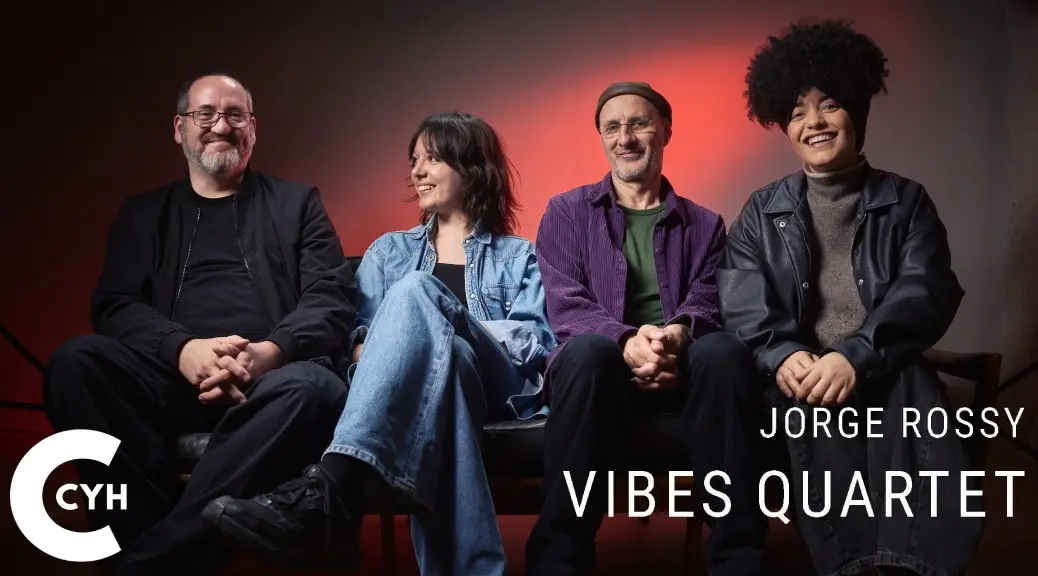
Recorded with a stellar, cross-generational international quartet, 11 Years is far more than a casual stylistic detour for a rhythm-section veteran. It is a deeply deliberate, harmonically daring exploration of space, texture, and collective memory. By stripping away the piano—a traditional anchoring instrument in jazz frontlines—Rossy takes on the formidable challenge of dictating the harmonic framework himself through the metallic resonance of the vibraphone. Supported by bassist Robert Landfermann, trumpeter Milena Casado, and drummer Cornelia Nilsson, Rossy delivers a masterclass in nuance, paying homage to jazz history while firmly anchoring his music in the present. This comprehensive review and investigative overview explores the architecture of 11 Years, tracing its historical inspirations, analyzing its compositional framework, and evaluating its place within the broader pantheon of modern European and American jazz.
Detailed Chronology and Musical Architecture of 11 Years
The conceptual genesis of 11 Years traces back through decades of jazz history, finding a direct ancestor in a classic 1955 Prestige recording session. On that historic date, trumpet icon Miles Davis and vibraphone titan Milt Jackson joined forces to record Thad Jones’s buoyant composition "Bitty Ditty," sharing the melodic theme while pianist Ray Bryant navigated the underlying chords. Rossy explicitly channels this iconic configuration on 11 Years, but with a crucial, high-risk modern twist: he removes the piano entirely.
This structural omission forces Rossy to shoulder the harmonic weight of the ensemble directly from the vibraphone. Without the safety net of a keyboard instrument to fill in the voicings, every gesture, chord extension, and counterpoint becomes hyper-visible. It is a high-wire act that pays artistic dividends across the album’s thoughtfully sequenced tracklist.
Opening Horizons: "Song for D.G." and "Blues 400"
The album opens with "Song for D.G.," a gentle, contemplative piece dedicated to the late anarchist anthropologist and activist David Graeber. From the very first notes, Spanish-born, New York-based trumpeter Milena Casado establishes herself as a searing, lyrical voice, cutting through the acoustic air with a pristine tone. Following this atmospheric introduction, the energy shifts decisively with "Blues 400," a swinging number co-written by Rossy in the 1990s alongside Basel-based pianist Michael Beck. Here, Rossy and bassist Robert Landfermann lock into an irresistible groove, demonstrating a telekinetic interplay forged through years of European and international collaborations.
The program continues with "Hope," an airy, contemporary showcase that brings Rossy’s delicate mallet work into sharp focus. This leads into one of the album’s emotional centerpieces: "Ninety-one." Written by Rossy’s older sister, Mercedes Rossy—a brilliant pianist and composer who tragically passed away in 1995 at the tender age of 34—the piece carries profound personal resonance. Within a year of her passing, Jorge Rossy performed the song on drums at a commemorative Barcelona concert, a tribute later released under saxophonist Mark Turner’s name as The Music of Mercedes Rossy. On the 11 Years rendition, Rossy steps back, allowing his bandmates to hold the floor while Casado delivers a breathtaking, emotionally charged solo that honors the memory of a fallen creative force.
Mid-Album Highlights: Post-Bop Exploration and Literary Allusions
As the album progresses, the temperature rises with "Some Things They Aren’t," unquestionably the tour de force of the collection. A dizzying post-bop contrafact built upon the changes of Jerome Kern’s timeless standard "All the Things You Are," the track features Landfermann maintaining a relentless, liquid-smooth walking bassline while the rest of the quartet balances intricate polyrhythms with crystalline precision.
Providing a necessary and artful counterweight to the pyrotechnics is "Anarres," a melancholy, slow-burning piece featuring muted trumpet. Named after the desert moon in Ursula K. Le Guin’s seminal anarchist sci-fi novel The Dispossessed, "Anarres" functions as a mid-programme breather. It serves the exact structural purpose that a dramatic interlude would in a classic Latin-jazz suite, offering the listener a moment of deep, reflective exhale before the tempo picks back up.
The Closing Movements: From "Bitty Ditty" to Strayhorn
The penultimate phases of the album pay direct tribute to the project’s historical roots. Cornelia Nilsson steps up front and center on the aforementioned "Bitty Ditty," driving the ensemble with an effortless, swinging momentum that highlights her reputation as one of Scandinavia’s most formidable young percussionists.

The title track, "11 Years"—written for Rossy’s partner Berit eleven years after they first met—features a striking transition from the woody, earthy resonance of the marimba to the bright, bell-like clarity of the vibraphone. While the piece leans into the instrument’s familiar, comforting idioms, the execution is executed with such warmth that resistance is futile.
The album concludes with a brilliant reimagining of Billy Strayhorn’s "Drawing Room Blues," filtered through the analytical lens of Joe Henderson’s iconic 1992 Verve album Lush Life. Rossy’s quartet wraps their collective fingers around Strayhorn’s sophisticated harmonies with complete authority, offering an arrangement that respects the Ellingtonian tradition while pushing the sonic boundaries outward.
Supporting Context & Metrics: The Ensemble and Production Ecosystem
To fully understand the artistic weight of 11 Years, one must examine the elite pedigree of the personnel involved. Jorge Rossy has assembled an ensemble that bridges generational divides and spans multiple continents, creating a veritable supergroup of contemporary European and New York-adjacent jazz talent.
+-----------------------------------------------------------------+
|                  JORGE ROSSY VIBES QUARTET                      |
+--------------------------+--------------------------------------+
| ROLE                     | ARTIST                               |
+--------------------------+--------------------------------------+
| Vibraphone / Marimba     | Jorge Rossy (Spain / Switzerland)    |
| Trumpet / Flugelhorn     | Milena Casado (Spain / New York)     |
| Double Bass              | Robert Landfermann (Germany)         |
| Drums                    | Cornelia Nilsson (Sweden / Denmark)  |
+--------------------------+--------------------------------------+
The Personnel Breakdown
- Jorge Rossy (Vibraphone/Marimba): A native of Barcelona, Rossy’s international prominence exploded in the 1990s as the rhythmic engine of the original Brad Mehldau Trio. Over the past two decades, he has systematically transitioned his public artistic voice to the vibraphone, releasing acclaimed projects on labels like Pirouet and ECM (such as his acclaimed trio album Puerta).
- Robert Landfermann (Double Bass): Returning from the Puerta recording sessions, the German bassist provides the essential gravitational pull for Rossy’s piano-less quartet. Known for his elastic tone and fearlessly modern harmonic conception, Landfermann bridges the gap between Rossy’s vibraphone and Nilsson’s drums.
- Milena Casado (Trumpet): The Spanish-born, New York-based trumpeter made massive waves in the international jazz community with her debut album, Reflection of Another Self, released on Candid Records. Her fluid phrasing and evocative muted work anchor the frontline alongside Rossy.
- Cornelia Nilsson (Drums): Based in Copenhagen, the Swedish-born percussionist was deservedly awarded the prestigious Ben Webster Prize in 2024. Her deep pocket, dynamic range, and swinging propulsion are vital to the album’s forward momentum.
The Label and Institutional Footprint: Clap Your Hands
11 Years is set to be distributed by Clap Your Hands, a boutique Basel-based record label helmed by saxophonist Sarah Chaksad and producer Patrik Zosso. Both figures share a deep institutional connection with Rossy as colleagues at the prestigious Jazzcampus in Basel, Switzerland. This localized, artist-run infrastructure ensures that the recording retains its uncompromising artistic vision, free from the commercial homogenization that frequently plagues major-label releases.
Official Statements and Critical Reception
While formal press statements from the artists remain tightly focused on the collaborative nature of the project, early critical assessments within the European jazz community have praised 11 Years for its structural audacity and emotional resonance.
Industry insiders have particularly lauded Rossy’s decision to forgo the piano. In contemporary jazz discourse, the absence of a chordal instrument is often viewed as an avant-garde gambit reserved for free-improvisation outfits. However, Rossy utilizes the piano-less format not to descend into chaotic abstraction, but to achieve a rare transparency. Every harmonic implication made by the vibraphone rings out clearly, creating an intimate dialogue between the mallets, the trumpet, the bass, and the drum kit.
In early critical notes, reviewers have emphasized that the album represents a triumph of "music built on family, friendship, and long memory." The inclusion of works dedicated to political thinkers (David Graeber), literary constructs (Ursula K. Le Guin), romantic partners (Berit), and fallen family members (Mercedes Rossy) elevates 11 Years from a mere collection of jazz standards and originals into a deeply autobiographical statement. It is a work that deliberately avoids the trap of slick, commercial "smooth jazz," opting instead for an organic, tactile aesthetic that rewards attentive, repeated listening.
Future Outlook: Touring, Legacy, and the Evolution of Rossy’s Artistry
As the jazz world looks ahead to the official CD release of 11 Years on November 15, 2026, anticipation is rapidly building for subsequent live tour dates. Given the geographic dispersion of the quartet—spanning Spain, New York, Germany, and Scandinavia—mobilizing the ensemble will require precise logistical coordination, yet the musical rewards promise to make any live engagement an essential ticket for contemporary jazz aficionados.
What Lies Ahead for the Jorge Rossy Vibes Quartet?
- Expanded Live Itineraries: European festival organizers and specialized New York jazz clubs are already positioning the quartet for regional showcases throughout late 2026 and 2027. The chemistry displayed on 11 Years begs to be witnessed in an intimate club setting, where the acoustic interplay between Rossy’s mallets and Casado’s trumpet can truly breathe.
- Further Repertoire Development: By testing the boundaries of the piano-less quartet format, Rossy has opened a new creative door for his compositional output. Future recordings may lean even further into long-form suites or explore expanded instrumentation, building upon the foundational grammar established here.
- Pedagogical Impact: Through his ongoing work at institutions like the Jazzcampus in Basel, Rossy continues to mentor the next generation of European jazz instrumentalists. Projects like 11 Years serve as living textbooks for students examining how to balance historical reverence with modern harmonic exploration.
Ultimately, 11 Years stands as a defining milestone in Jorge Rossy’s multifaceted career. It proves that an artist best known for driving the rhythm from behind a drum kit can step to the front of the stage, pick up a pair of mallets, and craft an intimate, intellectually stimulating, and emotionally resonant masterpiece. When physical CD copies hit the shelves this November, listeners will find an album that honors its past while fearlessly charting a course into the future of acoustic jazz.