Executive Overview
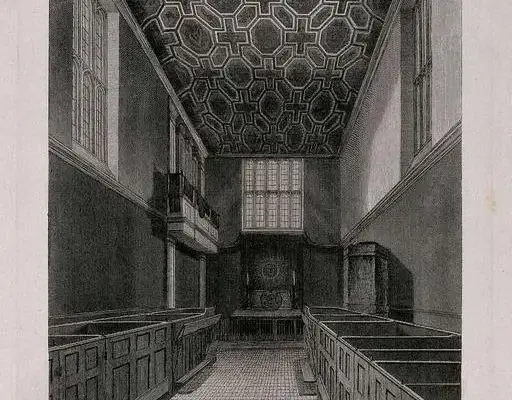
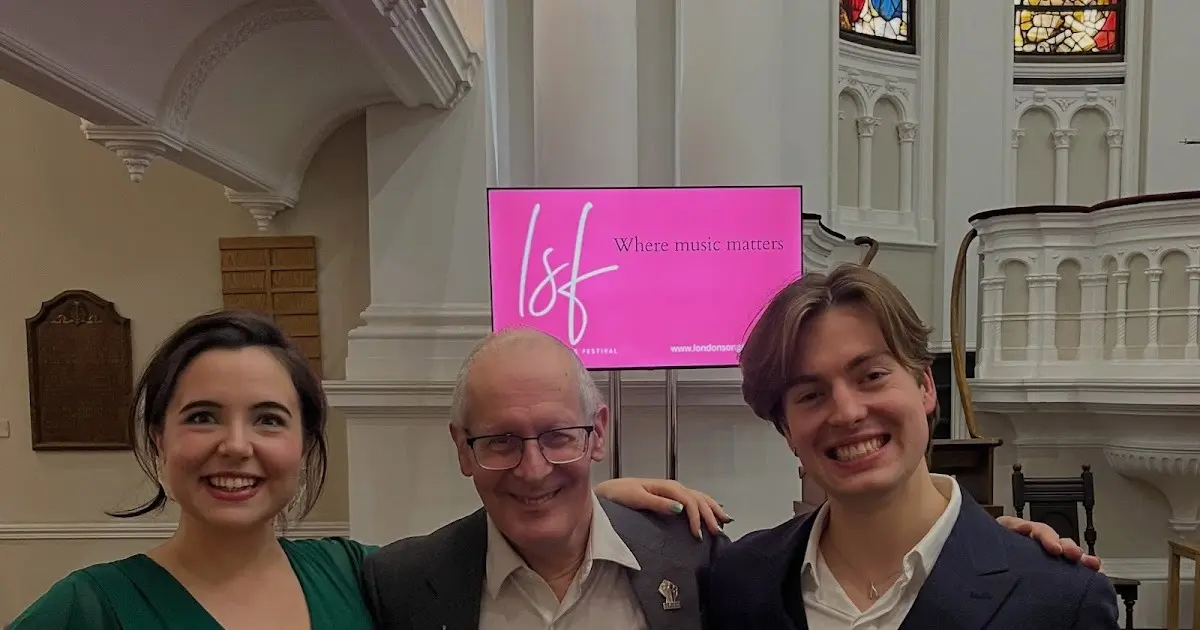
The classical music calendar in London received a vibrant and intellectually stimulating jolt on November 5, 2026, as the London Song Festival officially launched its eagerly anticipated season. Spearheaded by founder and artistic director Nigel Foster, the opening night concert at the historic Hinde Street Methodist Church set a remarkably high standard for the months ahead.
Titled Reaching Out to a Distant Lover, the evening’s programme drew conceptual inspiration from a unique historical milestone: the 150th anniversary of the granting of the patent for the telephone to Alexander Graham Bell.
Rather than merely indulging in a thematic novelty, Foster curated an exceptionally broad and eclectic repertoire that spanned centuries, languages, and stylistic boundaries. The concert featured two of Britain’s most compelling young vocal talents—mezzo-soprano Ellen Pearson and tenor Laurence Kilsby—alongside Foster himself at the piano.
The resulting performance was a masterclass in song interpretation, blending youthful charm, vocal agility, and deep emotional resonance. By exploring physical separation, the psychological weight of war, unrequited yearnings, and modern communication tropes—including a surprising nod to pop royalty ABBA—the trio delivered a performance that challenged traditional recital norms while honoring the profound lineage of the art song.
Detailed Chronology: A Musical Journey Across Distance
The recital was meticulously structured into thematic vignettes, guiding the audience through various manifestations of human separation and longing.
Part I: Messages, Isolation, and the Shadow of War
The evening opened with the theme ‘A message to the Distant Beloved’. Eschewing the obvious choice of Beethoven’s famous song cycle, Foster turned boldly and imaginatively to Franz Schubert. Tenor Laurence Kilsby opened the concert with ‘Liebesbotschaft’ from Schwanengesang. Kilsby immediately established his credentials, bringing out the lyric beauty of the line with an innate charm and controlled inner passion.
Mezzo-soprano Ellen Pearson followed with Schubert’s Suleika I. Utilizing her richly vibrant voice, Pearson injected a palpable sense of urgency into the vocal line, crafting an engaging account that dissolved into a quietly devastating, touching conclusion. Kilsby returned to Schubert’s late masterpiece later in the sequence with ‘Die Taubenpost’, deftly combining vocal line purity with acute sensitivity to the text, framing the song with a youthfulness that felt entirely fresh.
Shifting to the theme ‘So Alone…’, the programme moved into French repertoire via Cécile Chaminade and Hector Berlioz. Chaminade’s Attente proved to be an exotic excursion; Pearson navigated the intricate ornaments with precision while maintaining an undercurrent of driving urgency. Kilsby then tackled ‘Absence’ from Berlioz’s Les Nuits d’été. Possessing a vibrant lyric voice and an expansive sense of phrasing, Kilsby proved the ideal vehicle for the work, molding phrases with expressive intelligence and capturing the song’s inherent lyric melancholy.
The conceptual journey crossed oceans under the banner ‘Separated by the Sea’. Pearson delivered a focused, concentrated rendition of Fauré’s Les Berceaux, maintaining a lovely, supple vocal line throughout. This was followed by a rare gem: Gian Carlo Menotti’s ‘Gli amanti impossibili’ from his 1967 cycle Canti della Lontananza, written originally for Elisabeth Schwarzkopf. Kilsby seized upon the piece’s free, rhapsodic nature, infusing the performance with intensity, urgency, and raw passion.
The first half reached its emotional apex under the grim heading ‘Separated by War’. Kilsby and Pearson joined forces for Gustav Mahler’s ‘Aus! Aus!’. Although utilizing texts from Des Knaben Wunderhorn, this song exists outside Mahler’s formal orchestrations, remaining an intimate piano-backed narrative. Both singers infused the tale of a marching soldier with a mix of swagger and tragic charm.
Kilsby then offered a third installment from Schwanengesang with ‘Kriegers Ahnung’, a performance that began with hushed concentration before building to an urgent, bleak climax. Pearson brought the first half to a striking close with Henri Duparc’s magnificent ‘Au pays où se fait la guerre’. Striking a balance between profound melancholy and latent power, Pearson portrayed the abandoned lover not merely as a victim, but as a feisty, formidable presence, driving the song’s climax with fierce strength of line.
Part II: Dreams, Memories, and Modern Echoes
The second half commenced with a brilliant stroke of theatrical wit—a jeux d’esprit featuring ABBA’s infectious 1970s pop hit ‘Ring Ring’. Surprisingly effective within an art song recital, the performance highlighted the song’s surprisingly sophisticated pedigree, credited not only to Benny Andersson and Björn Ulvaeus, but also to Stig Anderson, Neil Sedaka, and Phil Cody.

Moving into ‘Thoughts and Dreams and Memories’, Kilsby approached Frank Bridge’s ‘Come to me in my dreams’ with intimacy and direct urgency, carefully sidestepping the over-the-top sentimentalism that frequently plagues interpretations of the piece. Pearson countered with Hugo Wolf’s ‘Verschwiegene Liebe’ from the Eichendorff-Lieder, imbuing the German lied with a palpable sense of suppressed excitement.
Kilsby then introduced another rarity: Albert Roussel’s 1908 song ‘Flammes’. Built initially around an almost monotonous vocal line, the song’s brilliance rested on a glittering, complex piano accompaniment driven by Foster. Kilsby navigated the piece’s trajectory from stillness to an urgent, passionate climax before returning to the haunting opening monotone. This exploration of lesser-known repertoire continued with Amy Beach’s 1889 salon-tinged yet emotionally charged ‘The Western Wind’, performed with unwavering seriousness by Kilsby and Foster.
Under the theme ‘Does he even think of me?’, Pearson delivered a deeply moving reading of John Ireland’s ‘Her Song’, setting words by Thomas Hardy. This was followed by Erich Wolfgang Korngold’s ‘Liebesbriefe’, a lush, warmly engaging performance rich in motifs that foreshadowed the composer’s seminal opera Die Tote Stadt.
A notable highlight of the evening arrived with Richard Strauss’s ‘Morgen!’. While the song is frequently claimed by female voices—having been written as a wedding present for the composer’s wife—Strauss himself recorded it exclusively with male singers, and the original poem by John Henry Mackay was penned from a male perspective regarding male intimacy. Laurence Kilsby’s interpretation was exceptionally moving; his pristine vocal line, combined with minute attention to expressive gestures, offered a fresh and profoundly touching perspective on a heavily canonical work.
The recital neared its conclusion with ‘We will never be together again…’. Kilsby tackled ‘Dawn’ by Ernest Charles—a composer celebrated both on Broadway and by legendary sopranos like Kirsten Flagstad and Rosa Ponselle—delivering a big-hearted performance that balanced popular theatricality with classical rigor. Pearson matched this with Cecil Armstrong Gibbs’s ‘The Cherry Tree’, emphasizing the song’s distinct folk roots with delicate tenderness.
The evening culminated in an inspired collaborative finale: ‘This nearly was mine’ from Rodgers and Hammerstein’s South Pacific. Originally conceived as a solo showpiece for a bass-baritone like Ezio Pinza, the reimagining as a shared duet provided a warm, communal resolution to an evening defined by themes of distance and separation.
Supporting Context & Metrics
| Performance Metric / Detail | Fact / Data Point |
|---|---|
| Event Date | November 5, 2026 |
| Venue | Hinde Street Methodist Church, London |
| Festival Season | London Song Festival 2026 Opening Concert |
| Inspiration / Milestone | 150th Anniversary of the Telephone Patent (Alexander Graham Bell) |
| Artistic Director & Pianist | Nigel Foster |
| Featured Vocalists | Ellen Pearson (Mezzo-Soprano), Laurence Kilsby (Tenor) |
| Total Composers Represented | Over 20 international and historical composers |
| Notable Rarities | Albert Roussel (Flammes), Gian Carlo Menotti (Gli amanti impossibili), Amy Beach (The Western Wind) |
Beyond the musical execution, Nigel Foster’s written programme notes provided audiences with a wealth of historical trivia, demonstrating the festival’s commitment to contextual scholarship. Notable revelations included the background of Roussel’s ‘Flammes’, which was dedicated to Madeleine Aubry—sister of the lyricist and wife of Tony Jules Guerite, the French structural engineer largely credited with introducing reinforced concrete to the British construction industry. Additionally, notes revealed that composer Cecil Armstrong Gibbs was the son of a director at D & W Gibbs, the historic firm responsible for Gibbs SR Toothpaste.
Official Statements & Artistic Vision
While formal press releases from cultural institutions often rely on hyperbolic marketing, the artistic intent behind the London Song Festival’s 2026 opening was transparently rooted in bridging historical divides.
Nigel Foster’s curation underscored a philosophical stance: that the art song genre is not a static museum piece, but a living, breathing medium capable of dialogue with modern communication history. By linking the Victorian anxiety of physical distance and wartime separation directly to the technological dawn of telecommunications, the festival positioned the human voice as the original instrument of bridging isolation.
Critics and attendees alike noted that the pairing of Ellen Pearson and Laurence Kilsby was a triumph of casting. Both singers, having established significant reputations in contemporary opera and orchestral song earlier in the year (Pearson in Elena Langer’s Four Sisters at Covent Garden; Kilsby in Britten’s Serenade alongside horn player Ben Goldscheider), brought theatrical discipline and dynamic versatility to the recital platform.
Future Outlook
The triumphant launch of the 2026 London Song Festival bodes exceptionally well for the remainder of the season. By refusing to pander to conservative expectations while maintaining rigorous vocal and pianistic standards, Nigel Foster has reaffirmed the festival’s status as a vital anchor in the British classical music ecosystem.
As the festival continues its 2026 run, audiences can anticipate further explorations of narrative-driven programming that challenge conventional recital formats. The success of Reaching Out to a Distant Lover proves that when historic art song is paired with imaginative thematic curation, exceptional young talent, and uncompromising artistic integrity, classical vocal music remains fiercely relevant, deeply emotional, and profoundly engaging to contemporary audiences.