Executive Overview
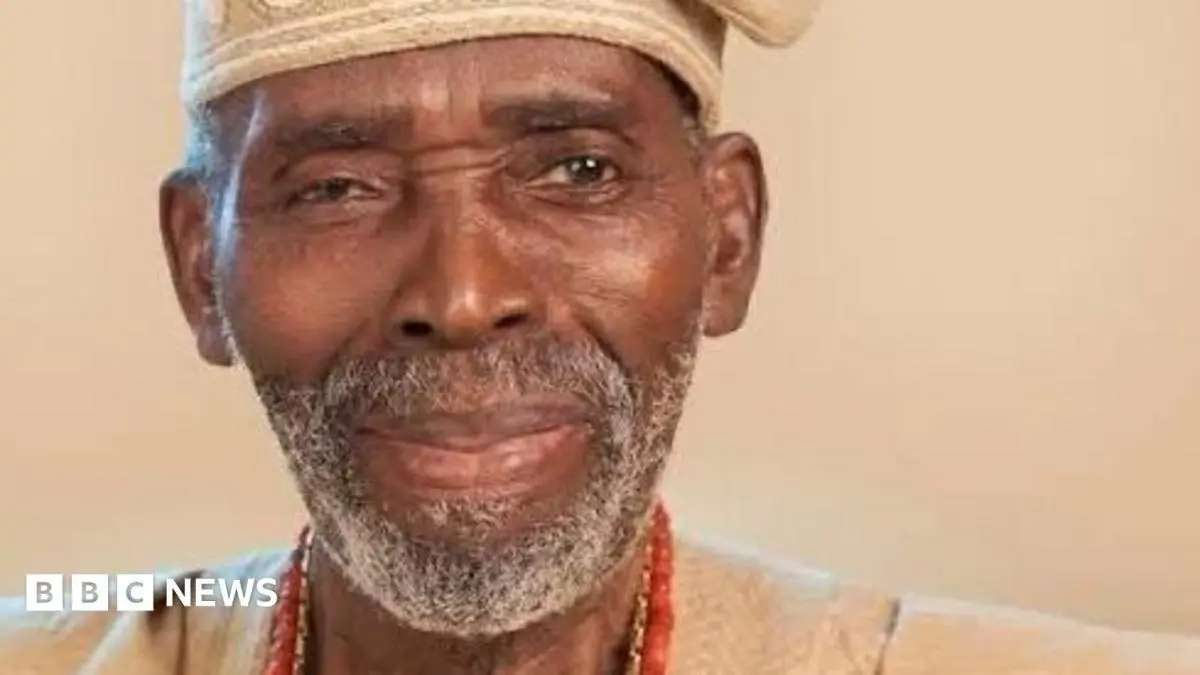
The global entertainment community and the vast landscape of Nigerian cinema are in deep mourning following the passing of Olu Jacobs, one of Africa’s most iconic, revered, and foundational actors. A towering titan of stage, television, and film, Jacobs passed away at the age of 84, leaving behind a legacy that spans over half a century. His departure marks the end of a golden era for Nollywood—the powerhouse Nigerian film industry—where he was universally regarded as a founding father, an artistic moral compass, and an inspiration to generations of storytellers.
His death was officially announced by his wife and fellow veteran actress, Joke Silva, who released a poignant statement describing her late husband as "The Lion of Lufodo." She noted that his monumental life was "well lived and fought," capturing the resilience, grace, and dignity that characterized both his personal journey and his professional career.
Born Oludotun Baiyewu Jacobs on July 11, 1942, his artistic footprint extended far beyond the borders of Nigeria. Before returning to his homeland to help architect the modern African film industry, Jacobs carved out a formidable reputation in the United Kingdom, training at the prestigious Royal Academy of Dramatic Art (RADA) and commanding the stages of British theatres and television screens during the 1970s and 1980s. His return to Nigeria injected international standardcraft into local productions, elevating the status of indigenous storytelling and helping to transform Nollywood into the global phenomenon it is today.
In his later years, Jacobs stepped back from the public eye, valiantly battling Dementia with Lewy bodies—a degenerative neurological condition that was publicly disclosed by his wife in 2021. Despite intermittent, baseless death hoaxes that plagued his family over the years—which his relatives and children consistently and swiftly debunked—Jacobs remained a quiet, majestic presence in the hearts of millions.
This retrospective examines the extraordinary life, career, and cultural impact of Olu Jacobs, charting his journey from the classic theatres of London to the pinnacle of African cinema, and assessing the indelible mark he leaves on the global artistic consciousness.
Detailed Chronology: From Abeokuta to the West End and Nollywood’s Zenith
Early Life and International Training (1942–1970s)
Oludotun Baiyewu Jacobs was born on July 11, 1942, in Abeokuta, Ogun State, Nigeria, though he spent much of his formative years growing up in Lagos. Fascinated by the arts from an early age, Jacobs made the pivotal decision to pursue formal training abroad—a path that was rare for African actors of his generation.
He moved to London, where he successfully auditioned for and was accepted into the Royal Academy of Dramatic Art (RADA), one of the world’s most elite drama schools. Graduating from RADA equipped Jacobs with a rigorous classical foundation, impeccable diction, and a commanding mastery of stagecraft. During the 1970s and 1980s, he immersed himself in the British entertainment ecosystem. He secured roles in numerous British television series, stage productions, and international films, working alongside prominent Western actors and directors. His ability to navigate complex classical texts as well as contemporary screenplays made him a versatile and sought-after talent in a European landscape that rarely offered leading roles to actors of African descent.
The Return to Nigeria and the Birth of Modern Nollywood (1980s–1990s)
Despite establishing a stable and promising career in the UK, Jacobs made the patriotic and visionary decision to return to Nigeria. This homecoming coincided with a critical turning point in Nigerian media, transitioning from state-run television dramas to the nascent home-video boom that would eventually be christened "Nollywood."
Jacobs brought with him an uncompromising standard of professionalism. With his deep, resonant voice, piercing gaze, and regal posture, he quickly became the definitive screen embodiment of authority. Whether cast as a benevolent patriarch, a ruthless king, a wise elder, or a corrupt politician, Jacobs brought psychological depth and moral complexity to every role.
Throughout the late 1980s and 1990s, he anchored some of the most memorable television dramas and feature films produced in West Africa. His performances in classic productions set a high-water mark for aspiring actors. As Nollywood expanded from a localized cottage industry into an international juggernaut, Olu Jacobs served as its anchor, lending instant credibility and prestige to any project bearing his name.
Career Peak, Entrepreneurship, and Industry Leadership (2000s–2010s)
The turn of the millennium marked the zenith of Jacobs’ cinematic output. He starred in dozens of critically acclaimed and commercially successful films that defined an era of Nigerian storytelling. Notable among his extensive filmography are My Kingdom, Covert Operation, One Fine Day, Abuja Connection, and The Royal Hibiscus Hotel.
Beyond acting, Jacobs and his wife, Joke Silva—whom he met and married in what became one of Africa’s most celebrated power-couples—demonstrated profound entrepreneurial foresight. Together, they founded the Lufodo Group, an umbrella corporation encompassing film production, distribution, and the Lufodo Academy of Performing Arts (LAPA). Through LAPA, Jacobs and Silva dedicated themselves to training the next generation of Nigerian actors, instilling in them the discipline, ethics, and technical proficiency required to excel globally.
His contributions did not go unnoticed by the Nigerian state or international bodies. In 2011, the Federal Government of Nigeria conferred upon him the national honour of Member of the Order of the Federal Republic (MFR), recognizing his decades of service to arts and culture. Furthermore, he amassed numerous accolades, including the African Movie Academy Award (AMAA) for Best Actor in a Leading Role, alongside multiple lifetime achievement awards from film festivals across the continent.
Supporting Context & Metrics: The Scale of a Legend’s Impact
To fully comprehend the loss of Olu Jacobs, one must examine the quantitative and qualitative dimensions of his career within the context of the African creative economy.
Career Longevity and Output
- Span of Career: Over 5 decades (from the early 1970s until his retirement due to ill health in the late 2010s).
- Film and Television Credits: Appeared in well over 150 feature films and numerous television series spanning British and Nigerian productions.
- Global Footprint: Bridged Western theatrical traditions with indigenous African storytelling, paving the way for the contemporary crossover of African talent into Hollywood and streaming platforms like Netflix and Amazon Prime.
Institutional Legacy
- The Lufodo Enterprise: Through the Lufodo Academy of Performing Arts, Jacobs and Joke Silva directly trained hundreds of young practitioners, functioning as an unofficial university for Nigerian screen actors.
- Prestige Elevation: In the early days of the Nigerian home-video industry, when production values were low and critical respect was scarce, Jacobs’ participation served as a quality seal. His presence signaled to educated elites and international audiences that Nigerian cinema was a serious artistic medium worthy of global attention.
Official Statements and Tributes
The announcement of Olu Jacobs’ passing sent shockwaves through the entertainment world, prompting an outpouring of grief, respect, and admiration from colleagues, fans, government officials, and cultural institutions across the globe.
In her official statement announcing his death, Joke Silva balanced profound personal grief with a celebration of her husband’s extraordinary life:
"The Lion of Lufodo has transitioned. His life was well lived and well fought. We call on all bloggers, fans, and social media influencers to respect our family’s privacy at this time as we mourn the irreplaceable loss of a husband, father, grandfather, and icon."
Tributes quickly flooded digital platforms. Younger Nollywood stars whom Jacobs had mentored or inspired took to social media to express their devastation.
- "You didn’t just teach us how to act; you taught us how to carry ourselves with dignity in an industry fraught with uncertainty. Rest in power, Daddy," wrote one prominent Nigerian actor.
- Cultural leaders and politicians also weighed in, highlighting his role as a national treasure who projected a positive image of Nigeria to the international community through his art.
Future Outlook: Preserving the Heritage of the Lion
As Nollywood continues its exponential growth—now capturing global audiences, securing international funding, and streaming on worldwide platforms—the foundation laid by pioneers like Olu Jacobs becomes increasingly vital.
The passing of "The Lion of Lufodo" closes a chapter on the generation of foundational actors who built the Nigerian film industry from the ground up under challenging economic and infrastructural conditions. However, his blueprint endures. Through the Lufodo Academy, the countless actors he mentored, and the vast cinematic archive he leaves behind, Jacobs has achieved immortality.
In the wake of his death, conversations have already begun among industry stakeholders regarding the establishment of permanent memorials, retrospectives, and academic research grants in his honor to ensure that future generations of filmmakers understand the sacrifices and brilliance of the pioneers who made modern African cinema possible.
Olu Jacobs may have left the physical stage, but his voice—deep, resonant, and uncompromisingly dignified—will echo through the corridors of African art for generations to come.