Executive Overview
For generations, the culinary identity of England has been wrapped in a shroud of cozy, unchanging nostalgia. Traditional English food is frequently perceived as an ancient, rustic monument to simpler times—a static culinary landscape of roast beef, fish and chips, and hearty breakfasts that have supposedly sustained the nation untouched for centuries.
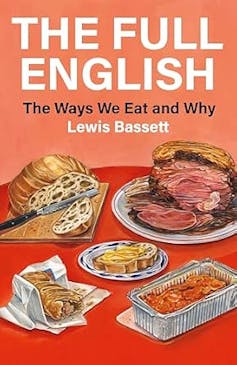
However, a provocative new book by podcast host, academic, and former professional kitchen worker Lewis Bassett aims to shatter this comforting illusion. Titled The Full English: The Ways We Eat and Why, Bassett’s work offers a sharp sociological autopsy of what the nation consumes and the socioeconomic machinery behind it. Rather than serving as a conventional recipe collection or a sentimental culinary history, Bassett’s book deploys a rigorous analytical lens to examine how forces like urbanization, industrial manufacturing, the legacy of empire, and even modern sociopolitical upheavals like Brexit have profoundly re-engineered the British diet.
The central thesis of The Full English is as compelling as it is disruptive: English food is uniquely entangled with the nation’s specific and often fraught route to modernity, binding what people eat inextricably to entrenched ideas of class, social mobility, and national identity. By tracing the historical trajectories of eight everyday food staples—including bread, curry, roast beef, and the titular full English breakfast—Bassett demonstrates that what many modern Britons revere as timeless traditions are, in reality, the relatively recent byproducts of sweeping economic and social transformations.
Yet, Bassett’s sociological crusade comes with a notable stylistic trade-off. Readers searching for a sensory, mouth-watering celebration of culinary pleasures will find that the book approaches food primarily as evidence rather than an experience to be savored. By leaning heavily into the commerce, industrial scale, and socio-political context of eating, Bassett transforms the mundane components of our daily diet into fascinating—if occasionally clinical—study subjects. Ultimately, The Full English challenges the public to look past the comforting myths of national cuisine, reframing the everyday British plate as a complex historical artifact that reveals as much about societal divides as it does about sustenance.
Detailed Chronology: The Evolution of English Eating Habits
To understand how modern English food culture was forged, one must trace the historical shifts that transformed localized, elite ingredients into mass-market commodities. Bassett’s sociological framework relies heavily on a chronological understanding of how industrialization and globalization reshaped the British pantry.
The Era of Aristocratic Monopoly
Centuries ago, the foods that now define the everyday British diet were strictly policed by socioeconomic status. In medieval and early modern England, diet was an overt marker of feudal hierarchy. White bread, for instance, was an exclusive luxury. While the peasantry subsisted on dense, dark loaves made from rye, barley, or mixed grains, the upper echelons of society reserved the purest wheat flour for themselves.
Similarly, elaborate meat dishes and curated morning feasts—the conceptual ancestors of the modern full English breakfast—were the sole preserve of the landed gentry. These aristocratic meals were designed to showcase wealth, land ownership, and access to imported spices or specialized livestock. The average working-class individual had no access to the diverse, protein-rich, and refined components that characterize these dishes today.
The Industrial Revolution and Mass Manufacturing
The true catalyst for the modern English diet was the Industrial Revolution, followed by the rise of 20th-century mass manufacturing. As cities swelled with factory workers and urban centers expanded, the food system had to adapt to feed a dense, wage-earning population efficiently.
This period marked a profound democratization of consumption, though not necessarily through artisanal means. As Bassett highlights, modern industrial manufacturing achieved something remarkable: it allowed ordinary people in Britain to regularly consume meals that were once the exclusive domain of the wealthy. The ubiquity of the modern sausage roll stands as a prime example. Once a delicate, meat-rich pastry for the upper classes, the sausage roll was industrialized, standardized, and mass-produced by commercial bakery giants like Greggs, converting an elite luxury into a ubiquitous, working-class convenience food.
Post-War Globalization and Empire
Empire and global trade further complicated and enriched the English palate. The British Empire exposed the island nation to global spices and culinary traditions, a trajectory that eventually birthed staples like chicken tikka masala—often dubbed a true British national dish.
In the contemporary era, this globalization manifests in unexpected ways. The components of a modern full English breakfast—widely viewed as the ultimate expression of British culinary patriotism—tell a story of international supply chains. The plate is routinely assembled from Danish bacon, factory-manufactured white bread, and Italian tinned tomatoes. Far from being an isolated, ancient tradition, the full English is a globalized assembly of ingredients made accessible by modern trade networks and industrial economies of scale.
Supporting Context & Metrics: Class, Commerce, and the Restaurant Economy
Bassett’s investigative approach is characterized by deep immersion into the contemporary food economy, blending academic inquiry with firsthand labor in commercial kitchens and fisheries. However, this methodology yields a distinct tension between the sociological data and the sensory enjoyment of food.
The Participant-Observer Dilemma
In researching the book, Bassett actively stepped behind the scenes of the British food industry. He worked shifts in an artisan bakery and joined commercial fishermen out at sea, attempting to understand the mechanics of food production at ground level. These excursions provide vivid, on-the-ground insights into how modern food is harvested and prepared.
However, Bassett’s relentless focus on the sociological imperative occasionally sidelining the food itself is a notable feature of the work. This is perhaps best illustrated by an anecdote in which Bassett recounts spending £369.56 on a solitary fine-dining experience at a "posh" restaurant. Crucially, this was the exact establishment where he had spent an entire week working for free as kitchen labor—a restaurant that, revealingly, did not offer him a single penny of discount on his bill in recognition of his unpaid toil.
While the financial figure and the transactional coldness of the interaction offer a brilliant critique of contemporary labor practices in high-end gastronomy, Bassett spends surprisingly little time describing whether the food was actually delicious, memorable, or distinctive. The meal functions purely as a data point in a broader argument about economic inequality and restaurant culture.
The Commercialization of the High Street
Bassett’s lens is so heavily trained on commerce and restaurant culture that the book could easily carry the alternate sub The Ways We Eat Out and Why. From analyzing the meteoric rise of the Greggs bakery chain to evaluating the plastic tablecloths and frozen Icelandic cod at local fish-and-chip shops, Bassett maps out how public eating spaces reflect societal structures.
Consider the curious case of British seafood. Britain’s coastal waters yield massive tonnages of marine life, including millions of whelks harvested and exported abroad. Yet, domestic consumption of whelks is virtually nonexistent today, despite their historic popularity on Victorian seaside piers where they were sold in pints, dressed with malt vinegar and white pepper. Meanwhile, the fish that the British do consume in their chip shops is overwhelmingly imported.
This structural paradox—where an island nation harvests what it refuses to eat and imports what it relies upon—raises profound sociological questions about supply chains, cultural memory, and changing tastes. Yet, as critics point out, it leaves the reader pondering the mechanics of the seafood trade rather than understanding the sensory appeal of biting into a boiled whelk.
Future Outlook: Reimagining the British Plate
By stripping away the cozy, nostalgic myths that have long pacified discussions of English cuisine, Lewis Bassett’s The Full English invites a necessary, forward-looking reassessment of what food means in modern Britain.
As the nation navigates post-Brexit economic realities, shifting global supply chains, and an increasingly diverse multicultural populace, its food culture will inevitably continue to transform. Bassett’s work demonstrates that British cuisine has never been a static artifact frozen in time; it is a dynamic, fluid reflection of economic pressures, class struggles, and industrial innovation.
For food historians, sociologists, and everyday eaters alike, the book serves as an urgent call to think differently about the daily plate. By making familiar foods newly puzzling, Bassett challenges consumers to interrogate the provenance of their meals—not just in terms of carbon footprints or food miles, but in terms of the social histories and power dynamics embedded in every bite.
Ultimately, The Full English may not leave readers with a craving for traditional comfort food, but it succeeds in opening the door to a more critical, clear-eyed appreciation of English food culture—and perhaps, inspiring a vision of what that culture might become in the decades ahead.