Executive Overview
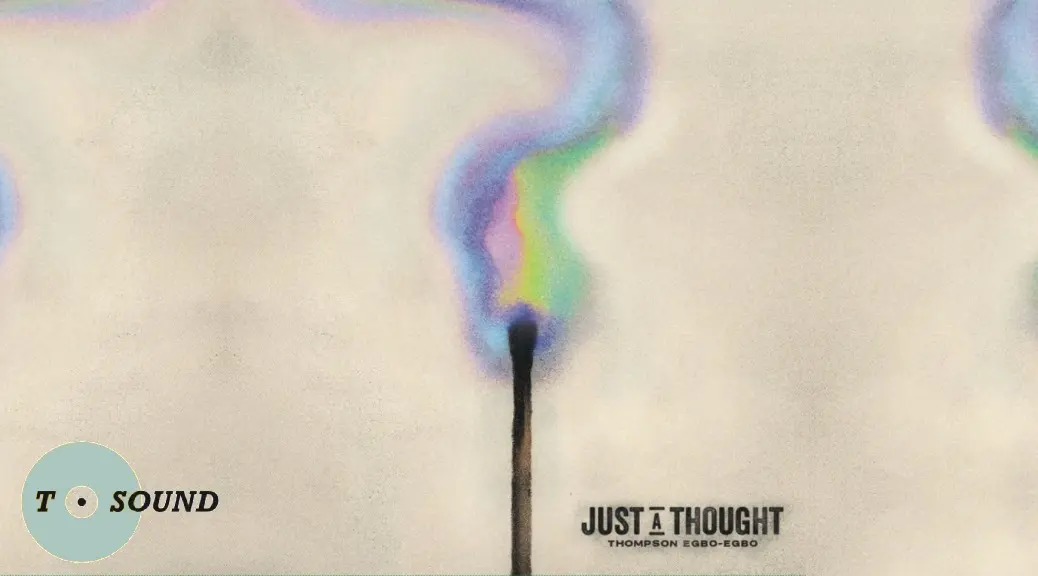
In the ever-evolving landscape of contemporary improvised music, few artists possess the rare capacity to merge high-art sophistication with immediate emotional accessibility quite like Toronto-based pianist and composer Thompson Egbo-Egbo. With his latest critically acclaimed release, Just A Thought, Egbo-Egbo significantly expands upon the robust architectural foundations of his established piano trio, introducing sweeping classical textures, bold cinematic dimensions, and a remarkably diverse compositional palette. Yet, this expansion is achieved without ever sacrificing the pulsating rhythmic drive, harmonic depth, and irresistible melodic appeal that have long defined his artistic signature.
Spanning a rich tapestry of influences—from the alternative-rock textures of Radiohead and the timeless pop-folk cadence of Paul Simon to the heavy-swinging bebop of Bud Powell and the dramatic tango intensity of Astor Piazzolla—Just A Thought stands as a definitive statement in modern jazz curation. Working in seamless synergy with long-standing collaborators bassist Randall Hall and drummer Jeff Halischuk, alongside the sublime guest contributions of the Odin Quartet, Egbo-Egbo has crafted a cohesive, warm-hearted, and deeply imaginative recording. This comprehensive review examines the artistic genesis, stylistic breadth, collaborative dynamics, and broader cultural significance of an album poised to leave an indelible mark on the international jazz canon.
Detailed Chronology and Artistic Evolution
From Lagos to Toronto: The Formative Years
The artistic trajectory of Thompson Egbo-Egbo is as culturally rich as it is musically rigorous. Born in Nigeria and relocating to Canada at the tender age of four, Egbo-Egbo’s early life was framed by a duality of cultural experiences that would ultimately inform his cosmopolitan approach to sound. He commenced formal piano studies as a child, displaying an intuitive grasp of classical discipline and harmonic structure.
As his passions matured, Egbo-Egbo formalized his education at Toronto’s prestigious Humber College, immersing himself in the intricacies of jazz performance, improvisation, and ensemble interaction. Eager to broaden his technical mastery and production capabilities, he subsequently pursued advanced studies in music production at the world-renowned Berklee College of Music. This cross-pollination of academic rigor and street-level performance sensibilities allowed him to develop a uniquely multifaceted career. Beyond traditional jazz venues, Egbo-Egbo’s creative footprint expanded into interdisciplinary domains, notably scoring and collaborating across theater and film productions. This cinematic exposure taught him how to manipulate space, narrative tension, and emotional pacing—skills that are acutely audible in the dynamic architecture of Just A Thought.
The Recorded Catalog: Paving the Path to Just A Thought
Prior to the release of Just A Thought, Egbo-Egbo systematically cultivated a reputation as a thoughtful innovator through a string of critically lauded projects, including The Offering and What Remains. These earlier works established his primary formula: a harmonious marriage of memorable, hummable melodies with sophisticated, unexpected harmonic twists and meticulously considered arrangements.
Crucially, Egbo-Egbo’s artistic philosophy has always been deeply intertwined with a commitment to music education and community outreach. Believing firmly in the transformative power of mentorship and knowledge-sharing, he has consistently dedicated time to nurturing the next generation of players. This spirit of generosity directly informs his playing style on Just A Thought, where technical wizardry is never deployed as a vehicle for self-aggrandizement, but rather as an open invitation for the listener to share in an intimate musical dialogue.
Supporting Context & Musical Metrics: Anatomy of the Trio and Chamber Integration
The Engine Room: Hall and Halischuk
At the core of Just A Thought is a telepathic trio dynamic forged through years of relentless live performance and studio exploration. Alongside Egbo-Egbo sits bassist Randall Hall, whose woody tone and rock-solid harmonic anchor provide a sturdy bridge between the piano’s upper registers and the drum kit’s rhythmic pulse. Drummer Jeff Halischuk completes the triad with a masterclass in taste, coloration, and polyrhythmic agility.

Together, the trio operates with a fluid elasticity that enables them to pivot on a dime between tightly organized, complex compositional passages and wild, spontaneous group improvisations. Egbo-Egbo’s piano work throughout these sessions is characterized by articulate phrasing, profound rhythmic alertness, and an instinctive grasp of dynamic contrast. Eschewing the noisy, over-flamboyant tendencies that occasionally plague contemporary piano trios, Egbo-Egbo favors a clean, purposeful touch—balancing delicate, whisper-quiet lines with thunderous surges of emotional energy.
The Odin Quartet: Expanding the Canvas
One of the defining structural metrics of Just A Thought is the integration of the Odin Quartet across three pivotal tracks. Rather than treating the string ensemble as a mere sonic sweetener or a heavy-handed backdrop, Egbo-Egbo integrates the quartet as an equal conversational partner. The strings introduce a rich, chamber-like dimension to the title track "Just A Thought," a breathtaking reimagining of "Out of Nowhere," and a deeply moving homage to Canadian jazz royalty, Oscar Peterson’s "Requiem." This chamber-jazz fusion enriches the harmonic arrangements immensely, padding the soundstage with velvety textures while meticulously preserving the exposed, breathing intimacy of the core piano trio.
Official Statements and Repertoire Breakdown: A Stylistic Tapestry
Reinterpreting the Canon: From Radiohead to Bud Powell
The true brilliance of Just A Thought lies in its radical yet respectful stylistic breadth. Speaking on his eclectic song choices, Egbo-Egbo has consistently emphasized that great music transcends rigid genre boundaries—a philosophy brilliantly demonstrated track by track across the album’s tracklist:
- "Time and Space" (Opening Track): Drawing deep inspiration from alternative rock pioneers Radiohead—specifically their intricate track "Reckoner"—this opening statement sets the tone for the entire album. Egbo-Egbo extracts the cyclic, hypnotic rhythmic undertones of the original composition and translates them into an idiom where jazz improvisation and indie-rock minimalism blur into one.
- "Sing a Song of Song" & "50 Ways to Leave Your Lover": Kenny Garrett’s blazing post-bop anthem and Paul Simon’s iconic, rhythmically distinct pop masterpiece receive radical instrumental makeovers. Familiar melodic contours are completely recast through Egbo-Egbo’s idiosyncratic harmonic lens, proving that a great melody remains invincible regardless of the stylistic vehicle carrying it.
- "Tempus Fugit" & "Chant": Representing the historical and contemporary pillars of the genre, Bud Powell’s bebop classic "Tempus Fugit" delivers an electrifying, adrenaline-fueled burst of classic jazz urgency. Conversely, Robert Glasper’s modern soul-jazz piece "Chant" anchors the project squarely in the cutting-edge vocabulary of 21st-century urban improvised music.
Paying Homage and Closing the Circle
Among the album’s most poignant moments is the inclusion of Oscar Peterson’s "Requiem." For a Canadian pianist of Egbo-Egbo’s generation, Peterson stands as an absolute titan and a guiding light. By featuring the Odin Quartet on this track, Egbo-Egbo crafts a respectful, tear-inducing tribute that honors Peterson’s legacy of swinging virtuosity while introducing a contemporary chamber-music solemnity.
The album reaches its dramatic crescendo with Astor Piazzolla’s immortal "Libertango." Here, the trio—bolstered by the dramatic tension of the string arrangements—brings tango’s fiery, passionate pulse into direct conversation with jazz swing and unbridled improvisation, closing the record with a breathtaking display of flair, passion, and cross-cultural synthesis.
Future Outlook: The New Standard for Contemporary Jazz
As the global music industry continues to fragment into hyper-specific micro-genres, Just A Thought emerges as a vital, unifying counter-narrative. Thompson Egbo-Egbo has successfully demonstrated that jazz does not need to retreat into academic isolation to maintain its integrity, nor does it need to pander to commercial trends to achieve mass appeal. By treating radiohead tracks, bebop standards, classical string quartets, and tango rhythms as equal ingredients in a unified sonic recipe, he has forged a path forward for modern pianism.
Looking ahead, Just A Thought firmly positions Egbo-Egbo at the vanguard of international contemporary jazz. Critics and fans alike are already anticipating how this expanded compositional palette will translate to live international stages, where the interactive chemistry between Egbo-Egbo, Hall, Halischuk, and visiting string sections can be fully experienced in real-time. For listeners seeking an album that marries intellectual ambition with unadulterated listening pleasure, Just A Thought is not merely recommended listening—it is an essential milestone in modern recorded art.