Executive Overview
For decades, English-speaking readers knew Tove Jansson primarily as the creative genius behind the whimsical, round-bellied Moomins—the beloved Finnish-Swedish trolls who inhabited the idyllic, yet occasionally melancholic, Moominvalley. However, a profound and lesser-known chapter of Jansson’s artistic career bridges her signature world with J.R.R. Tolkien’s foundational high fantasy. Long before her name became synonymous with Scandinavian children’s literature worldwide, Jansson left an indelible, if subtle, mark in the scholarly margins of The Annotated Hobbit, edited by Tolkien scholar Douglas A. Anderson. That volume showcased more than 150 international illustrations, featuring several striking etchings Jansson originally created for the 1962 Swedish translation of Tolkien’s classic, En Hobbit’s Äventyr (A Hobbit’s Adventure).
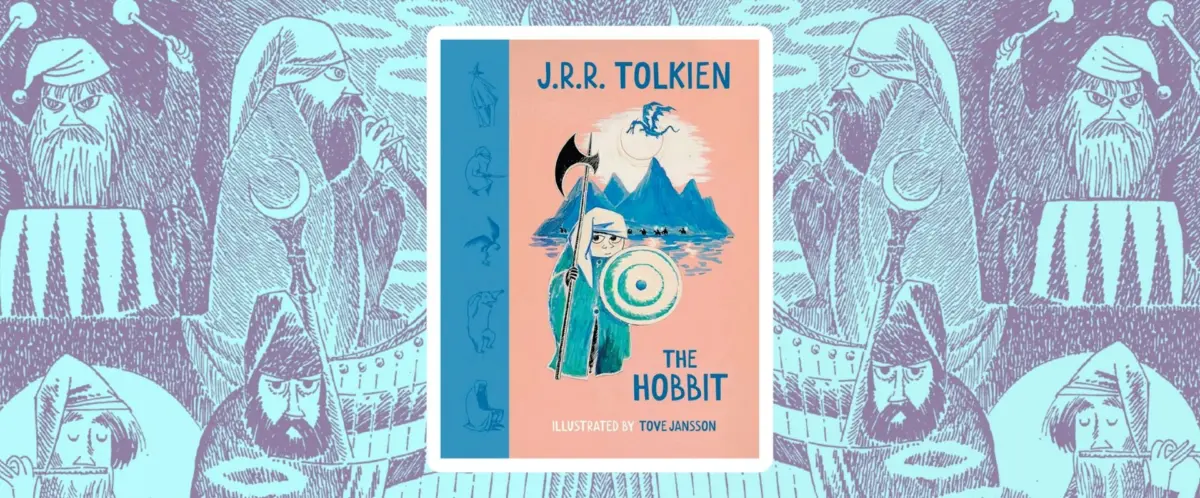
The recent publication of The Hobbit: Illustrated by Tove Jansson changes the landscape of Tolkien studies and illustration history by presenting, for the very first time, a complete, standalone English-language edition dedicated entirely to her chilling and distinctive artistic vision. Far from softening Middle-earth for a younger audience, Jansson’s monochromatic masterpieces embrace what she famously termed the "intense horror sensation" inherent to any honest work of children’s literature. Crafted in an era before Peter Jackson’s cinematic trilogies standardized the visual lexicon of Middle-earth, Jansson’s interpretations are deeply idiosyncratic, psychologically rich, and visually arresting. This comprehensive feature explores the historical collision between Finland’s greatest literary export and the father of modern fantasy, charting how shared folkloric roots, artistic audacity, and a taste for the macabre yielded one of the most fascinating crossover collaborations in literary history.
Detailed Chronology: From the Kalevala to Moominvalley and Middle-earth
To understand how a Finnish-Swedish author and artist came to visualize J.R.R. Tolkien’s underground caverns and misty peaks, one must trace a historical lineage defined by shared mythologies, linguistic fascination, and mid-century European publishing trends.
1835–1937: The Shared Roots of Northern Myth
Long before Jansson put pen to paper for En Hobbit’s Äventyr, the cultural bedrock of Finland exerted a quiet yet monumental pull on Tolkien’s imagination. Finland’s national epic, The Kalevala—compiled by Elias Lönnrot and published in 1835—served as a crucial touchstone for Tolkien’s expanding legendarium. Fascinated by the stark, melancholic beauty of the Finnish language, Tolkien heavily borrowed from its complex grammar and phonetic architecture to construct Quenya, one of his primary invented Elvish languages.
When The Hobbit was first published in the United Kingdom in 1937, it arrived as a self-contained children’s fantasy rather than the opening salvo of a global cultural empire. At the time, the modern fantasy genre as a distinct, commercially dominant publishing category did not yet exist. This absence of genre expectations allowed regional translators and illustrators enormous creative leeway. When Swedish publishers sought to bring The Hobbit to Scandinavian audiences in the early 1960s, they turned to Tove Jansson—an artist whose dark aesthetic sensibilities were already capturing the imagination of Nordic readers through her early Moomin books.
1961–1962: The Commission and Jansson’s Macabre Vision
In 1961, just prior to accepting the Tolkien commission, Jansson penned a revealing essay on children’s literature in which she argued that an "intense horror sensation […] in every honest children’s book" is not only permissible but vital. According to children’s literature scholar Olga Holownia, this philosophical stance served as Jansson’s primary motivation for taking on The Hobbit. Rather than viewing the text as a gentle bedtime story, Jansson found Tolkien’s subterranean landscapes and looming perils "seductive in its macabre ferocity."
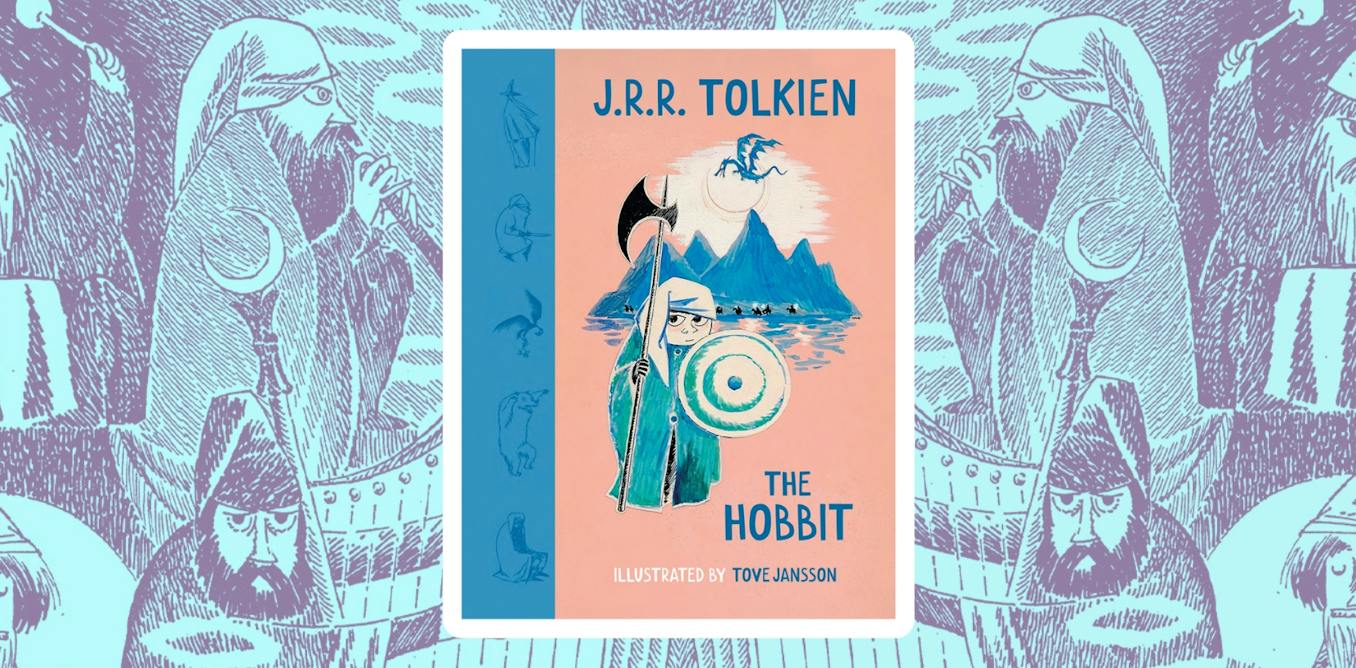
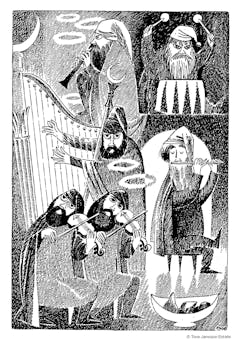
When En Hobbit’s Äventyr hit shelves in 1962, Jansson’s black-and-white etchings defied traditional expectations of heroic fantasy. Her Bilbo Baggins bore an undeniable resemblance to Snufkin—the free-spirited, solitary wanderer of her Moomin stories—complete with a heavy traveling cloak and an oversized, floppy hat. Yet, the environments through which her characters moved were distinctly alien to the cozy woods of Moominvalley. The Misty Mountains loomed like jagged teeth, and the ruined gates of the Lonely Mountain echoed the monstrous, fire-breathing jaws of Smaug himself.
Post-1960s to Present: Cultural Re-evaluation
As The Lord of the Rings exploded into a cultural phenomenon across college campuses in the late 1960s, fantasy solidified into a distinct publishing juggernaut. Subsequent visual adaptations were increasingly forced to measure up against an expanding canon of high-fantasy art. Jansson’s work slipped quietly out of print in English-speaking markets, preserved primarily as a collector’s curiosity and a footnote in scholarly editions like The Annotated Hobbit.
The release of The Hobbit: Illustrated by Tove Jansson rectifies this historical oversight, inviting contemporary readers to re-evaluate how mid-century modernism and Scandinavian folklore once sought to interpret the foundational texts of Middle-earth.
Supporting Context & Metrics: The Art of Scale and Psychological Truth
Jansson’s visual interpretation of The Hobbit challenges viewers by upending traditional expectations of scale, proportion, and character design. Her artistic choices reveal a profound understanding of vulnerability within a hostile environment.
The Aesthetics of Smallness
In Jansson’s illustrations, characters are repeatedly dwarfed by the immense, oppressive topography of Middle-earth. Rather than presenting grand, cinematic vistas designed to evoke heroic triumph, Jansson focuses on the psychological weight of isolation. Her figures navigate vast, empty spaces where cliffs tower like monoliths and rivers rush with terrifying velocity.
This stylistic choice aligns closely with what literary critics describe as the "ecstatic truth" of childhood: the visceral experience of being a small, vulnerable individual navigating a vast, imposing, and frequently incomprehensible world. While Tolkien purists occasionally object to how loosely Jansson interpreted specific textual descriptions—such as her depiction of Gollum, who towers over Bilbo like a slimy, towering cave-troll rather than a shrunken, gnarled creature—her illustrations succeed on an emotional and atmospheric level. They capture the raw, unadulterated terror of the dark.
Comparative Metrics of Tolkien Adaptations
To contextualize Jansson’s contribution within the broader pantheon of Tolkien illustration, consider the following metrics and historical milestones:
- Publication Timeline: The Hobbit was first published in 1937 with illustrations by Tolkien himself. Jansson’s Swedish translation followed 25 years later in 1962. The complete English-language edition of Jansson’s illustrations arrived over six decades after her initial commission.
- Artistic Scope: Jansson produced a series of intricate black-and-white etchings and spot illustrations that diverge sharply from the watercolor aesthetics popularized by artists like Alan Lee and John Howe.
- Cultural Footprint: While Tolkien’s own artwork remains the baseline of canonical visualization, Jansson’s work represents a rare instance where a globally renowned creator (the mother of the Moomins) lent her distinct stylistic imprimatur to another literary titan’s universe.
Official Statements and Critical Perspectives
The intersection of Tolkien’s literary theory and Jansson’s visual philosophy has long fascinated literary scholars, even if the author of Middle-earth left behind remarkably few direct comments on Scandinavian adaptations of his work.
J.R.R. Tolkien on the Perils of Illustration
Tolkien harbored a notoriously complex relationship with visual art. In his seminal 1947 essay On Fairy-Stories, he articulated a deep-seated skepticism toward the very concept of illustrating imaginative literature, writing:
"If a story says ‘he climbed a hill and saw a river in the valley below,’ the illustrator may catch, or nearly catch, his own vision of such a scene; but every hearer of the words will have his own picture, and it will be made out of all the hills and rivers and dales he has ever seen, but especially out of The Hill, The River, The Valley which were for him the first embodiment of the word."
Despite these theoretical misgivings, Tolkien’s own copious drawings, maps, and watercolor paintings became inextricably linked to the publication of The Hobbit and The Lord of the Rings, ultimately establishing a powerful visual baseline for the legendarium. No surviving documentation indicates whether Tolkien ever laid eyes on Jansson’s Swedish illustrations or what his precise reaction might have been. Yet, his philosophical warnings about the limitations of imposed imagery highlight precisely why Jansson’s radically different approach works: rather than attempting to literalize every sentence, she superimposed her own mythic vocabulary onto Tolkien’s text, creating an entirely independent artistic dialogue.
Modern Scholarly Consensus
Scholar Olga Holownia, writing on Jansson’s engagement with macabre children’s literature, emphasizes that Jansson viewed fantasy not as an escape into safety, but as a safe space to explore existential dread.

"An opportunity to create horror-infused landscapes was Jansson’s key motivation behind taking on the Tolkien commission," Holownia notes. "She found the scenery ‘seductive in its macabre ferocity.’"
This perspective positions Jansson alongside visionary filmmakers and artists—such as Hayao Miyazaki (Spirited Away) and Guillermo del Toro (Pan’s Labyrinth)—who understand that dark fairy tales derive their enduring power from an unflinching willingness to gaze into the abyss.
Future Outlook: The Legacy of Alternative Tolkien Illustration
The release of The Hobbit: Illustrated by Tove Jansson signals a broader, highly encouraging shift in how major publishing houses curate classic fantasy literature. For decades, the visual interpretation of Middle-earth was tightly funneled through a homogenous lens dominated by high-fantasy realism, largely codified by the aesthetics of the late 20th century and blockbuster cinematic adaptations.
By unearthing and celebrating mid-century international interpretations—such as Jansson’s stark, expressionistic etchings—publishers are opening the door to a more pluralistic understanding of Tolkien’s work. Future scholarship is increasingly likely to explore how different linguistic and cultural traditions outside the Anglo-American sphere conceptualized Middle-earth during the crucial decades before fantasy hardened into a standardized commercial genre.
Furthermore, this publication invites a new generation of readers to appreciate Tove Jansson not merely as a beloved chronicler of gentle Scandinavian trolls, but as a fierce, uncompromising artist capable of capturing the terrifying, sublime beauty of the wider literary cosmos. As contemporary audiences continue to seek out fresh perspectives on canonical texts, Jansson’s Middle-earth stands as a testament to the enduring power of cross-cultural artistic translation—proving that when two masters of myth collide, the resulting landscape is as haunting as it is unforgettable.