Executive Overview
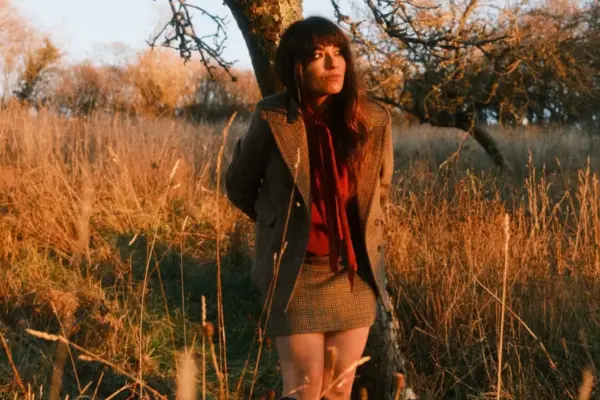
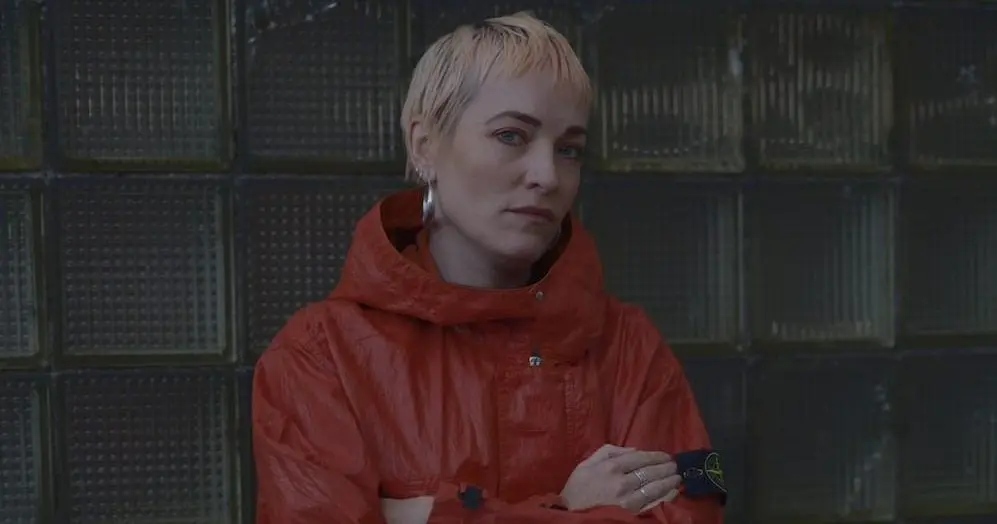
As the contemporary global folk revival continues to expand its boundaries, few voices command the reverence, visceral power, and academic dedication of Radie Peat. Best known as the formidable vocalist and multi-instrumentalist of the Mercury Prize-nominated, critically lauded Irish group Lankum, Peat is now stepping firmly into the solo spotlight. Ahead of the highly anticipated release of her debut solo full-length album, No Human Tongue Can Tell, arriving this Friday via major streaming and physical distributors, Peat has dropped her final pre-release single, a striking and historically rich rendition of the traditional American murder ballad Willow Garden.
The forthcoming album is not merely a collection of songs; it is a meticulously curated auditory archive that examines the multifaceted realities of the female experience through centuries of musical folklore. Throughout No Human Tongue Can Tell, Peat has consciously selected traditional folk songs that reflect female struggle, suffering, strength, and endurance. From the quiet tragedies of betrayal and abandonment to the stark, unfiltered horrors of gendered violence, the album positions the historical folk canon as a mirror to contemporary and enduring human tribulations.
Peat’s interpretation of Willow Garden—a song previously hinted at during her tenure with Lankum on their acclaimed 2017 sophomore studio album, Between the Earth and the Sky—introduces a rare, archival final verse discovered under serendipitous circumstances in rural North Carolina. To accompany the single’s release, Peat has also shared an intimate, haunting live session performance recorded for the celebrated roots and Americana video platform Western AF, further cementing the organic, unvarnished aesthetic that defines her artistic ethos.
This deep dive examines the historical roots of Willow Garden, explores the thematic architecture of Peat’s debut solo record, traces the collaborative and migratory journey of the song across the Atlantic, and assesses the broader cultural impact of Peat’s solo venture on the modern international folk landscape.
Detailed Chronology: From Irish Roots to Appalachian Trails and Back
To fully understand the weight of Radie Peat’s rendition of Willow Garden, one must trace the dizzying, transnational migratory path of the song itself. Often categorized within the broad umbrella of traditional murder ballads—a subgenre of folk music that details acts of violence, often committed by men against women, and the subsequent capture or remorse of the perpetrator—Willow Garden possesses a history as complex as it is dark.
Peat sheds light on the transatlantic journey of the composition, detailing its surprising pedigree:
"This is a traditional murder ballad, mostly sung in America. There is evidence of its existence in Ireland in 1810 when the tune was noted in the bunting collection, without lyrics, but with the title ‘Rose Connolly’. We appear to have lost it since then in Ireland, but it survived very successfully in the Appalachians. The last verse was transcribed by Matt Kinman from ‘an old fella’ he was living up the mountains with for a while, and I’ve never found it anywhere else. Thanks to Matt for writing it down for me in a dive bar in Sylva, North Carolina."
The 1810 Bunting Collection and the Loss of "Rose Connolly"
The historical trail begins in Ireland at the dawn of the nineteenth century. In 1810, the melody associated with what would eventually become Willow Garden was documented in a traditional music collection without accompanying lyrics, cataloged under the title "Rose Connolly." During this period of Irish history, vernacular music was frequently collected, preserved, or transcribed by antiquarians keen to save indigenous art forms from vanishing under the pressures of rapid modernization and political upheaval.
However, while the tune was captured on paper in Ireland, the lyrical narrative tied to the melody appears to have faded from the island’s oral tradition over the generations. As the Irish diaspora surged westward across the Atlantic Ocean, particularly during the mid-nineteenth century, cultural baggage—including songs, tunes, and folklore—traveled in the memories of emigrants. These sonic fragments found a fertile, isolated breeding ground in the Appalachian mountain ranges of the United States.
Survival in the American Appalachians
In the isolated hollers and mountain communities of Appalachia, the ballad underwent a process of cultural localization. Renamed Willow Garden (or occasionally variants such as Rose Connolly or The Lexington Murder), the song transformed into a staple of the American old-time and bluegrass repertoires. generations of mountain musicians passed the story down from parent to child, maintaining archaic vocal ornamentation and modal tuning systems long abandoned in mainstream urban environments.
The narrative follows a classic, chilling trope of the genre: a young man lures his lover, Rose Connolly, to a secluded garden by a willow tree, murders her, and subsequently faces the agonizing weight of his conscience and the certainty of earthly justice. While hundreds of American folk revivalists have recorded versions of the song over the past century—ranging from field recordings by musicologists like Alan Lomax to commercial bluegrass interpretations—Peat’s version bridges a two-hundred-year-old gap, dragging the tune back across the ocean to its ancestral hemisphere while retaining the hard-won folklore gathered along its American detour.
Supporting Context & Metrics: Thematic Architecture of No Human Tongue Can Tell
While Radie Peat is globally celebrated for her work within the drone-laden, doom-folk framework of Lankum—where her harmononium playing, concertina work, and chilling lead vocals have helped redefine contemporary Irish music—her debut solo record represents a distillation of her most intimate artistic convictions.
The Politics of Pain and Endurance in Folk Music
The central thesis of No Human Tongue Can Tell lies in its uncompromising exploration of female agency, suffering, and survival through the lens of traditional song. In an era where cultural archives are frequently sanitized or viewed solely through nostalgic lenses, Peat’s curatorial approach is resolutely unflinching. The tracks chosen for the album do not shy away from the darker elements of the human condition; instead, they interrogate them.
- Betrayal and Abandonment: Traditional folk music is rife with narratives of women left destitute, deceived by smooth-talking suitors, or socially ostracized by rigid patriarchal structures. Peat uses her distinct vocal delivery—characterized by its raw emotional resonance, microtonal micro-variations, and immense dynamic range—to give these historical figures a palpable immediacy.
- Gendered Violence and Historical Echoes: By including murder ballads such as Willow Garden, Peat confronts the historical and ongoing epidemic of violence directed against women. Rather than exploiting these narratives for shock value, her interpretive framing highlights the psychological aftermath, the tragedy of lost potential, and the quiet resilience embedded within the wreckage.
- Strength and Endurance: Crucially, the album’s overarching narrative is not one of perpetual victimization. Through the execution of songs detailing extraordinary trials, Peat highlights the endurance, psychological fortitude, and quiet resistance of women who navigated hostile social landscapes across the centuries.
Critical Metrics and Production Pedigree
The release of No Human Tongue Can Tell arrives at a time of unprecedented critical and commercial momentum for the broader Irish folk and experimental underground. Over the past five years, acts like Lankum, Ye Vagabonds, The Mary Wallopers, and Lisa O’Neill have demonstrated that contemporary audiences possess a deep, insatiable appetite for authentic, roots-based music that refuses to pander to commercial radio formats.
- Format and Availability: The album will be released physically on vinyl, CD, and digitally via major platforms, supported by specialized independent record stores across the UK, Ireland, and North America.
- Live Performance Integration: Alongside the recorded release, Peat’s integration with high-profile live session platforms—such as her recent feature on Western AF, which boasts hundreds of thousands of dedicated subscribers and millions of views globally—ensures that her work reaches an international demographic spanning traditional folk purists, indie rock aficionados, and Americana devotees alike.
Official Statements and Archival Discovery
The journey of Willow Garden to this specific recording offers a fascinating glimpse into the collaborative, underground network of folk music preservationists. The discovery of the final verse—transcribed in a dive bar in Sylva, North Carolina, by fellow musician Matt Kinman from an unnamed mountain resident—underscores the oral, lived nature of folk traditions.
Radie Peat elaborates on this serendipitous encounter:
"The last verse was transcribed by Matt Kinman from ‘an old fella’ he was living up the mountains with for a while, and I’ve never found it anywhere else. Thanks to Matt for writing it down for me in a dive bar in Sylva, North Carolina."
This anecdote highlights the fundamental difference between standard commercial songwriting and the living tradition of folk music. Songs are not static museum pieces; they are living organisms that absorb the travels, chance meetings, and localized memories of the people who carry them. By incorporating this elusive final verse, Peat’s rendition of Willow Garden ceases to be a mere cover of a standard folk tune and becomes a unique historical artifact in its own right—a localized Appalachian variant filtered back through an Irish artistic sensibility.
Furthermore, the accompanying live session released via Western AF provides an unadorned, visual and auditory testament to Peat’s performance style. Shot with a minimalist aesthetic that places the emphasis entirely on the vocal performance and instrumental dexterity, the video acts as an essential companion piece to the studio recording, stripping away any potential modern production gloss to present the music in its purest, most elemental form.
Future Outlook: The Solitary Path and Global Impact
As No Human Tongue Can Tell hits shelves and digital storefronts this Friday, industry analysts and music critics alike are watching closely to see how Radie Peat’s solo trajectory will influence the broader landscape of contemporary acoustic music.
Expanding the Solo Horizon within Lankum’s Shadow
While Peat remains an integral pillar of Lankum—a band that has consistently pushed the boundaries of drone, folk, and ambient noise—her solo debut proves that her artistic vision extends far beyond the collective output of the group. Solo releases from band members often serve as pressure valves for personal artistic exploration, allowing musicians to experiment with minimalist arrangements, personal thematic focal points, and intimate vocal stylings that might get lost in the maximalist, wall-of-sound orchestration of a full band.
For Peat, this solo venture establishes her not merely as a compelling ensemble performer, but as a master curator, ethnomusicological custodian, and powerhouse vocal interpreter capable of holding a listener’s complete attention with nothing more than her voice and traditional instrumentation.
Implications for the Global Folk Revival
The release of Willow Garden and the broader album campaign signal several key trends for the future of the international folk scene:
- The Validation of Transnational Folk Scholarship: Peat’s meticulous liner notes and storytelling regarding the evolution of songs from 1810 Ireland to the American Appalachians demonstrate that modern audiences are hungry for deep contextual knowledge. The success of such projects encourages younger artists to engage in rigorous archival research rather than relying on surface-level tropes.
- The Re-Examination of Dark Themes: By leaning directly into the uncomfortable terrain of murder ballads and systemic female suffering, Peat challenges contemporary songwriters to use traditional idioms to address complex modern realities. The album provides a historical template for processing trauma, grief, and resilience through song.
- Cross-Pollination of American and Irish Roots: The seamless blending of Appalachian mountain music history with Irish traditional sensibilities reinforces the deep, historical dialogue that has existed between the two musical cultures for centuries. Projects like No Human Tongue Can Tell ensure that these transatlantic bridges remain active, vibrant, and mutually enriching.
As fans prepare to dive into No Human Tongue Can Tell upon its official release this Friday, Radie Peat stands firmly at the vanguard of a generation of artists proving that the oldest songs often hold the most vital, urgent truths for the modern world.