Executive Overview
On January 15th, 2027, the avant-garde landscape of contemporary Latin American music will welcome a monumental addition. Julián Mayorga—the Madrid-based, Colombian-born poet, singer-songwriter, and sonic surrealist—is set to release his tenth studio album, Chispeaba la sangre en el hierbal (Blood was spattering on the grass), via the acclaimed independent label Glitterbeat. Known for destabilizing traditional rhythms with eccentric electronic production and Dadaist lyricism, Mayorga’s latest project promises to push the outer limits of experimental folkloric deconstruction.
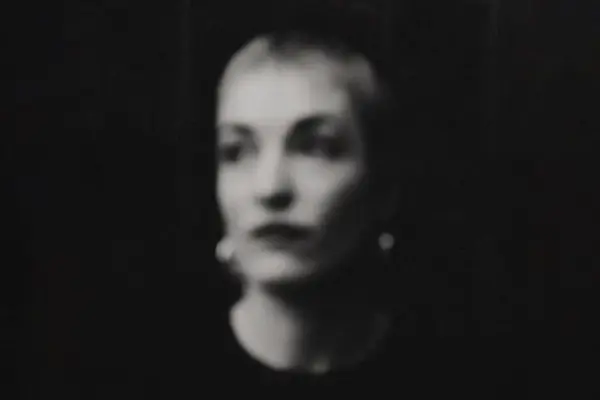
The album’s lead single, Mi Mama, serves as a surreal portal into this new era. Accompanied by a deeply hypnotic, hallucinatory music video, the track establishes the tone for a record that refuses to sit comfortably within the boundaries of standard world music curation. Mayorga does not merely reinterpret South American heritage; he drags it through the mud of his own hyper-imaginative subconscious.
Rather than relying on conventional instrumentation, Mayorga has constructed an entirely unique acoustic ecosystem for this album. Utilizing a self-made "scrap-metal gamelan"—composed of dinner plates, scavenged petrol cans, bakery trays, and agricultural cowbells—the artist bends industrial debris into organic, pulsing rhythms. This investigative report delves into the mechanics of Mayorga’s sonic universe, examining the philosophy of his radical folklorism, the material reality of his makeshift percussion, and the broader cultural implications of his upcoming release on the international music stage.
Detailed Chronology: The Evolution of a Sonic Surrealist
From Ibagué to Madrid: The Formative Years
To understand the gravity of Julián Mayorga’s tenth album, one must retrace a transcontinental journey that has spanned decades and stylistic revolutions. Born in Ibagué, Colombia—a city historically celebrated as the "Musical Capital of Colombia"—Mayorga was steeped from an early age in the rich, acoustic storytelling traditions of Andean and Caribbean folkloric music. However, unlike many of his contemporaries who sought to preserve these traditions in amber, Mayorga viewed folklore as a living, volatile organism subject to decay, mutation, and reinfection.
Upon relocating to Madrid, Spain, Mayorga found himself operating within a vibrant nexus of European avant-garde experimentation and Latin American diaspora identity. It was within this liminal space that his artistic persona crystallized. Over the course of nine preceding albums, EPs, and multidisciplinary art projects, he carved out a distinct niche that merged the literary absurdism of magic realism with the unbridled structural freedom of modern composition.
The Lead-Up to Chispeaba la sangre en el hierbal
The announcement of Chispeaba la sangre en el hierbal marks a critical milestone in Mayorga’s career. Reaching a tenth studio album is a rare feat for any independent artist, let alone one working on the outer fringes of avant-pop and experimental cumbia. The project has been quietly gestating over several years, drawing on Mayorga’s experiences navigating the dual realities of his homeland’s complex socio-political fabric and the cosmopolitan pulse of European artistic hubs.
With Glitterbeat serving as the distribution and production vehicle, the album benefits from a label renowned for championing boundary-pushing, roots-infused sonic terrorism (having previously housed groundbreaking artists such as Gaye Su Akyol, BCuc, and Altin Gün). The partnership signals a major step forward in bringing Mayorga’s idiosyncratic brand of surrealism to a broader global audience.
Mi Mama: The Gateway Single
Released as the primary harbinger of the album, Mi Mama immediately sets a dizzying benchmark for what listeners can expect on January 15th, 2027. The track is built on a foundation of undulating grooves that simultaneously honor and subvert the rhythmic cadence of classic cumbia.
The accompanying visualizer and music video amplify the song’s disquieting allure. Featuring dreamlike animations and unsettling visual juxtapositions, the video invites the audience into a theater of the absurd where maternal archetypes merge with uncanny, spectral visions. It is a masterclass in atmospheric world-building, proving that Mayorga’s songwriting is as much a visual and psychological experience as it is an auditory one.
Supporting Context & Metrics: The Anatomy of a Scrap-Metal Gamelan
Redefining the South American River of Sound
In contemporary discussions surrounding world music and Latin American fusion, artists often speak of "returning to the roots" or "maintaining the purity" of traditional genres. Julián Mayorga rejects this preservationist impulse outright, offering instead a visceral metaphor for his relationship to his cultural heritage:
"If traditional Colombian or Latin American music is a river, I am not outside that river," Mayorga reflects. "It’s just that where I swim there is a whirlpool of leaves and branches and old clothes and blood and bones and other filth."
This quote encapsulates the core aesthetic of Chispeaba la sangre en el hierbal. The album does not sanitize the history or geography of South America; rather, it embraces the debris, the violence, the beauty, and the detritus that accumulate along the currents of cultural transmission.
The Orchestration of Industrial Debris
Perhaps the most fascinating metric of Mayorga’s artistic independence is his physical approach to instrumentation. Eschewing traditional drum kits and standard synthesizer patches in favor of raw, tactile object-found sounds, Mayorga has engineered a private percussion ensemble that bridges the gap between Indonesian gamelan orchestras and urban junkyards.
In his own words, Mayorga details the inventory of his unique sonic workshop:
- Dinner Plates & Saucepan Lids: Utilized for high-frequency metallic shimmers and piercing transient accents.
- Knives & Metal Rods: Scavenged directly from the streets of Madrid, used to strike resonant surfaces and create industrial textures.
- Bakery Trays & Petrol Cans: Employed to generate hollow, booming low-mid resonances that mimic and distort traditional hand-drum frequencies.
- Agricultural Cowbells: Sourced explicitly from farming supply shops, grounding the avant-garde arrangements in a rustic, pastoral irony.
This "scrap-metal gamelan" is not a mere gimmick; it is an ideological statement. By forcing domestic and industrial garbage to perform the duties of traditional folkloric percussion, Mayorga draws a direct line between the socioeconomic realities of modern life and the ancient rhythms that underpin Latin American identity.
Official Statements & Critical Analysis
The Artistic Philosophy of Julián Mayorga
Music critics and cultural theorists have increasingly pointed to Mayorga as a vital voice in the decolonialization of avant-garde pop. By refusing to choose between intellectual experimentation and danceable rhythmic foundations, he occupies a rare space where high art and visceral pleasure intersect.
Industry analysts reviewing advance tracks from Chispeaba la sangre en el hierbal have noted a distinct sharpening of Mayorga’s lyrical bite. While his earlier work leaned heavily into whimsical, dream-logic narratives, the new material—as hinted by the title Blood was spattering on the grass—confronts themes of historical trauma, ecological anxiety, and surrealist political allegory with unflinching directness.
Glitterbeat’s Visionary Alignment
The decision by Glitterbeat to house Mayorga’s tenth release underscores a growing demand for music that defies algorithmic categorization. In an era dominated by hyper-compressed streaming singles designed for passive consumption, Chispeaba la sangre en el hierbal demands active, immersive listening. The label’s executive team has emphasized that Mayorga represents the ideal synthesis of local root systems and global avant-garde networks—an artist capable of dismantling musical traditions only to rebuild them into something entirely necessary for our current cultural moment.
Future Outlook: What to Expect on January 15th, 2027
As the release date for Chispeaba la sangre en el hierbal approaches, anticipation within independent music circles continues to mount. The album is scheduled to drop worldwide via Glitterbeat in digital download (DL), compact disc (CD), and heavyweight vinyl (LP) formats, with pre-orders currently live on Mayorga’s official Bandcamp page.
Key Milestones to Watch:
- January 15th, 2027: Official global release of Chispeaba la sangre en el hierbal across all streaming platforms, physical retail outlets, and independent record stores.
- Spring 2027 Tour Dates: Anticipated announcement of European and international live dates featuring Mayorga’s custom scrap-metal percussion setup recreated in a live performance environment.
- Subsequent Video Releases: Following the success of Mi Mama, further visualizers and narrative music videos are expected to roll out, expanding the cinematic universe of the album.
Julián Mayorga stands at the threshold of a career-defining release. By diving headfirst into the turbulent, debris-laden whirlpool of Latin American folklore, he has crafted a work of uncompromising vision. Chispeaba la sangre en el hierbal is not merely an album to be heard; it is an excavation site of sound, surrealism, and subversion that will undoubtedly reverberate through the experimental music landscape for years to come.